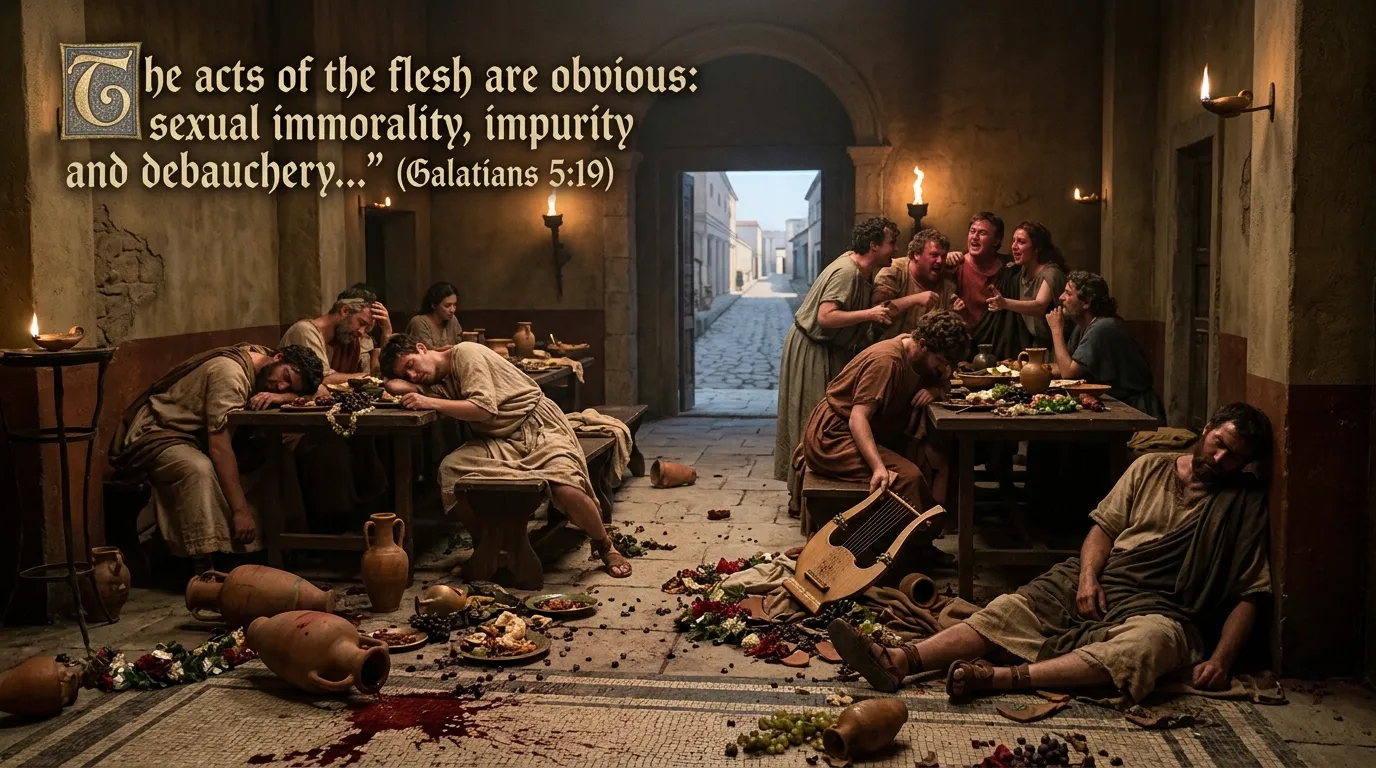
Have you ever wondered why the Bible speaks so directly and seriously about the dangers of wild and excessive living and what it truly means for your faith today? That important question leads us straight into understanding the debauchery meaning in Bible with honesty, grace, and biblical clarity.
Debauchery refers to excessive indulgence in sinful pleasures wild living, moral corruption, and the dangerous abandonment of godly boundaries in pursuit of fleshly satisfaction. It is not simply about making mistakes it is about a lifestyle pattern of unchecked excess that pulls a person further and further away from God and deeper into spiritual bondage.
The Apostle Paul addressed this with unmistakable clarity in Ephesians 5:18 declaring, “Do not get drunk on wine, which leads to debauchery. Instead, be filled with the Spirit.” This powerful verse captures the entire debauchery meaning in Bible in one divine contrast the emptiness of sinful excess versus the fullness of the Holy Spirit.
Understanding the debauchery meaning in Bible is not meant to condemn you it is meant to awaken you to the beautiful freedom God has already made available through the transforming power of his grace, his Word, and His Spirit working powerfully in your surrendered life every single day.
What Does Debauchery Mean in the Bible?
Debauchery in the Bible refers to excessive, reckless, and morally corrupt behavior driven by uncontrolled desires. It includes self-indulgence, sexual immorality, drunkenness, and other actions that reject God’s standards for holy living. Scripture contrasts debauchery with a life led by the Holy Spirit, characterized by self-control, purity, and wisdom.
In simple terms, the debauchery meaning in the Bible includes:
- Living without self-control.
- Pursuing sinful pleasures without restraint.
- Ignoring God’s moral guidance.
- Choosing selfish desires over obedience.
- Rejecting wisdom in favor of reckless living.
Does the Word “Debauchery” Appear in the Bible?
Yes.
The word debauchery appears in many modern Bible translations, including the New International Version (NIV) and several other contemporary versions.
In the King James Version (KJV), similar ideas are translated using words such as:
- Lasciviousness
- Riot
- Excess
- Wantonness
- Uncleanness
Although the wording varies across translations, the message remains consistent.
The Bible repeatedly warns against lifestyles characterized by uncontrolled sinful behavior and encourages believers to pursue holiness instead.
Hebrew and Greek Background of Debauchery
To understand the debauchery meaning in the Bible, it’s helpful to look at the original biblical languages.
Rather than describing one specific sin, the Hebrew and Greek words emphasize a way of life marked by moral carelessness and lack of restraint.
Hebrew Background
The Old Testament does not use one exact Hebrew word equivalent to the English word debauchery.
Instead, several Hebrew words describe behaviors associated with it.
Zimmah (זִמָּה)
One important Hebrew word is Zimmah, which can refer to:
- Wickedness
- Lewd behavior
- Immorality
- Evil intentions
- Shameful conduct
In many Old Testament passages, this word describes actions that violate God’s moral standards and damage both individuals and communities.
Ra’ (רַע)
Another common Hebrew word connected with this theme is Ra’, meaning:
- Evil
- Wickedness
- Harmful behavior
- Moral corruption
Scripture frequently contrasts Ra’ with righteous living, encouraging God’s people to reject evil and pursue goodness.
Greek Meaning of Debauchery
The New Testament provides an even clearer picture.
Asōtia (ἀσωτία)
The primary Greek word translated as debauchery is Asōtia.
It means:
- Wasteful living
- Dissipation
- Reckless behavior
- Excessive indulgence
- Lack of self-control
The word describes someone who squanders both opportunities and moral character by living without restraint.
Aselgeia (ἀσέλγεια)
Another Greek word closely connected to debauchery is Aselgeia, meaning:
- Sensuality
- Shameless behavior
- Moral recklessness
- Unrestrained lust
This word appears frequently in lists describing behaviors that are inconsistent with a life devoted to God.
Together, these Greek words show that debauchery is not merely about isolated mistakes.
It describes an ongoing pattern of living without moral boundaries or spiritual discipline.
Why Is Debauchery an Important Biblical Theme?
The Bible speaks about debauchery because actions have consequences.
A lifestyle driven by uncontrolled desires often leads to broken relationships, emotional pain, poor decisions, spiritual emptiness, and separation from God’s wisdom.
By contrast, God’s commands are designed to protect people and lead them toward abundant life.
Understanding the debauchery meaning in the Bible helps answer questions such as:
- Why does God emphasize self-control?
- What happens when people reject His guidance?
- How does the Holy Spirit transform human desires?
- What does true freedom actually look like?
The Bible teaches that lasting freedom is not found by doing whatever feels good in the moment.
It is found through living according to God’s truth.
The Biblical Meaning of Debauchery: Powerful Spiritual Lessons
1. Debauchery Leads People Away From God’s Best
The first lesson about the debauchery meaning in the Bible is that sin often promises satisfaction but ultimately leaves people spiritually empty.
Debauchery encourages people to chase temporary pleasure while ignoring long-term consequences.
God warns against this lifestyle because He desires something better for His people.
His commands are not intended to remove joy but to protect and guide us toward lasting peace.
Bible Verse
“And be not drunk with wine, wherein is excess; but be filled with the Spirit.” Ephesians 5:18 (KJV)
Simple Explanation
Paul contrasts two very different ways of living.
One is controlled by temporary pleasures and excess.
The other is directed by the Holy Spirit.
Instead of seeking fulfillment through reckless behavior, believers are encouraged to seek God’s presence and wisdom.
Modern Example
Someone may believe that constant partying, excessive drinking, or chasing pleasure will bring happiness.
Over time, however, those choices often create deeper loneliness, unhealthy relationships, and lasting regret.
Real joy comes from living according to God’s design rather than temporary excitement.
Life Application
Ask yourself:
“Am I looking for lasting fulfillment in God, or am I depending on temporary pleasures to satisfy deeper needs?”
True freedom begins by allowing God not sinful desires to shape your life.
2. God Calls Believers to Live With Self-Control
Another important truth connected with the debauchery meaning in the Bible is that God values self-control.
Biblical self-control is not about suppressing every desire.
Instead, it means allowing God’s wisdom to guide your choices rather than acting on every impulse.
As believers grow spiritually, the Holy Spirit helps them develop discipline, wisdom, and healthier habits.
This transformation leads to greater peace and stronger relationships.
Bible Verse
“For the grace of God… teaching us that, denying ungodliness and worldly lusts, we should live soberly, righteously, and godly.” Titus 2:11–12 (KJV)
Simple Explanation
God’s grace does more than forgive sin.
It teaches believers how to live wisely and honor Him through everyday decisions.
Choosing self-control is not about earning God’s love.
It is a response to the grace already received through Christ.
Modern Example
Someone who once acted impulsively may gradually become more patient, thoughtful, and disciplined as they grow in their relationship with God.
Over time, healthier choices replace destructive habits.
That transformation reflects God’s work within the heart.
Life Application
Ask yourself:
“What habit or desire is God inviting me to surrender so I can experience greater freedom?”
Real spiritual growth often begins with one faithful decision at a time.
3. Debauchery Promises Freedom but Often Leads to Bondage
One of the greatest misunderstandings about the debauchery meaning in the Bible is the belief that unlimited freedom brings lasting happiness.
The Bible presents a different picture.
When people continually follow unhealthy desires without self-control, those desires can eventually begin to control them.
What starts as occasional indulgence can gradually become a habit, and habits can become strongholds that affect relationships, decision-making, emotional health, and spiritual life.
God warns against debauchery not to remove joy but to protect people from becoming enslaved by destructive choices.
Bible Verse
“All things are lawful unto me, but all things are not expedient… I will not be brought under the power of any.” 1 Corinthians 6:12 (KJV)
Simple Explanation
Paul explains that not everything a person is free to do is actually beneficial.
Wise believers choose not to let any habit, desire, or behavior gain control over their lives.
True freedom is found in living under God’s guidance rather than being ruled by unhealthy impulses.
Modern Example
Someone may initially turn to excessive entertainment, alcohol, gambling, or unhealthy online content simply to escape stress.
Over time, those temporary escapes can become patterns that are difficult to break.
God invites people into a healthier freedom that is rooted in truth and self-control.
Life Application
Ask yourself:
“Is there anything in my life that has more influence over me than it should?”
Recognizing unhealthy patterns is often the first step toward lasting freedom.
4. God Offers Grace, Forgiveness, and a New Beginning
The Bible never teaches that people are beyond God’s mercy.
Even those who have lived recklessly can experience complete forgiveness through repentance and faith in Christ.
The message of Scripture is not simply about avoiding sin.
It is about receiving God’s grace, allowing Him to transform the heart, and beginning a new way of life.
No past mistake is greater than God’s ability to forgive and restore those who sincerely turn to Him.
Bible Verse
“If we confess our sins, he is faithful and just to forgive us our sins, and to cleanse us from all unrighteousness.” 1 John 1:9 (KJV)
Simple Explanation
God invites people to come to Him honestly.
When believers confess their sins, He offers forgiveness and spiritual cleansing.
His goal is restoration, not condemnation.
Modern Example
Someone who once lived a reckless lifestyle may later encounter Christ, turn away from destructive habits, rebuild damaged relationships, and begin serving others with compassion.
The past no longer defines their future because God’s grace brings transformation.
Life Application
If guilt or regret from past choices weighs heavily on your heart, remember that God’s forgiveness is available to everyone who sincerely seeks Him.
Healing often begins with honest repentance and trust in His grace.
5. A Spirit-Led Life Produces Lasting Joy
The Bible contrasts debauchery with a life guided by the Holy Spirit.
Rather than chasing temporary pleasures, believers are invited to experience deeper joy that grows through a relationship with God.
This joy is not dependent on perfect circumstances.
Instead, it comes from knowing Christ, living according to His truth, and allowing the Holy Spirit to shape daily decisions.
The result is a life marked by peace, purpose, and spiritual maturity.
Bible Verse
“Walk in the Spirit, and ye shall not fulfil the lust of the flesh.” Galatians 5:16 (KJV)
Simple Explanation
Paul teaches that the best way to overcome sinful desires is not through willpower alone but by walking closely with God.
As believers grow in their relationship with Him, the Holy Spirit gradually changes their desires and strengthens them to make wise choices.
Modern Example
A person who once searched for happiness through unhealthy pleasures may discover lasting fulfillment by building healthy relationships, serving others, spending time in prayer, and growing in faith.
True joy becomes deeper and more stable than temporary excitement.
Life Application
Instead of asking,
“What will make me happy today?”
consider asking,
“What choice will help me grow closer to God?”
Lasting joy grows from faithful obedience.
Bible Verses About Debauchery Explained Simply
The Bible repeatedly warns against reckless living while encouraging believers to pursue holiness and self-control.
Here are several important passages.
Ephesians 5:18 Choose the Spirit Over Excess
“Be not drunk with wine, wherein is excess; but be filled with the Spirit.”
Simple Meaning
Paul contrasts a life controlled by excess with a life directed by God’s Spirit.
True fulfillment comes from God rather than temporary pleasures.
Galatians 5:16 Walk by the Spirit
“Walk in the Spirit, and ye shall not fulfil the lust of the flesh.”
Simple Meaning
Growing closer to God helps believers resist sinful desires and make healthier choices.
1 Peter 4:3 Leave the Old Life Behind
“The time past… wrought the will of the Gentiles.”
Simple Meaning
Peter reminds believers that their former way of living does not define who they are now.
Following Christ means embracing a new way of life.
Titus 2:11–12 Grace Teaches Holy Living
“The grace of God… teaching us.”
Simple Meaning
God’s grace not only forgives sin but also teaches believers to live wisely, righteously, and with self-control.
Romans 13:13 Live Honorably
“Let us walk honestly… not in rioting and drunkenness.”
Simple Meaning
Christians are encouraged to live with integrity, purity, and wisdom instead of participating in reckless behavior.
Why the Debauchery Meaning in the Bible Still Matters Today
Although the word debauchery may sound ancient, its message is remarkably relevant.
Modern culture often encourages people to pursue whatever feels good in the moment, regardless of long-term consequences.
The Bible offers a wiser path.
When You’re Searching for Identity
Many people try to build identity through popularity, pleasure, appearance, possessions, or success.
These foundations are temporary.
Scripture teaches that true identity is found in a relationship with God, where worth is based on His love rather than personal performance.
When Temptation Feels Strong
Every person experiences temptation.
The Bible reminds believers that temptation itself is not the same as sin.
God provides wisdom, strength, and practical ways to resist unhealthy desires through prayer, Scripture, and dependence on the Holy Spirit.
Choosing obedience becomes easier as faith grows.
When Relationships Have Been Damaged
Reckless choices often hurt families, friendships, and marriages.
The good news is that God’s grace makes reconciliation and healing possible.
Although rebuilding trust may take time, forgiveness and genuine change can restore hope.
When Anxiety Leads to Unhealthy Escapes
Stress, loneliness, and emotional pain sometimes cause people to seek temporary relief through harmful habits.
The Bible points toward healthier responses bringing worries to God, seeking wise counsel, building supportive relationships, and finding peace in His presence.
God offers comfort that temporary pleasures cannot provide.
When You’re Pursuing Personal Growth
Real transformation rarely happens overnight.
God shapes character through daily decisions, consistent prayer, studying Scripture, accountability, and reliance on the Holy Spirit.
Freedom is usually the result of steady spiritual growth rather than one dramatic moment.
Dreams, Repeated Signs, and Synchronicity: What Could Debauchery Mean Spiritually?
Many people begin searching for the debauchery meaning in the Bible after reading the word during Bible study, hearing it in a sermon, or dreaming about reckless behavior, wild parties, drunkenness, or losing self-control.
These experiences often raise questions like:
- Why did I dream about living recklessly?
- Is God warning me about something?
- Why do I keep noticing the word debauchery?
- Could these repeated experiences be spiritual signs?
These are sincere questions, and the Bible encourages believers to approach them with wisdom rather than fear.
God often uses His Word to convict, encourage, teach, and guide His people. Sometimes a particular biblical word becomes meaningful because it speaks directly to a situation you are currently facing. However, Scripture also reminds us that not every dream, repeated word, or coincidence is automatically a direct message from God.
Instead of relying on personal experiences alone, believers should always evaluate them in light of God’s Word.
The Spiritual Meaning of Repeatedly Seeing the Word “Debauchery”
If the word debauchery keeps appearing during Bible reading, sermons, devotionals, or conversations, it may encourage you to examine your spiritual life honestly.
Consider asking yourself:
- Are there habits pulling me away from God?
- Have I been relying on temporary pleasures instead of lasting peace?
- Is God calling me toward greater self-control?
- Are my daily choices helping me grow spiritually?
- Am I allowing unhealthy influences to shape my thinking?
- Is there an area where I need repentance and renewal?
These questions don’t mean every repeated word is supernatural.
Often, God simply uses Scripture to bring attention to truths we need during a particular season of life.
Dreaming About Debauchery: A Biblical Perspective
Dreams involving excessive partying, drunkenness, uncontrolled behavior, or reckless living can feel unsettling.
The Bible records occasions when God communicated through dreams to certain individuals.
However, it never teaches that every dream should be interpreted as a prophecy.
Many dreams reflect our emotions, memories, struggles, fears, or current life experiences.
If you dream about themes connected with debauchery, it may encourage reflection on areas such as:
- Self-control
- Temptation
- Repentance
- Spiritual growth
- Emotional healing
- Personal choices
- Dependence on God
Instead of asking,
“Is this dream predicting my future?”
consider asking,
“Is there a biblical lesson this dream is encouraging me to consider?”
This approach keeps your focus on God’s truth instead of speculation.
Understanding Synchronicity from a Christian Perspective
Some people use the word synchronicity to describe meaningful coincidences.
For example, you may read about debauchery during your Bible study, hear the same topic in church, and later notice another related passage in Scripture.
These moments can certainly feel significant.
From a biblical perspective, they should be approached carefully.
Helpful questions include:
- Does this align with Scripture?
- Does it encourage repentance rather than fear?
- Does it strengthen my relationship with Christ?
- Does it inspire wisdom and self-control?
- Does it lead me closer to God instead of superstition?
If repeatedly encountering this topic encourages you to pursue holiness and healthier choices, it has already produced something valuable.
The emphasis should always remain on applying biblical truth rather than searching for hidden meanings in every coincidence.
The Psychological Perspective: Why Certain Biblical Topics Stay in Your Mind
Psychology offers helpful insights into why specific biblical words continue capturing our attention.
These explanations do not replace faith.
Instead, they help explain how the human mind naturally processes meaningful experiences.
The Role of the Subconscious Mind
Your subconscious mind continually processes ideas that feel emotionally important.
If you’ve recently been thinking about temptation, unhealthy habits, forgiveness, or spiritual growth, your brain naturally becomes more aware of related concepts.
Words like:
- Holiness
- Self-control
- Temptation
- Repentance
- Freedom
- Transformation
may seem to appear more often simply because your attention has become more focused on them.
This is a normal cognitive process.
Identity Formation and Personal Change
Many people ask questions like:
- Why do I keep making the same mistakes?
- Can people really change?
- How do I break unhealthy habits?
- How does God transform a person’s life?
The biblical teaching about debauchery speaks directly to these concerns.
Instead of defining people by their past, Scripture teaches that identity is transformed through faith in Christ.
Real change begins in the heart before it becomes visible in behavior.
Emotional Symbolism in Dreams
Dreams often communicate emotions through symbolic situations.
For example:
- Attending a wild party may symbolize losing control.
- Being unable to escape a crowd may represent unhealthy influences.
- Feeling ashamed in a dream may reflect unresolved guilt.
- Walking away from a reckless environment may symbolize personal growth.
- Returning home safely may represent restoration and hope.
These symbols should not automatically be viewed as supernatural messages.
More often, they reflect emotional or spiritual themes your mind is processing.
When viewed alongside Scripture, they can encourage honest self-reflection.
Scientific Insights: Why Certain Spiritual Themes Keep Appearing
Modern psychology and neuroscience also help explain why certain ideas become more noticeable during different seasons of life.
Although science cannot determine spiritual meaning, it provides valuable insight into attention, memory, and habit formation.
Selective Attention
Once a topic becomes personally meaningful, your brain naturally notices it more often.
For example, after learning a new word, people commonly begin seeing it everywhere.
The word was already present.
Your awareness simply increased.
The same principle often explains why someone researching the debauchery meaning in the Bible suddenly notices similar themes throughout Scripture.
Habit Formation
Research shows that repeated behaviors gradually become habits.
The Bible has emphasized this principle for centuries.
Choices repeated over time shape character.
Healthy habits strengthen self-control, while unhealthy habits often become increasingly difficult to break.
The encouraging news is that positive habits can also be developed through consistency, accountability, and intentional practice.
Emotional Memory
Experiences connected with strong emotions are remembered more clearly.
If learning about God’s grace or conviction deeply affected you, your brain naturally becomes more attentive to related biblical themes in future reading and conversations.
Understanding this process helps believers remain balanced while appreciating meaningful spiritual experiences.
Practical Life Lessons from the Biblical Meaning of Debauchery
Understanding the debauchery meaning in the Bible becomes most valuable when it influences everyday choices.
Here are practical habits that encourage spiritual growth.
Practice Honest Self-Reflection
Regularly examine your attitudes, habits, and priorities.
Ask God to reveal areas where growth is needed and be willing to respond with humility.
Honest reflection often leads to lasting transformation.
Build Healthy Daily Habits
Replace harmful routines with life-giving ones.
Spend time reading Scripture, praying, exercising, resting well, and investing in healthy relationships.
Positive habits strengthen both spiritual and emotional well-being.
Practice Gratitude
Gratitude shifts attention away from temporary pleasures and toward God’s faithfulness.
Keeping a gratitude journal or thanking God each day can help cultivate contentment.
Develop Emotional Awareness
Pay attention to what triggers unhealthy choices.
Ask yourself:
- Am I acting from stress?
- Am I trying to escape emotional pain?
- What deeper need am I attempting to satisfy?
Understanding your emotions makes wise decisions easier.
Seek Accountability
Growth is rarely a solo journey.
Trusted Christian friends, mentors, pastors, or Bible study groups can offer encouragement, wisdom, and support when facing temptation or pursuing spiritual maturity.
A Balanced and Trustworthy Perspective
As we’ve explored the debauchery meaning in the Bible, one important truth deserves emphasis.
Not every dream, repeated word, emotional experience, or coincidence should automatically be interpreted as a direct sign from God.
The Bible consistently encourages believers to seek discernment through prayer, careful study of Scripture, and wise counsel.
If the word debauchery continues to stand out to you:
- Read the surrounding Bible passages carefully.
- Pray for wisdom and self-control.
- Reflect honestly on your spiritual life.
- Seek guidance from mature Christian believers if needed.
- Focus on applying God’s truth instead of searching for hidden meanings.
God’s Word remains the clearest guide for understanding His will.
FAQs:
What does debauchery mean in the Bible?
The debauchery meaning in the Bible refers to reckless, excessive, and morally irresponsible behavior driven by uncontrolled desires. Scripture contrasts this lifestyle with one marked by holiness, self-control, and obedience to God.
Is debauchery only about sexual sin?
No.
While sexual immorality can be part of debauchery, the biblical meaning is broader. It also includes drunkenness, reckless living, selfish indulgence, and any lifestyle that rejects God’s moral guidance.
Does the Bible say people can change after living in debauchery?
Yes.
The Bible consistently teaches that through repentance and faith in Jesus Christ, people can receive forgiveness, experience spiritual renewal, and begin living a transformed life.
Can dreams about reckless living have spiritual meaning?
Such dreams may encourage reflection on temptation, self-control, repentance, or personal growth. However, not every dream is a direct message from God, and every interpretation should be evaluated in light of Scripture.
How can I avoid the lifestyle the Bible calls debauchery?
You can grow spiritually by:
- Reading God’s Word regularly.
- Praying consistently.
- Practicing self-control.
- Building healthy habits.
- Seeking accountability.
- Trusting the Holy Spirit for strength and guidance.
Final Thoughts:
The debauchery meaning in Bible is ultimately God’s loving warning to every believer that sinful excess never delivers what it promises it only takes what you cannot afford to lose. It steals your peace, damages your relationships, weakens your faith and creates distance between you and the God who loves you unconditionally and desires your complete freedom and wholeness.
But here is the glorious truth that makes all the difference no pattern of sin is stronger than the grace of God. Romans 6:14 declares with absolute authority, “For sin shall no longer be your master, because you are not under the law, but under grace.”
You are not defined by your past struggles with sinful excess you are defined by the grace that covers them and the power that overcomes them. So here is your challenge today will you surrender every area of sinful excess to God and trust his grace to do what you could never do in your own strength alone?

James Harper is a passionate writer and digital creator known for sharing insightful, engaging, and easy-to-understand content. With a strong interest in technology, creativity, and modern trends, he aims to inspire readers through informative articles and fresh ideas. His writing style combines simplicity with professionalism, making content enjoyable for every audience.