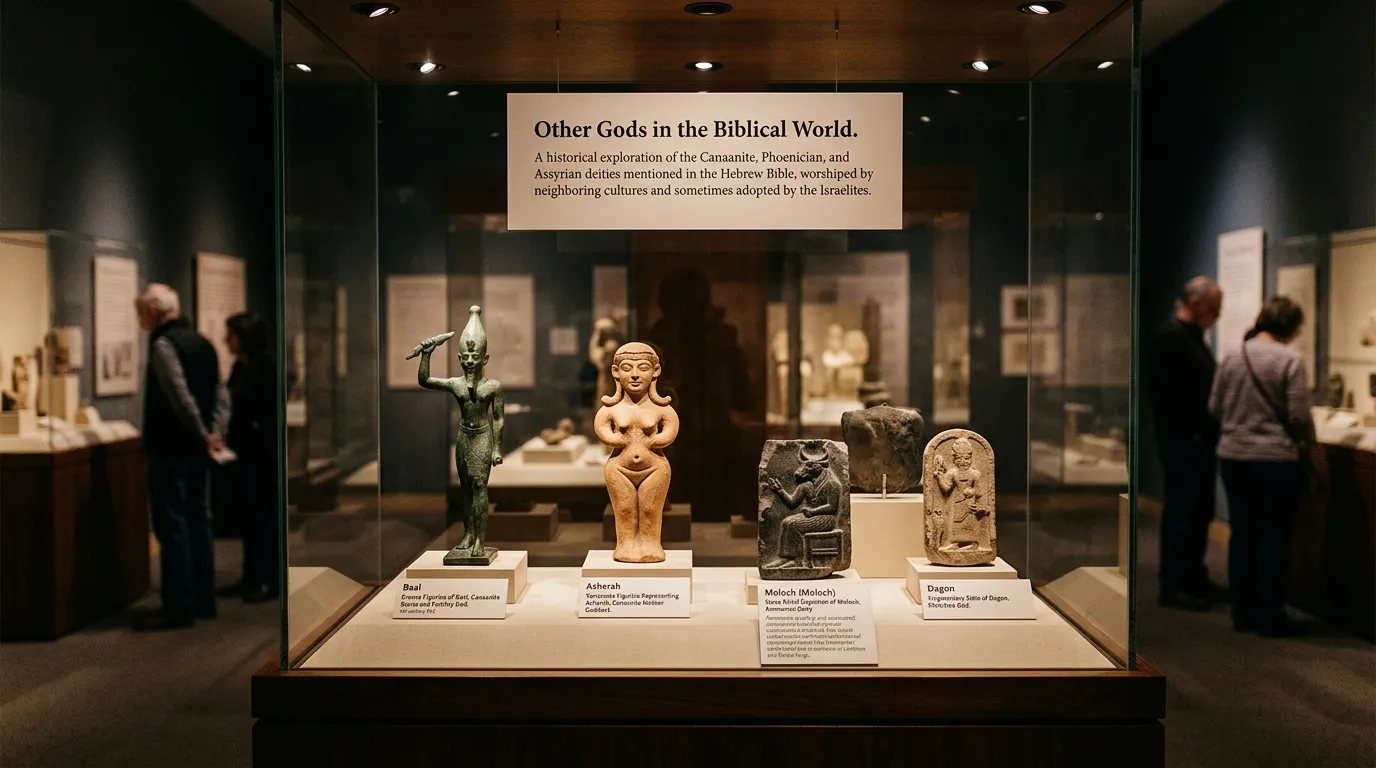
The topic of “Other Gods in the Bible” has become one of the most searched and debated biblical subjects online. Many readers are curious about whether the Bible truly acknowledges the existence of other gods or simply warns against idol worship.
Throughout both the Old and New Testaments, verses mention foreign deities, pagan nations, and spiritual beings worshiped by surrounding cultures. These references often create confusion and spark theological discussions among Christians, scholars, and history enthusiasts.
Understanding these passages helps readers explore the biblical perspective on monotheism, false gods, and spiritual authority. From ancient Canaanite idols to Egyptian deities and Greek gods mentioned in Scripture, the Bible provides powerful insights into faith, obedience, and the worship of the one true God.
This fascinating subject continues to trend because it connects religion, history, prophecy, and spiritual interpretation in ways that capture the attention of modern audiences worldwide today.
What Does “Other Gods” Mean in the Bible?
In the Bible, “other gods” refers to any being, object, or force that people worship, trust, or prioritize above the God of Israel. These include ancient pagan deities such as Baal, Asherah, and Molech, but also symbolic “idols” like wealth, power, or self-centered desires.
Are “Other Gods” Real or Symbolic?
Biblical and Linguistic Context
In Hebrew, the phrase often used is “elohim acherim” (אֱלֹהִים אֲחֵרִים), meaning “other gods.” In Greek New Testament thought, false gods are often referred to as “theoi heteroi” (θεοὶ ἕτεροι).
The Bible does not present these “gods” as equal to the Creator. Instead, it describes them in two ways:
- Spiritual entities (in some ancient worldview interpretations)
- Human-made idols representing false devotion
Key Biblical Truth
“You shall have no other gods before me.” Exodus 20:3
This is not only a commandment is a foundation of identity and spiritual alignment.
Spiritual Meaning of Other Gods in Scripture
1. Idolatry as a Heart Condition
The Bible repeatedly shows that “other gods” are not just physical statues they represent what controls the human heart.
“For where your treasure is, there your heart will be also.” Matthew 6:21
Spiritual Insight
Idolatry begins when something becomes more important than truth, integrity, or spiritual alignment.
Modern examples include:
- Obsession with success
- Dependence on relationships for self-worth
- Addiction to approval or validation
2. Other Gods as Distractions from Purpose
Biblically, false gods often pulled people away from destiny and clarity.
“Do not follow other gods… for they will lead you astray.” Deuteronomy 6:14
Meaning in Simple Terms
Anything that replaces your focus on truth and purpose becomes a “false direction.”
This includes:
- Toxic relationships
- Harmful habits
- Ego-driven ambition
3. The Conflict Between Truth and Identity
One of the deepest themes in Scripture is identity conflict choosing between truth and illusion.
“Choose for yourselves this day whom you will serve.” Joshua 24:15
Psychological Insight
This reflects an internal struggle:
- Truth vs. ego
- Purpose vs. distraction
- Spiritual alignment vs. emotional dependency
4. False Security and Emotional Dependence
The Bible often warns that “other gods” cannot truly save or stabilize life.
“They have mouths, but do not speak; eyes, but do not see.” Psalm 115:5
Meaning
False sources of security may look powerful but lack real support.
Modern equivalents include:
- Money without peace
- Fame without identity
- Relationships without emotional safety
5. Spiritual Blindness and Emotional Confusion
“Their idols are silver and gold, the work of human hands.” Psalm 115:4
Insight
When people rely on false anchors, clarity becomes distorted.
This can lead to:
- Anxiety
- Confusion about life direction
- Emotional emptiness
- Identity instability
Modern-Day Relevance of Other Gods
Why This Ancient Concept Still Matters Today
Even though ancient idols no longer dominate culture physically, modern “gods” are more subtle but equally powerful.
Examples of Modern “Other Gods”
- Social media validation
- Career obsession
- Romantic dependency
- Materialism
- Ego and self-image
Connection to Real-Life Struggles
Anxiety
When identity is built on unstable things, emotional pressure increases.
Identity Confusion
People often ask:
- “Who am I without success?”
- “Who am I without relationships?”
Relationship Issues
Over-dependence can create emotional imbalance and fear of abandonment.
Personal Growth
Breaking false dependencies often leads to maturity, clarity, and emotional strength.
Dreams, Repeated Signs, and Spiritual Sensitivity
Many people connect spiritual meaning to dreams or repeated thoughts about “idols,” “conflict,” or “spiritual warning.”
Spiritual Interpretation
In biblical tradition:
- Dreams were often symbolic messages
- Repetition indicated importance
- Inner conviction was seen as guidance
Psychological Interpretation
From a scientific view:
- Dreams reflect subconscious processing
- Repeated thoughts show emotional focus
- Symbols represent internal fears or desires
Balanced Understanding
Not every dream is a divine message but dreams can reveal:
- Emotional stress
- Internal conflict
- Identity struggles
- Unresolved fears
Scientific Insights: Psychology of “Other Gods”
1. Subconscious Attachment
The brain naturally attaches meaning to what feels emotionally important.
2. Identity Formation
Human identity is shaped by:
- What we value
- Who we admire
- What we depend on
3. Emotional Symbolism
“Gods” in psychological terms often represent:
- Control
- Security
- Validation
- Self-worth
Key Insight
When something replaces inner stability, it becomes psychologically “central,” almost like a controlling force.
Practical Life Lessons from the Biblical Concept of Other Gods
1. Practice Honest Self-Reflection
Ask yourself:
- What controls my emotions?
- What do I fear losing most?
- What defines my self-worth?
2. Build Emotional Independence
Healthy identity includes:
- Self-awareness
- Emotional balance
- Internal stability
3. Strengthen Gratitude Practices
Gratitude shifts focus from dependency to awareness of what is already stable and meaningful.
4. Develop Consistent Prayer or Meditation
This builds:
- Clarity
- Inner peace
- Emotional grounding
5. Reduce Over-Attachment to External Validation
Limit dependence on:
- Approval
- Social comparison
- External success markers
Balanced Perspective: Not Everything Is a “False God”
A healthy understanding is important.
Not every passion, goal, or relationship is negative.
The key question is:
- Does it support your growth?
- Or does it control your identity?
Healthy values include:
- Love
- Purpose
- Discipline
- Ambition (when balanced)
The problem is not having desires, it is being ruled by them.
FAQs :
What are the “other gods” mentioned in the Bible?
They refer to false deities or anything that replaces God in importance, including idols, desires, and worldly attachments.
Are other gods real beings?
The Bible describes them within an ancient spiritual worldview, but also strongly emphasizes that they are not equal to the one true God.
What is modern idolatry?
Modern idolatry includes anything that takes priority over spiritual truth or dominates identity, such as money, ego, or relationships.
Why does the Bible warn against other gods?
Because they distort identity, weaken spiritual clarity, and lead people away from purpose and truth.
How do I know if something has become an “idol” in my life?
If something controls your emotions, decisions, or self-worth, it may be functioning as an internal idol.
Conclusion:
The biblical idea of other gods is not just an ancient warning, it is a mirror for modern life.
It asks a timeless question:
What truly defines you?
When identity is built on unstable foundations, life feels anxious and fragmented. But when identity is rooted in truth, clarity replaces confusion, and peace replaces emotional instability.
You are not meant to be controlled by fear, validation, or temporary desires. You are meant to live with clarity, purpose, and inner alignment.
The message of Scripture is simple yet powerful:
Let go of what controls you and return to what gives you life, stability, and meaning.

James Harper is a passionate writer and digital creator known for sharing insightful, engaging, and easy-to-understand content. With a strong interest in technology, creativity, and modern trends, he aims to inspire readers through informative articles and fresh ideas. His writing style combines simplicity with professionalism, making content enjoyable for every audience.