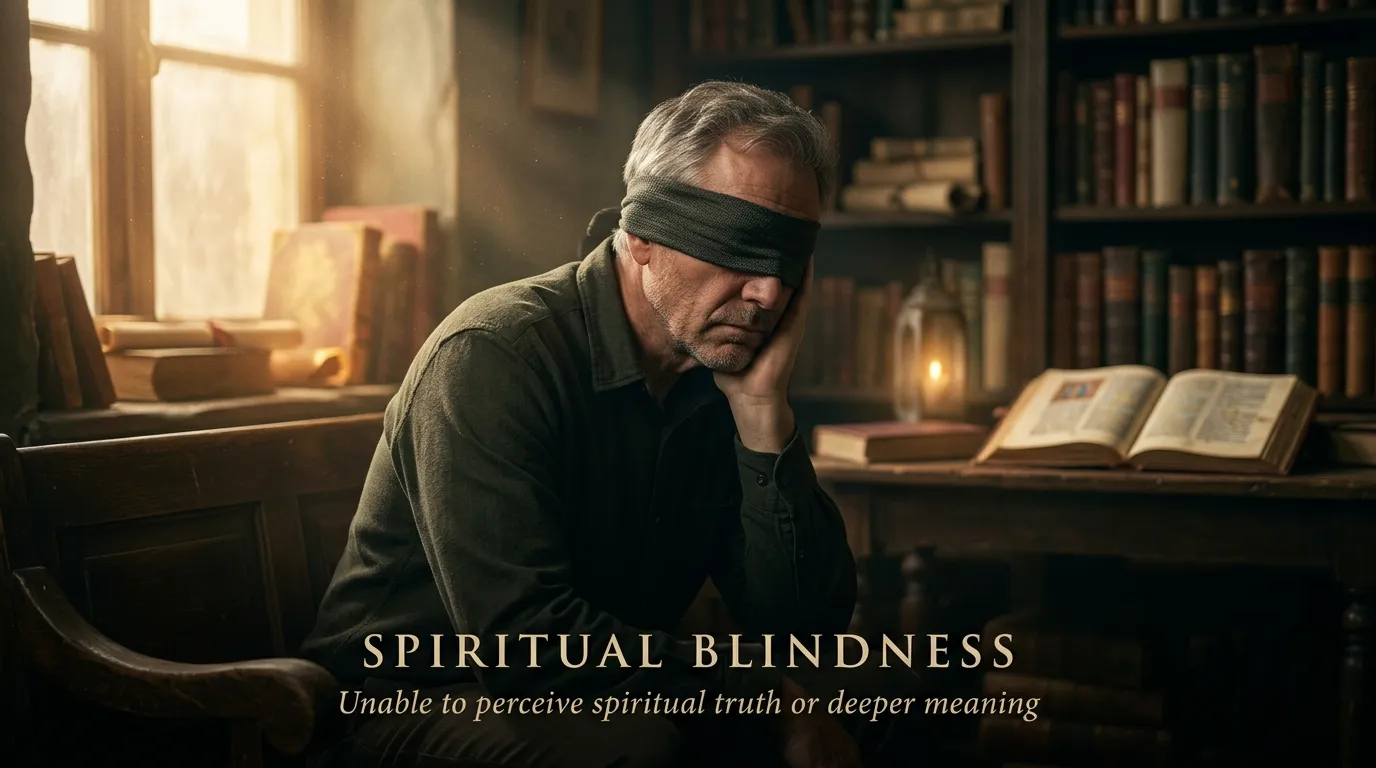
Spiritual blindness meaning refers to a condition where a person is unable to recognize spiritual truth, divine guidance, or deeper inner awareness. It is often described in religious teachings as a disconnect between the heart, mind and soul where someone may see the physical world clearly but struggle to understand spiritual realities.
Spiritual blindness can happen through pride, fear, attachment, distraction, or a lack of reflection. Many faith traditions, including Christianity, discuss it as being closed off to God’s wisdom purpose, or presence. Understanding spiritual blindness meaning helps people reflect on their beliefs, actions, and relationship with faith.
It invites self-examination and encourages openness to wisdom, humility, and personal transformation. Whether viewed through scripture or personal growth, spiritual blindness is often seen not as permanent darkness but as something that can be healed through awareness, prayer, repentance, and a willingness to seek truth with sincerity and an open heart.
What Is Spiritual Blindness Meaning in the Bible and Spiritual Context?
The term spiritual blindness does not refer to a physical condition. Instead, it describes a state where a person is unable to perceive spiritual truth clearly, even when it is present in their life.
Spiritual blindness refers to a condition where a person cannot recognize or understand spiritual truth, moral direction, or divine guidance due to emotional, psychological, or spiritual barriers.
Does the Term Appear in the Bible?
The exact phrase “spiritual blindness” does not appear as a single Greek or Hebrew word but the concept is deeply rooted in Scripture.
- Greek concept: “typhlos” (blind) used metaphorically for spiritual ignorance
- Hebrew concept: blindness as “lack of understanding or insight”
Biblical Connection
Jesus often used blindness as a metaphor:
- “They are blind guides…” (Matthew 15:14)
- “Having eyes, do you not see?” (Mark 8:18)
These verses show that spiritual blindness is not about eyesight it is about inner perception and truth recognition.
Causes of Spiritual Blindness (Biblical + Psychological View)
Spiritual blindness does not happen suddenly. It develops gradually through emotional, mental, and spiritual layers.
1. Emotional Pain and Unhealed Trauma
When pain is not processed, it can block clarity.
- Broken trust
- Childhood wounds
- Emotional rejection
This creates internal resistance to truth.
2. Pride and Self-Centered Thinking
The Bible repeatedly warns about pride:
- “Pride goes before destruction” (Proverbs 16:18)
Pride limits openness to correction and guidance.
3. Disconnection from Reflection and Prayer
Without reflection, the mind becomes noisy and unclear.
4. Negative Influences and Mental Overload
Constant comparison, stress, and digital overload can cloud inner awareness.
5. Spiritual Desensitization
Repeated ignoring of conscience or moral intuition weakens sensitivity over time.
Spiritual Meaning of Blindness: Deeper Biblical Insights
Spiritual blindness is not only about “not seeing God.” It reflects deeper internal struggles.
1. Blindness of the Heart
The Bible speaks of hardened hearts:
- “Their hearts are hardened” (Ephesians 4:18)
Meaning:
When emotions become numb, truth feels distant.
2. Blindness of Understanding
Some people hear the truth but cannot interpret it.
- “You will be ever hearing but never understanding” (Isaiah 6:9)
Meaning:
Knowledge without reflection leads to confusion, not clarity.
3. Blindness of Purpose
Many people feel lost in direction.
- “Your word is a lamp to my feet” (Psalm 119:105)
Meaning:
Without inner guidance, life feels dark and uncertain.
4. Blindness Through Distraction
Modern life creates constant noise:
- social media
- pressure
- comparison
Meaning:
Distraction reduces spiritual awareness and emotional clarity.
5. Blindness Before Awakening
Sometimes blindness is temporary before transformation.
- Paul’s experience before spiritual awakening (Acts 9)
Meaning:
Confusion can precede deep personal change.
Modern-Day Relevance: How Spiritual Blindness Affects Real Life
Today, spiritual blindness is not just a religious idea, it is a daily reality for many people.
Anxiety and Overthinking
When clarity is missing:
- the mind overanalyzes everything
- fear increases
- peace becomes difficult
Identity Confusion
People begin asking:
- Who am I really?
- Why do I feel empty?
- What is my purpose?
Relationship Struggles
Spiritual blindness can cause:
- misunderstanding others
- emotional distance
- repeated toxic patterns
Personal Growth Blockage
Without inner clarity:
- decisions feel confusing
- motivation drops
- direction feels unclear
Spiritual blindness often feels like being “lost inside yourself.”
Dreams, Repeated Signs, and Synchronicity
Many people experiencing spiritual blindness report:
- confusing dreams
- repeated symbols or numbers
- emotional spiritual experiences
Spiritual Interpretation
In biblical tradition, dreams can be:
- warnings
- guidance
- reflection of inner state
Psychological Interpretation
From psychology:
- dreams reflect subconscious thoughts
- repeated patterns show emotional focus
- the brain processes unresolved conflict during sleep
Balanced Understanding
Not every sign is divine communication, but many can reflect:
- inner healing needs
- emotional processing
- subconscious awareness
Scientific Insights: Psychology Behind Spiritual Blindness
Modern psychology helps explain this condition in practical terms.
Subconscious Mind Influence
Most decisions are shaped by:
- stored memories
- emotional conditioning
- belief systems
Identity Formation
Identity is built through:
- childhood experiences
- social environment
- repeated thoughts
When identity is unstable, clarity becomes weaker.
Emotional Symbolism
The brain uses symbols to process emotions:
- darkness = confusion
- light = clarity
- blindness = lack of understanding
Spiritual language often reflects psychological reality.
How to Overcome Spiritual Blindness (Practical Steps)
Spiritual blindness is not permanent. It can be healed through awareness and intentional practice.
1. Daily Reflection
Ask yourself:
- What am I avoiding?
- What truth am I ignoring?
- What is my heart trying to say?
2. Practice Gratitude
Gratitude shifts focus from confusion to clarity.
- write 3 things daily
- focus on what is stable, not missing
3. Honest Prayer or Meditation
Not perfect words just honesty.
- express confusion
- ask for clarity
- allow silence
4. Emotional Awareness
Recognize emotions instead of suppressing them:
- fear
- anger
- sadness
Awareness creates clarity.
5. Reduce Mental Noise
Limit:
- overuse of social media
- toxic comparisons
- unnecessary mental clutter
Silence often restores insight.
Balanced Perspective: Not Everything Is a Spiritual Sign
A healthy understanding is important.
Spiritual blindness can feel symbolic, but it is also influenced by:
- stress
- trauma
- emotional fatigue
- cognitive overload
Not every experience is a divine message but every experience can teach something meaningful about yourself.
True wisdom combines:
- spirituality
- psychology
- self-awareness
FAQs:
What is spiritual blindness meaning?
Spiritual blindness means the inability to recognize or understand spiritual truth due to emotional, mental, or spiritual barriers.
Is spiritual blindness mentioned in the Bible?
Not as a single term, but the concept is widely used through metaphors like “blind hearts” and “eyes but cannot see.”
What causes spiritual blindness?
It can be caused by emotional pain, pride, distraction, trauma, or lack of self-reflection.
Can spiritual blindness be healed?
Yes. Through reflection, emotional awareness, prayer, and mental clarity practices.
Is spiritual blindness only religious?
No. It can also be understood psychologically as lack of inner awareness or emotional clarity.
Conclusion:
Spiritual blindness meaning is not just about being “lost” it is about being in a temporary state where truth feels hidden, direction feels unclear, and identity feels uncertain.
But this state is not the end of your story.
In many spiritual and psychological traditions, blindness often comes before awakening. It is the moment where a person begins to question, reflect, and slowly return to clarity.
When awareness grows, confusion begins to fade. When reflection deepens, direction returns. And when the inner world becomes honest, outer life begins to change.
Even in moments of uncertainty, there is still purpose forming, still healing unfolding, and still light waiting to be seen again.

James Harper is a passionate writer and digital creator known for sharing insightful, engaging, and easy-to-understand content. With a strong interest in technology, creativity, and modern trends, he aims to inspire readers through informative articles and fresh ideas. His writing style combines simplicity with professionalism, making content enjoyable for every audience.