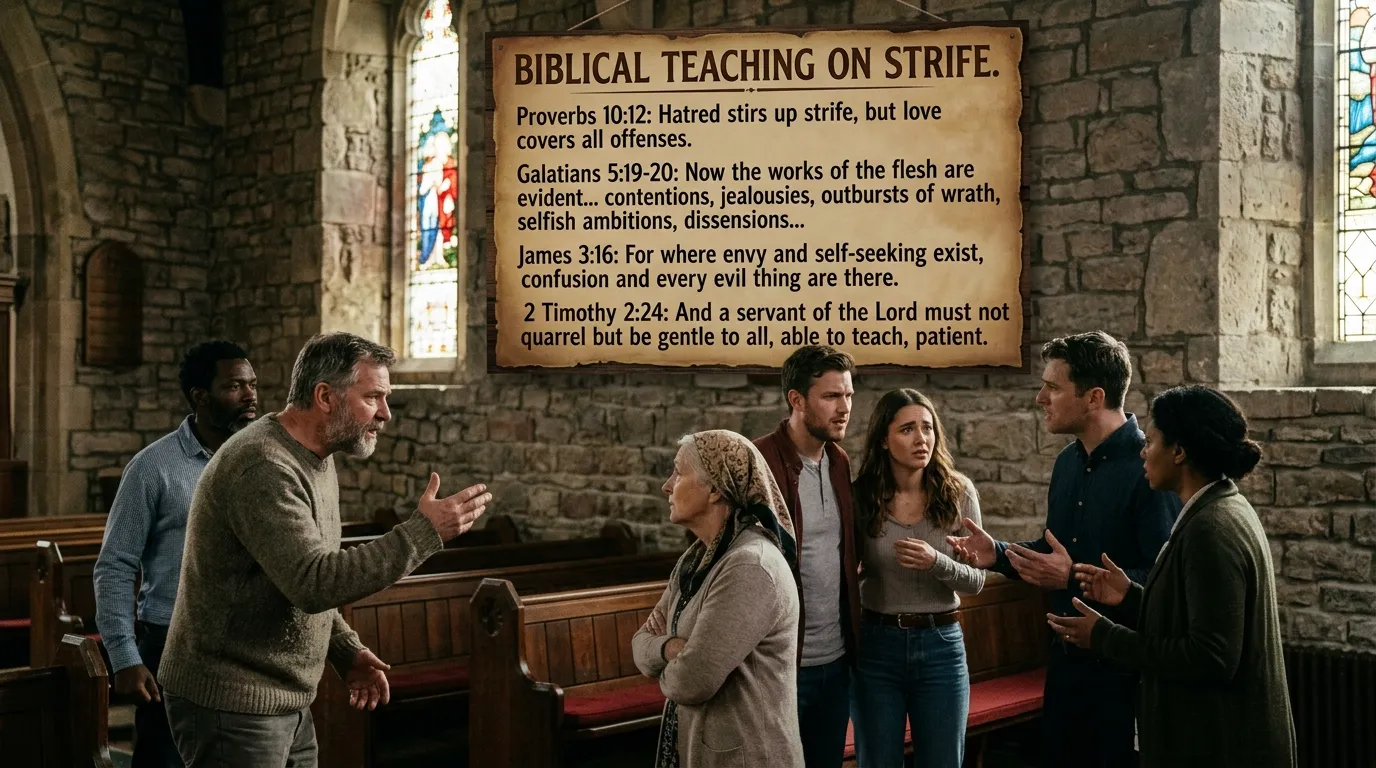
Strife is a common theme throughout the Bible, often describing conflict, anger, jealousy, and division among people. In scripture, strife is viewed as a destructive force that can damage relationships, communities, and spiritual growth.
The Bible repeatedly warns believers against engaging in quarrels, arguments, and hostility because these behaviors separate people from God’s peace and wisdom. From the Old Testament to the New Testament, biblical teachings encourage forgiveness, humility, patience, and unity instead of contention.
Understanding the meaning of strife in the Bible helps Christians recognize harmful attitudes and develop a more peaceful, godly lifestyle. Many verses explain how strife begins in the heart through pride, envy, and selfish ambition, while other passages reveal how love and faith can overcome conflict.
By studying biblical examples and teachings, believers can learn practical ways to avoid unnecessary disputes and build stronger relationships rooted in compassion, grace, and spiritual maturity.
What Does Strife Mean in the Bible?
In the Bible, strife refers to conflict, division, arguments, hostility, or ongoing tension between individuals or groups. It is often connected to emotions like anger, jealousy, pride, bitterness, and selfish ambition. Scripture teaches that strife damages peace, relationships, and spiritual growth while encouraging believers to pursue humility, wisdom, forgiveness, and unity instead.
Does the Word Strife Appear in the Bible?
Yes, the word strife appears many times throughout both the Old and New Testaments. It is commonly used to describe:
- Arguments
- Rivalries
- Jealousy
- Division
- Emotional conflict
- Spiritual unrest
The Bible treats strife as a serious issue because it can destroy relationships, communities, emotional health, and spiritual stability.
Hebrew and Greek Meaning of Strife
Understanding the original biblical languages gives deeper insight into the spiritual meaning of strife.
Hebrew Meaning of Strife
In the Old Testament, strife is often connected to the Hebrew word:
- “Madon” meaning contention, quarrel, or dispute
This word describes ongoing conflict that creates emotional tension and separation between people.
Another related Hebrew concept is:
- “Rib” meaning legal dispute, controversy, or argument
These terms often appear in passages warning against pride, anger, and unnecessary conflict.
Greek Meaning of Strife
In the New Testament, the Greek word frequently associated with strife is:
- “Eris” meaning discord, rivalry, or contention
The word “eris” is often connected to:
- Jealousy
- Selfish ambition
- Pride
- Emotional division
The Apostle Paul repeatedly warned early Christians that strife weakens spiritual maturity and damages unity.
Spiritual Meaning of Strife in the Bible

The biblical meaning of strife goes beyond surface-level arguments. Scripture presents strife as both an external conflict and an internal spiritual condition.
Strife as a Reflection of Inner Turmoil
Key Verse
“For where jealousy and selfish ambition exist, there will be disorder and every vile practice.” James 3:16
The Bible often connects external conflict with unresolved internal emotions.
Spiritual Insight
Many arguments begin long before words are spoken. Strife often grows from:
- Insecurity
- Fear
- Pride
- Emotional wounds
- Unhealed pain
Spiritually, this teaches that inner peace matters just as much as outward behavior.
Modern Example
Someone constantly comparing themselves to others on social media may develop jealousy and frustration that eventually affects friendships and emotional stability.
Strife as a Warning Against Pride
Key Verse
“Pride only breeds quarrels” Proverbs 13:10
One of the strongest biblical themes connected to strife is pride.
Spiritual Meaning
Pride can create:
- Defensiveness
- Emotional stubbornness
- Lack of empathy
- Constant conflict
The Bible teaches that humility reduces unnecessary division and creates healthier relationships.
Simple Explanation
People who always need to “win” arguments often damage emotional connection and long-term trust.
Strife and Broken Relationships
Key Verse
“A hot-tempered person stirs up conflict” Proverbs 15:18
The Bible repeatedly warns that uncontrolled anger fuels strife.
Spiritual Lesson
Words spoken during emotional intensity can leave lasting wounds.
Scripture encourages:
- Patience
- Gentle communication
- Forgiveness
- Emotional control
Modern-Day Relevance
Many relationships today suffer because of:
- Miscommunication
- Ego battles
- Emotional reactivity
- Unresolved resentment
The biblical wisdom surrounding strife remains deeply practical even in modern life.
Strife as a Barrier to Spiritual Peace
Key Verse
“Let us therefore make every effort to do what leads to peace” Romans 14:19
Strife often steals emotional and spiritual peace.
Spiritual Meaning
When people live in constant conflict, they may experience:
- Anxiety
- Emotional exhaustion
- Mental unrest
- Spiritual emptiness
The Bible encourages believers to actively pursue peace rather than feeding division.
Emotional Insight
Peace is not weakness. Sometimes emotional maturity means stepping away from unnecessary conflict.
Strife and Emotional Transformation
Key Verse
“Get rid of all bitterness, rage and anger” Ephesians 4:31
The Bible teaches that emotional healing requires intentional transformation.
Spiritual Growth Lesson
Overcoming strife often involves:
- Self-reflection
- Forgiveness
- Emotional awareness
- Spiritual discipline
This process helps people grow emotionally and spiritually stronger.
Modern-Day Meaning of Strife
The concept of strife is highly relevant today because modern life constantly creates emotional pressure.
People experience strife through:
- Toxic relationships
- Workplace competition
- Family conflict
- Online arguments
- Political division
- Identity confusion
- Social comparison
Many people outwardly appear successful while internally struggling with emotional conflict and inner unrest.
Strife, Anxiety, and Mental Exhaustion
Constant conflict deeply affects emotional health.
Signs of Emotional Strife
- Overthinking
- Irritability
- Emotional burnout
- Difficulty trusting others
- Fear of confrontation
- Relationship anxiety
The Bible’s teachings about peace, humility, and forgiveness can support emotional healing and healthier communication.
Identity Confusion and Internal Conflict
Modern culture often pressures people to constantly prove their value through:
- Achievement
- Appearance
- Status
- Social approval
This pressure creates internal strife because people begin tying self-worth to external validation.
Biblical Perspective
The Bible teaches that identity should not depend entirely on:
- Popularity
- Success
- Comparison
- Human approval
This spiritual perspective can help reduce emotional instability and insecurity.
Dreams About Strife and Conflict
Many people search for the spiritual meaning of dreams involving arguments, conflict, or emotional tension.
Common Strife Dreams
- Fighting with loved ones
- Being chased or attacked
- Feeling emotionally trapped
- Witnessing conflict
- Loud arguments
Spiritual Interpretation of Strife Dreams
Spiritually, dreams about strife may symbolize:
- Emotional unrest
- Unresolved pain
- Spiritual imbalance
- Need for forgiveness
- Inner conflict
Some believers view these dreams as reminders to seek peace, healing, wisdom, and emotional restoration.
Psychological Interpretation of Strife Dreams
Psychology explains conflict dreams as reflections of subconscious stress and emotional processing.
Dreams often mirror:
- Anxiety
- Suppressed frustration
- Fear of rejection
- Emotional insecurity
- Relationship tension
The subconscious mind processes unresolved emotions symbolically during sleep.
Repeated Signs and Synchronicity
Sometimes people repeatedly encounter themes connected to peace, conflict, forgiveness, or emotional healing.
Examples include:
- Repeated Bible verses about peace
- Hearing sermons about forgiveness
- Constantly noticing words related to conflict
- Feeling emotionally drawn to specific passages
Balanced Spiritual Perspective
Not every repeated experience is automatically a divine sign.
Sometimes repeated themes appear because the brain naturally focuses on emotionally important topics.
However, spiritual reflection can still inspire:
- Self-awareness
- Emotional healing
- Positive change
- Greater wisdom
Healthy spirituality combines:
- Discernment
- Emotional intelligence
- Humility
- Reflection
Scientific Insights About Strife and Emotional Conflict
Modern psychology confirms that unresolved conflict can deeply affect emotional and physical health.
Chronic emotional tension may contribute to:
- Stress
- Anxiety
- Sleep problems
- Emotional exhaustion
- Difficulty concentrating
Research also suggests that practices connected to spiritual reflection may improve:
- Emotional regulation
- Self-awareness
- Stress management
- Relationship health
Practical Life Lessons From the Biblical Meaning of Strife
The Bible does not only identify the problem of strife it also offers practical wisdom for overcoming it.
Practice Emotional Awareness
Pay attention to emotional triggers before conflict escalates.
Ask yourself:
- Why am I reacting this way?
- Is pride influencing my response?
- Am I listening or only defending myself?
Develop Daily Reflection Habits
Quiet reflection helps identify hidden emotional tension.
Helpful practices include:
- Journaling
- Prayer
- Meditation on Scripture
- Gratitude exercises
Learn the Power of Gentle Communication
The Bible repeatedly teaches that calm words reduce conflict.
Because words can either create peace or intensify conflict, understanding the biblical meaning of the tongue is important.
Practical Habits
- Pause before reacting
- Avoid speaking in anger
- Listen carefully
- Communicate respectfully
“Choosing kind words can help reduce tension, protect relationships, and reflect biblical wisdom.”
Choose Peace Over Ego
Not every disagreement requires a battle.
Sometimes emotional maturity means:
- Letting go
- Seeking understanding
- Prioritizing peace
Build Spiritual and Emotional Stability
Consistent spiritual habits may strengthen emotional resilience.
Helpful practices include:
- Prayer
- Scripture reading
- Gratitude
- Honest self-reflection
- Forgiveness
Common Bible Verses About Strife
Proverbs 17:14
“Starting a quarrel is like breaching a dam”
This verse warns how quickly conflict can grow once emotions spiral out of control.
Galatians 5:19-20
“hatred, discord, jealousy, fits of rage”
Paul lists strife among destructive emotional behaviors that damage spiritual growth.
Romans 12:18
“If it is possible live at peace with everyone.”
The Bible encourages believers to actively pursue peace whenever possible.
Frequently Asked Questions
What does strife mean spiritually?
Spiritually, strife represents emotional conflict, division, pride, jealousy, or inner unrest that disrupts peace and relationships.
Is strife considered a sin in the Bible?
The Bible warns against strife because it often grows from harmful attitudes like pride, anger, selfish ambition, and bitterness.
What causes strife according to the Bible?
Common biblical causes of strife include:
- Pride
- Jealousy
- Anger
- Selfish ambition
- Emotional insecurity
What is the opposite of strife in the Bible?
The opposite of strife is peace, humility, unity, patience, and love.
Why do I keep dreaming about conflict?
Conflict dreams often reflect unresolved emotions, stress, anxiety, or relationship tension. Spiritually, they may encourage self-reflection and healing.
Final Thoughts
Understanding the strife meaning in the Bible reveals far more than the idea of simple arguments or disagreements. Scripture presents strife as a deeper emotional and spiritual issue connected to pride, insecurity, anger, fear, and unresolved pain.
At the same time, the Bible offers hope. It repeatedly teaches that peace, healing, forgiveness, wisdom, and emotional transformation are possible.
In today’s world filled with pressure, division, anxiety, and emotional exhaustion, the biblical lessons about strife remain incredibly relevant. They remind people that inner peace is not found through constant competition or emotional battles, but through humility, wisdom, self-awareness, compassion, and spiritual growth.
Not every conflict can be avoided, and not every emotional struggle disappears immediately. But small daily choices toward forgiveness, reflection, emotional honesty, and peaceful communication can slowly transform both relationships and inner well-being.
Sometimes the greatest spiritual victory is not winning every argument it is learning how to protect your peace, strengthen your character, and grow through the struggle with wisdom and grace.

James Harper is a passionate writer and digital creator known for sharing insightful, engaging, and easy-to-understand content. With a strong interest in technology, creativity, and modern trends, he aims to inspire readers through informative articles and fresh ideas. His writing style combines simplicity with professionalism, making content enjoyable for every audience.