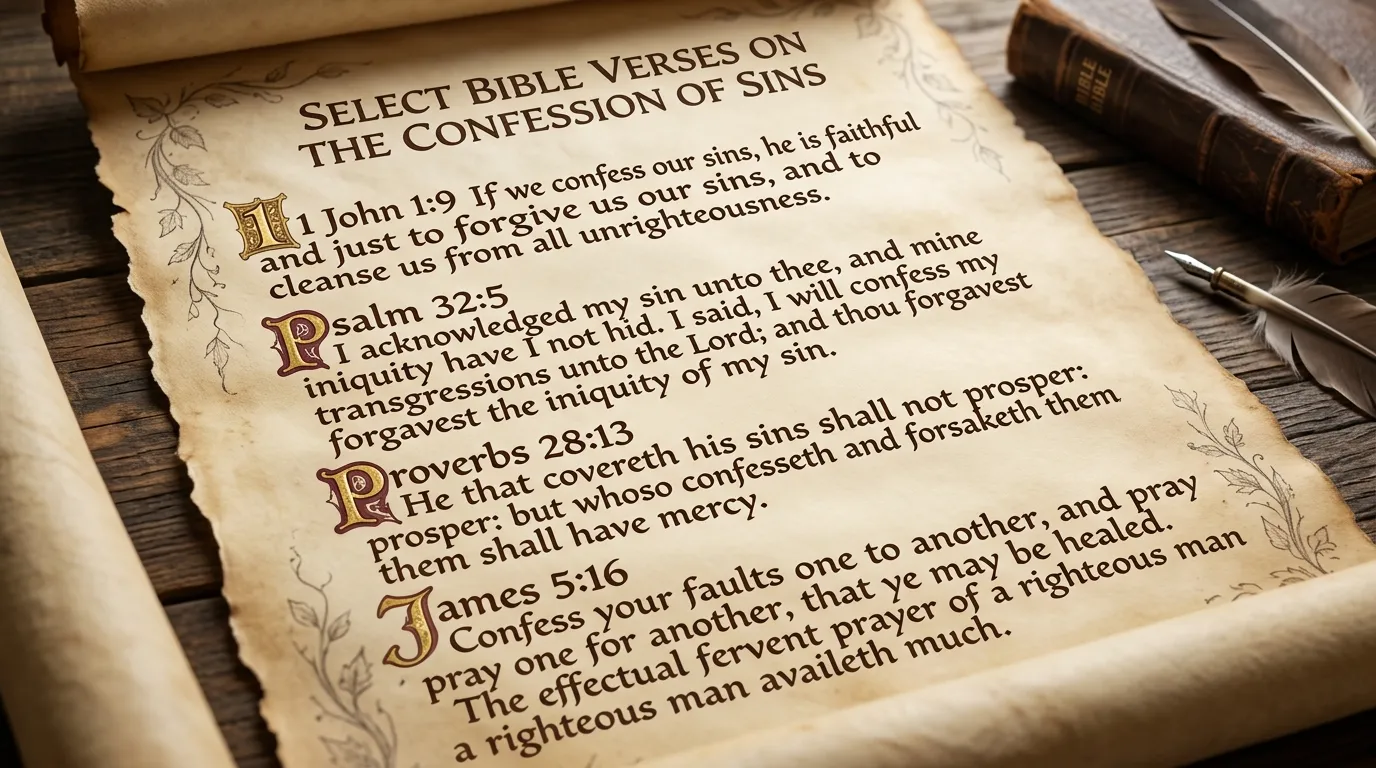
Confessing sins is an important part of spiritual growth, healing, and restoring a close relationship with God. The Bible teaches believers to openly confess their sins with sincerity, humility, and true repentance.
Through confession, we receive God’s mercy, forgiveness, and peace that renews the heart and soul. Many powerful Bible verses remind us that God is faithful to forgive those who genuinely seek Him and turn away from wrongdoing.
These scriptures encourage honesty before God and inspire believers to live a transformed life filled with grace and faith. If you are seeking comfort, guidance, or spiritual renewal, these Bible verses about confessing sins can strengthen your faith and help you understand God’s endless love and forgiveness.
Reading and reflecting on these verses daily can bring hope encouragement, and a deeper connection with God while guiding you toward a more faithful and peaceful Christian life every single day.
What Does ConfessiMean ng Sins in the Bible?
Confessing sins in the Bible means openly acknowledging wrongdoing before God with honesty, repentance, and a desire to change. It is not just admitting mistakes but turning the heart back toward God for forgiveness and spiritual renewal.
Is Confession of Sins Mentioned in the Bible?
Yes, the concept of confessing sins appears clearly throughout Scripture. It is deeply rooted in both the Old and New Testaments.
Hebrew and Greek Understanding
- Hebrew idea (Old Testament): Confession is linked with “yadah,” meaning to acknowledge or admit truth openly.
- Greek idea (New Testament): “Homologeo” means to agree with God about one’s sin.
This shows that confession is not about shame it is about truth alignment with God.
Core Bible Verses About Confessing Sins
1. 1 John 1:9 The Foundation of Forgiveness
“If we confess our sins, He is faithful and just and will forgive us our sins and purify us from all unrighteousness.”
Simple Meaning
God does not delay forgiveness when confession is sincere. This verse emphasizes:
- God’s faithfulness
- Immediate forgiveness
- Spiritual cleansing
Psychological Insight
Confession reduces internal emotional pressure, similar to releasing suppressed guilt or shame.
2. Proverbs 28:13 The Power of Honesty
“Whoever conceals their sins does not prosper, but the one who confesses and renounces them finds mercy.”
Meaning
Hiding mistakes creates emotional and spiritual stagnation, but honesty leads to mercy and growth.
Life Application
Avoiding truth may feel easier short-term, but confession brings long-term peace.
3. James 5:16 Healing Through Confession
“Therefore confess your sins to each other and pray for each other so that you may be healed.”
Meaning
Confession is not only vertical (with God) but also relational (with others).
Key Insight
Healing often happens in safe relationships built on trust and honesty.
4. Psalm 51:10 David’s Prayer of Restoration
“Create in me a clean heart, O God, and renew a right spirit within me.”
Meaning
This verse shows emotional transformation after guilt and failure.
Emotional Depth
David does not hide his mistakes; he invites God to rebuild his inner world.
5. Acts 3:19 A Call to Renewal
“Repent, then, and turn to God, so that your sins may be wiped out.”
Meaning
Confession is connected to change, not just words.
Spiritual Principle
True confession leads to transformation, not repetition of the same cycle.
Spiritual Meaning of Confessing Sins
1. Confession Restores Identity
Sin often distorts how people see themselves. Confession helps restore:
- Self-awareness
- Spiritual clarity
- Emotional honesty
You stop living in denial and start living in truth.
2. Confession Breaks Emotional Bondage
Hidden guilt creates:
- Anxiety
- Inner shame
- Emotional heaviness
Confession releases this burden and brings relief.
3. Confession Builds Humility
The Bible repeatedly connects humility with spiritual strength.
Key Insight
Humility is not weakness, it is emotional courage to face the truth.
4. Confession Opens the Door to Grace
Grace is not earned, it is received.
Confession allows the heart to accept forgiveness instead of resisting it.
5. Confession Restores Relationship With God
Sin creates emotional distance, but confession restores closeness.
It is not about fear, it is about reconnection.
Modern-Day Relevance of Confessing Sins
Today, many people struggle silently with:
- Anxiety from hidden guilt
- Identity confusion after mistakes
- Relationship breakdowns
- Emotional suppression
- Fear of judgment
Confession in a modern sense becomes:
- Emotional honesty
- Self-acceptance
- Accountability
- Healing communication
Example
A person hiding emotional struggles may feel constant stress. When they open up honestly whether in prayer, journaling, or trusted conversation emotional pressure often reduces significantly.
Confession, Dreams, Signs, and Synchronicity
Some people experience dreams or repeated thoughts connected to guilt, forgiveness, or spiritual awareness.
Spiritual Interpretation
Biblically, dreams sometimes reflected:
- Conviction
- Warning
- Spiritual reflection
Psychological Interpretation
From a psychological view:
- Dreams process unresolved emotions
- The subconscious highlights hidden guilt or stress
- Repeated thoughts reflect emotional focus
Balanced Understanding
Not every dream is a divine message, but some may reflect internal emotional processing or spiritual sensitivity.
Scientific Insights: Psychology of Confession
1. Subconscious Relief
Confession reduces internal cognitive load and the brain no longer suppresses emotional conflict.
2. Identity Formation
Humans build identity through:
- Self-narratives
- Beliefs about past mistakes
- Emotional memory
Confession helps rewrite identity from “I am broken” to “I am growing.”
3. Emotional Symbolism
Guilt often appears as:
- Stress
- Anxiety
- Overthinking
- Emotional heaviness
Verbal or spiritual confession helps release this emotional buildup.
Practical Life Lessons From Confessing Sins
1. Daily Reflection Habit
Spend a few minutes asking:
- What actions felt wrong today?
- Where did I lose emotional balance?
- What do I need to correct?
2. Honest Prayer Practice
Speak openly without hiding emotions:
- Fear
- guilt
- regret
- confusion
3. Emotional Awareness
Recognize early signs of guilt or stress instead of suppressing them.
4. Practice Forgiveness (Self and Others)
Confession is incomplete without learning to forgive:
- Yourself
- Others who caused pain
5. Choose Accountability
Talk to trusted people when needed. Healing often grows in safe relationships.
Balanced Spiritual Perspective
Not every feeling of guilt is meant to be carried forever, and not every emotional thought is a divine warning. Sometimes:
- Stress creates overthinking
- Past memories resurface emotionally
- Anxiety exaggerates guilt
However, biblical confession teaches a healthy balance:
- Face truth honestly
- Seek forgiveness sincerely
- Move forward with wisdom
- Avoid repeating destructive patterns
True confession leads to peace, not permanent shame.
FAQs
What does the Bible say about confessing sins?
The Bible teaches that confessing sins leads to forgiveness, cleansing, and spiritual restoration, especially in verses like 1 John 1:9.
Why is confession important in Christianity?
Confession is important because it restores relationship with God, brings emotional healing, and leads to personal transformation.
Do I have to confess sins to others?
The Bible encourages confessing to trusted people for healing (James 5:16), but personal confession to God is also essential.
Does confession remove guilt?
Yes, when sincere, confession helps release emotional guilt and brings peace through forgiveness and acceptance.
Is feeling guilty always spiritual conviction?
Not always. Guilt can come from conscience, psychology, or past experiences. Discernment is important.
Conclusion:
The message behind Bible verses about confessing sins is not about condemnation, it is about restoration.
Confession is the moment a broken inner world begins to heal. It is where honesty meets grace, and where shame begins to lose its power. The Bible does not define people by their failures; it defines them by the possibility of renewal.
No matter how heavy the past feels, confession opens the door to forgiveness, emotional healing, and a restored identity. It reminds every heart that mistakes are not the end of the story, they are often the beginning of transformation.
In a world full of pressure, hidden emotions, and silent struggles, confession becomes a pathway back to peace, truth, and hope.

James Harper is a passionate writer and digital creator known for sharing insightful, engaging, and easy-to-understand content. With a strong interest in technology, creativity, and modern trends, he aims to inspire readers through informative articles and fresh ideas. His writing style combines simplicity with professionalism, making content enjoyable for every audience.