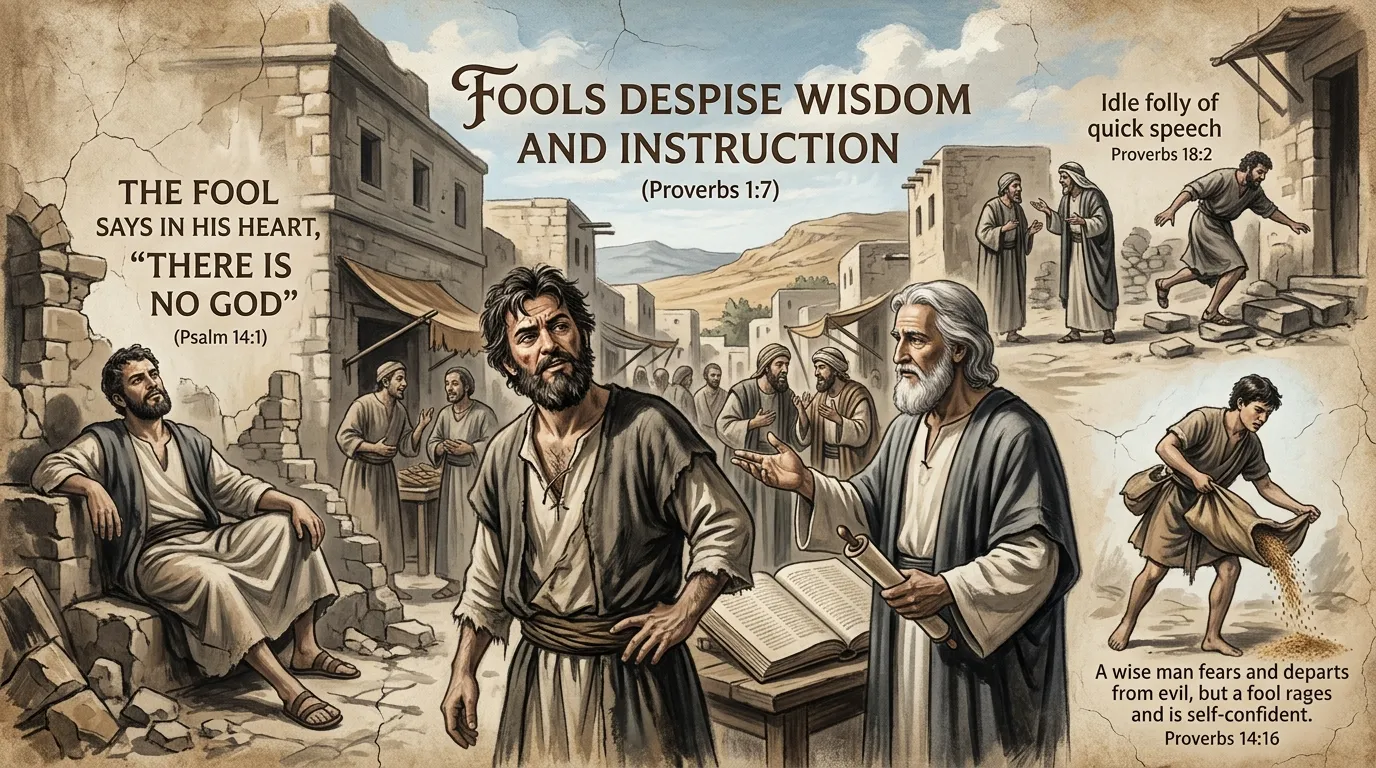
Have you ever made a decision you deeply regretted and later wondered was that the wisest choice? We have all been there. The Bible speaks honestly and directly about this very human struggle through its powerful teachings on fools in the Bible. From the book of Proverbs to the words of Jesus himself, Scripture does not shy away from describing what foolishness looks like, where it leads and how every believer can choose a wiser and more God-honoring path.
Proverbs 14:1 declares that a wise woman builds her house while a foolish one tears it down with her own hands a vivid picture of how our daily choices shape our lives and our legacy. Understanding fools in the Bible is not about judging others it is about holding up God’s mirror to our own hearts and asking if we are walking in wisdom or foolishness.
The lessons found in these Biblical accounts are as relevant today as they were thousands of years ago. If you have ever struggled with pride, impulsive decisions or ignoring God’s guidance, this study on fools in the Bible was written specifically and lovingly for you.
What Is the Biblical Meaning of Fools in the Bible?
Featured Snippet Answer
In the Bible, a fool is not simply someone who lacks intelligence. A biblical fool is someone who rejects wisdom, ignores God’s guidance, acts recklessly, or lives without regard for spiritual truth. Scripture contrasts foolishness with wisdom, showing that wise people seek understanding, humility, and obedience to God.
Does the Word “Fool” Appear in the Bible?
Yes. The word “fool” appears throughout both the Old and New Testaments.
In fact, the Bible frequently discusses fools, foolish behavior, and the consequences of rejecting wisdom.
Hebrew Meaning of Fool
Several Hebrew words are translated as “fool” in the Old Testament.
Nabal (נָבָל)
One of the most common Hebrew words is Nabal.
This word describes someone who is morally insensitive, arrogant, or spiritually rebellious.
A famous example appears in 1 Samuel 25, where a man named Nabal acts foolishly toward David. Interestingly, his name itself means “fool.”
Kesil (כְּסִיל)
Another Hebrew word is Kesil, often referring to someone who is stubborn, self-confident, and resistant to correction.
The Book of Proverbs frequently uses this term.
Greek Meaning of Fool
In the New Testament, one important Greek word is Moros (μωρός).
This word can mean:
- Foolish
- Thoughtless
- Spiritually careless
- Lacking good judgment
It is the root of the English word “moron,” though its biblical meaning is broader and more focused on spiritual understanding.
Why Does the Bible Talk So Much About Fools?
The Bible’s goal is not to shame people.
Instead, Scripture uses the contrast between wisdom and foolishness to help readers understand how choices shape life.
Throughout Proverbs, Ecclesiastes, and the teachings of Jesus, wisdom is presented as a path that leads to peace, growth, and purpose.
Foolishness, on the other hand, often leads to unnecessary pain, conflict, and regret.
Spiritual Meanings of Fools in the Bible
Foolishness Represents Ignoring God’s Wisdom
One of the deepest biblical meanings of a fool is someone who consistently ignores God’s wisdom.
Psalm 14:1 famously states:
“The fool says in his heart, ‘There is no God.'”
This verse does not simply refer to intellectual disbelief. It describes a person who chooses to live as though God has no authority over their life.
The focus is on attitude rather than intelligence.
Modern Example
A person may know what is right but repeatedly choose harmful behaviors because they believe they know better than anyone else.
The Bible describes this pattern as foolishness because it rejects wisdom that could prevent suffering.
Foolishness Often Comes From Pride
Another major theme in Scripture is the connection between pride and foolishness.
Proverbs 12:15 says:
“The way of fools seems right to them, but the wise listen to advice.”
A fool often believes they already have all the answers.
Wise people, however, remain teachable.
Life Lesson
Personal growth begins when we become willing to learn from others, admit mistakes, and accept corrections.
Humility is not weakness. It is one of the strongest foundations of wisdom.
Fools Struggle to Control Their Emotions
The Bible repeatedly links foolishness with emotional impulsiveness.
Proverbs 29:11 teaches:
“Fools give full vent to their rage, but the wise bring calm in the end.”
In simple terms, foolish people allow emotions to control their decisions.
Wise people acknowledge emotions but do not let emotions dictate their actions.
Modern Example
Social media arguments provide a clear illustration.
Many people post angry comments without reflection, only to regret their words later.
Scripture encourages emotional self-control rather than emotional reaction.
Foolishness Can Lead to Broken Relationships
The Bible teaches that foolish behavior often damages relationships.
Proverbs 18:2 says:
“Fools find no pleasure in understanding but delight in airing their own opinions.”
Healthy relationships require:
- Listening
- Empathy
- Patience
- Understanding
When people prioritize being right over understanding others, conflict usually follows.
Spiritual Insight
The biblical fool often speaks more than they listen.
Wisdom, by contrast, seeks understanding before judgment.
Fools Ignore Consequences
One recurring lesson throughout Scripture is that fools often focus on immediate gratification rather than long-term outcomes.
Ecclesiastes 10:2 says:
“The heart of the wise inclines to the right, but the heart of the fool to the left.”
The verse uses symbolic language to describe wise and unwise direction.
Wise people think ahead.
Foolish people frequently act without considering consequences.
Modern Example
Impulsive spending, unhealthy habits, and destructive relationships often begin with short-term desires while ignoring long-term effects.
Foolishness Is an Invitation to Seek Wisdom
Perhaps the most encouraging spiritual meaning is that biblical foolishness is not a permanent identity.
The Bible consistently teaches that people can grow in wisdom.
James 1:5 says:
“If any of you lacks wisdom, you should ask God.”
This means foolishness is not a life sentence.
God offers guidance, growth, and transformation to those willing to learn.
Examples of Fools in the Bible
Nabal
Nabal ignored wisdom, acted arrogantly, and nearly brought disaster upon his household.
His story teaches the dangers of pride and stubbornness.
The Rich Fool
In Luke 12:16-21, Jesus tells the parable of a wealthy man who stored up earthly treasures but neglected his spiritual life.
God called him a fool because he focused on temporary wealth while ignoring eternal priorities.
The Foolish Virgins
In Matthew 25, Jesus describes five foolish virgins who failed to prepare for the bridegroom’s arrival.
Their lack of preparation symbolizes spiritual carelessness.
These examples reveal that foolishness often involves neglecting what truly matters.
Why the Biblical Meaning of Fools Matters Today
Many people assume biblical teachings about fools belong to ancient history.
In reality, they address modern struggles surprisingly well.
Anxiety and Poor Decision-Making
Stress often causes people to make rushed decisions.
The Bible encourages slowing down, seeking wisdom, and making thoughtful choices.
Identity Confusion
Many people define themselves through:
- Social status
- Career success
- Popularity
- Financial achievement
Scripture teaches that true identity comes from a relationship with God rather than external achievements.
Relationship Challenges
Miscommunication, pride, and emotional reactions remain common causes of relationship problems today.
The wisdom literature of the Bible offers practical guidance that remains relevant centuries later.
Personal Growth
The difference between wisdom and foolishness often determines whether people continue repeating mistakes or learn from them.
Dreams About Fools, Foolish Decisions, and Repeated Signs
Some people dream about making mistakes, being embarrassed, or acting foolishly.
These dreams can feel surprisingly vivid.
Spiritual Interpretation
From a biblical perspective, such dreams may encourage:
- Self-examination
- Humility
- Reflection
- Greater wisdom
They may serve as reminders to seek God’s guidance before making important decisions.
Psychological Interpretation
Psychologists often view these dreams as reflections of:
- Fear of failure
- Regret
- Anxiety
- Self-doubt
- Unresolved decisions
Dreams frequently process emotions and experiences rather than predict future events.
Scientific Insights Into Foolishness and Human Behavior
Modern psychology offers fascinating insights into why people make unwise decisions.
The Subconscious Mind
Many decisions are influenced by subconscious beliefs and emotional patterns.
People often repeat behaviors without fully understanding why.
Identity Formation
Research suggests people act according to the stories they tell themselves about who they are.
When individuals develop healthier identities, better decisions often follow.
Emotional Symbolism
Dreams involving foolish mistakes may symbolize:
- Fear of judgment
- Fear of failure
- Desire for growth
- Need for self-reflection
Understanding these symbols can increase emotional awareness.
Practical Life Lessons From the Biblical Meaning of Fools
Practice Daily Reflection
Spend a few minutes each day reviewing your choices and attitudes.
Ask yourself:
- What did I learn today?
- Where can I grow?
Develop Gratitude
Gratitude shifts focus away from pride and entitlement.
A thankful heart is often more receptive to wisdom.
Strengthen Your Prayer Life
Prayer creates space for guidance and perspective.
Many biblical figures sought God’s wisdom before making important decisions.
Build Emotional Awareness
Learn to recognize:
- Anger
- Fear
- Impatience
- Pride
Awareness often prevents impulsive reactions.
Seek Wise Counsel
One of Proverbs’ most consistent lessons is the value of learning from wise people.
No one succeeds alone.
A Balanced Perspective on Biblical Foolishness
It is important to understand that the Bible’s definition of a fool differs from modern insults.
Scripture does not teach that people are worthless or incapable of growth.
Instead, it focuses on behaviors and attitudes that can be changed.
Likewise, not every mistake makes someone a fool.
Everyone makes poor decisions at times.
The biblical message emphasizes learning, growth, repentance, and wisdom rather than condemnation.
FAQs:
Who is considered a fool in the Bible?
A fool in the Bible is someone who rejects wisdom, ignores God’s guidance, and repeatedly chooses harmful or reckless behavior.
What does Psalm 14:1 mean?
The verse describes a person who lives as though God does not matter, rather than simply discussing intellectual belief or disbelief.
What is the difference between a wise person and a fool?
Wise people seek understanding, correction, and guidance. Fools resist wisdom and rely solely on their own judgment.
Can a fool become wise according to the Bible?
Yes. Scripture repeatedly teaches that wisdom is available to anyone willing to seek God and learn.
Why does the Book of Proverbs talk so much about fools?
Proverbs contrast wisdom and foolishness to help readers make better choices and avoid unnecessary suffering.
Final Thoughts:
The Biblical portraits of fools in the Bible are not meant to shame us they are meant to save us from repeating the same painful and destructive mistakes. From the fool who builds his house on sand to the one who says in his heart there is no God, Scripture uses these powerful examples to redirect our steps toward wisdom, humility and deeper faith in God.
Proverbs 9:10 reminds every believer that the fear of the Lord is the beginning of wisdom and that single truth is the greatest antidote to foolishness that the world has ever known. Every story of a fool in Scripture is ultimately an invitation an invitation to choose differently, to seek God’s counsel before acting, to humble yourself before his Word and to walk in the light of His truth every single day.
The good news is that no one is beyond God’s grace and redemption. Wisdom is available to every believer who asks for it in faith. So here is your call to action today open your Bible, study the lessons of fools in the Bible, and make the daily decision to walk in God’s wisdom rather than the world’s foolishness.

Adrian Cole is a creative author and digital writer known for producing engaging, informative, and inspiring content across multiple topics. His work focuses on creativity, technology, and modern online trends.