Have you ever found yourself in a quiet moment asking do I really know who God is beyond the Sunday morning sermons and familiar Bible verses? So many Christians in America carry a surface-level understanding of God without ever truly diving into the breathtaking depth of His character, his nature and his personal love for them.
Understanding who God is is not just a theological exercise it is the most transformative journey a human soul can ever take. In Exodus 3:14, God revealed himself to Moses with three powerful words “I AM WHO I AM.” That declaration was not just a name it was an eternal statement of his self-existence his sufficiency and his absolute authority over every situation in your life.
When you begin to truly grasp who God is his holiness, his mercy, his faithfulness and His unfailing love everything changes. Fear loses its grip. Faith grows stronger. Your perspective shifts from worry to worship. This guide is your invitation to move beyond religion and into a real, personal, and life-changing encounter with the God of Scripture who knows your name and loves you beyond all measure.
What Is the Biblical Meaning of Who God Is?
Featured Snippet Answer
The biblical meaning of who God is refers to God’s revealed nature, character, and relationship with humanity. According to the Bible, God is the eternal Creator, loving Father, righteous Judge, faithful Provider, and source of truth. Understanding who God is helps believers discover their purpose, identity, and spiritual direction.
Does the Phrase “Who God Is” Appear in the Bible?
The exact phrase “who God is” does not appear as a specific biblical term. However, the entire Bible is essentially a revelation of God’s identity, character, and nature.
From Genesis to Revelation, Scripture consistently answers one central question: Who is God?
Hebrew Names That Reveal God’s Nature
In the Old Testament, God revealed Himself through several names that describe different aspects of His character.
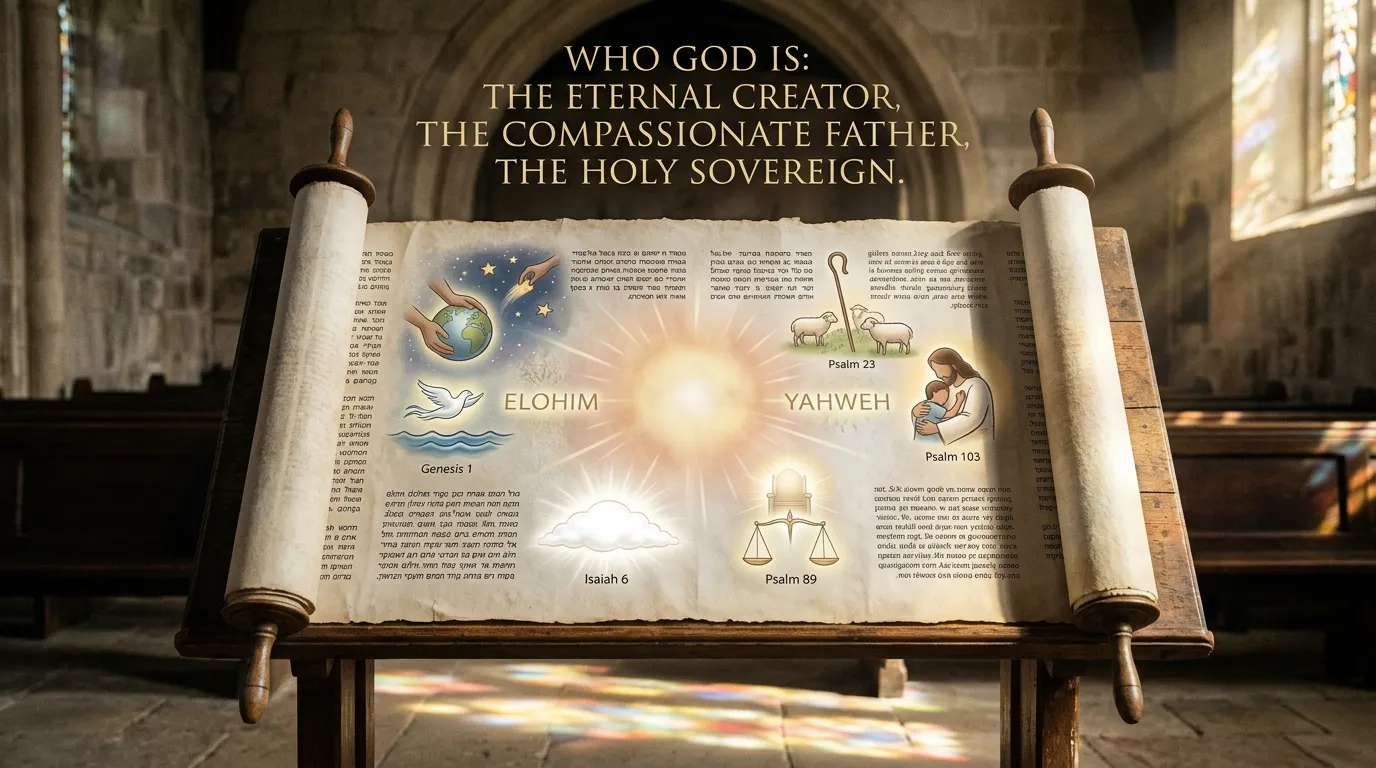
Yahweh (יהוה)
Yahweh is God’s personal covenant name and is often translated as “LORD.”
In Exodus 3:14, God tells Moses:
“I AM WHO I AM.”
This name reveals God’s eternal existence. He depends on nothing and no one for His existence.
Elohim
Elohim emphasizes God’s power as Creator.
Genesis 1:1 begins:
“In the beginning God created the heavens and the earth.”
This name highlights God’s authority and creative power over all things.
El Shaddai
El Shaddai means “God Almighty.”
It reflects God’s strength, protection, and ability to provide for His people.
Greek Names and Titles
In the New Testament, God’s character is further revealed through Jesus Christ.
One important Greek word is:
Theos
Theos simply means God and emphasizes divine authority and sovereignty.
The New Testament teaches that God’s fullest revelation is seen through Jesus.
John 14:9 records Jesus saying:
“Anyone who has seen me has seen the Father.”
Spiritual Meanings of Who God Is in the Bible
God Is the Source of Identity
One of the most powerful truths in Scripture is that God defines human identity.
Modern culture often tells people to find their worth through:
- Success
- Wealth
- Appearance
- Social status
- Public approval
The Bible offers a different perspective.
Genesis 1:27 teaches that humanity was created in God’s image.
This means every person possesses inherent value, dignity, and purpose.
Modern Example
A person struggling with self-worth may constantly seek validation from others. Understanding God’s view of human value provides a more stable foundation than opinions or achievements.
God Is Perfect Love
Many people view God primarily as a judge, but Scripture repeatedly emphasizes His love.
1 John 4:8 states:
“God is love.”
This does not mean God merely shows love. Love is part of His very nature.
God’s love is:
- Patient
- Faithful
- Sacrificial
- Unconditional
The ultimate example is found in John 3:16, where God’s love motivated Him to send Jesus for humanity’s salvation.
Understanding God’s love can transform how people view themselves and others.
God Is Holy and Righteous
Another essential aspect of God’s nature is holiness.
Isaiah 6:3 declares:
“Holy, holy, holy is the Lord Almighty.”
God’s holiness means He is completely pure, perfect, and separate from sin.
This attribute reminds believers that God is trustworthy because His standards never change.
While society’s values often shift, God’s character remains constant.
God Is Faithful Through Every Season
One of the most comforting biblical truths is God’s faithfulness.
Deuteronomy 7:9 describes God as faithful to His promises across generations.
Life often includes:
- Disappointments
- Delays
- Unexpected changes
- Personal struggles
Yet Scripture consistently teaches that God remains dependable even when circumstances change.
Many believers find strength in knowing that God’s character is not determined by temporary situations.
God Is a Guide and Shepherd
Psalm 23 presents God as a shepherd who leads, protects, and provides for His people.
A shepherd does more than direct sheep.
A shepherd:
- Protects
- Feeds
- Guides
- Comforts
Spiritually, this image reveals God’s desire to walk with people through every stage of life.
Even during uncertainty, God’s guidance remains available.
God Is the Source of Hope and Restoration
Throughout the Bible, God repeatedly restores what appears broken.
Whether through the stories of Joseph, David, Peter or the Prodigal Son, God demonstrates His ability to redeem difficult situations.
Romans 15:13 calls Him:
“The God of hope.”
This means hope is not merely something God gives it originates from Him.
Why Understanding Who God Is Matters Today
The question of who God is remains incredibly relevant in today’s world.
Anxiety and Fear
Many people live with constant stress and uncertainty.
Understanding God as a source of peace helps individuals navigate challenges with greater confidence.
Philippians 4:6-7 encourages believers to bring their concerns to God through prayer.
Identity Confusion
Modern culture often sends conflicting messages about identity.
Understanding who God is helps people understand who they are.
When identity is rooted in God’s truth rather than external validation, confidence becomes more stable.
Relationship Challenges
God’s character provides a model for healthy relationships.
His qualities of love, forgiveness, patience, and grace offer valuable lessons for families, friendships, and marriages.
Personal Growth and Purpose
Many people struggle to find meaning in their daily lives.
Understanding God’s purpose helps individuals make decisions aligned with deeper values rather than temporary desires.
Dreams About God, Repeated Signs and Synchronicity
Many people report dreams, recurring thoughts, or repeated experiences that cause them to reflect on God.
These experiences often raise questions about spiritual meaning.
Spiritual Interpretation
From a biblical perspective, dreams and recurring themes may encourage people to:
- Reflect on their spiritual lives
- Seek wisdom
- Reconnect with God
- Consider important life decisions
Throughout Scripture, God occasionally used dreams to communicate guidance and encouragement.
However, biblical wisdom also encourages discernment.
Psychological Interpretation
Psychology offers another perspective.
Dreams involving God often reflect:
- Personal beliefs
- Emotional needs
- Questions about purpose
- Inner desires for guidance
Rather than predicting future events, these dreams frequently reveal concerns already present in the subconscious mind.
Scientific Insights Into Why People Seek God
Modern psychology and neuroscience provide fascinating insights into spirituality.
The Subconscious Mind
The subconscious stores beliefs, memories, emotions, and experiences that influence daily behavior.
Questions about God often emerge during periods of major life transition because people naturally seek meaning and stability.
Identity Formation
Psychologists recognize that humans need a coherent sense of identity.
Spiritual beliefs often help individuals develop a stronger understanding of who they are and why they matter.
Emotional Symbolism
Dreams and recurring thoughts frequently use symbolic imagery.
For example:
- Light may symbolize hope.
- A path may symbolize direction.
- A father figure may symbolize protection or guidance.
These symbols can hold both psychological and spiritual significance.
Practical Life Lessons From Understanding Who God Is
Learning about God’s character becomes most meaningful when applied to everyday life.
Make Time for Reflection
Spend a few minutes each day considering:
- What did I learn today?
- What am I grateful for?
- Where did I see growth?
Reflection builds self-awareness and spiritual maturity.
Practice Gratitude
Gratitude shifts focus away from fear and toward appreciation.
A simple gratitude journal can improve emotional well-being and spiritual perspective.
Develop a Consistent Prayer Habit
Prayer creates space for connection, guidance, and peace.
It doesn’t require perfect words only honesty and openness.
Strengthen Emotional Awareness
Pay attention to emotions such as:
- Fear
- Anxiety
- Anger
- Loneliness
- Joy
Understanding emotions helps people respond thoughtfully rather than react impulsively.
Build Healthy Relationships
God designed people for connection.
Supportive relationships provide encouragement, accountability, and opportunities for growth.
A Balanced Perspective on Spiritual Signs
It is important to approach spiritual experiences with both faith and wisdom.
Not every dream, coincidence, or repeated number is necessarily a direct message from God.
Sometimes experiences reflect:
- Personal concerns
- Emotional needs
- Stress
- Natural coincidence
Healthy discernment involves prayer, reflection, biblical wisdom, and thoughtful evaluation.
The goal is not to search for hidden messages everywhere but to remain open to meaningful insights while staying grounded in truth.
FAQs:
Who is God according to the Bible?
According to the Bible, God is the eternal Creator, loving Father, holy Judge, faithful Provider, and source of all truth, wisdom, and life.
What is God’s most important characteristic?
The Bible highlights many attributes, but love is one of the most emphasized. First John 4:8 states that God is love.
Why is understanding who God is important?
Understanding God’s character helps people develop a stronger sense of identity, purpose, faith, and direction in life.
Does God still guide people today?
Many believers believe God continues to provide guidance through Scripture, prayer, wisdom, circumstances, and spiritual growth.
Can learning about God improve mental and emotional well-being?
For many people, faith provides hope, meaning, resilience and emotional stability during life’s challenges.
Final Thoughts:
Knowing who God is is not simply an intellectual pursuit it is the very foundation upon which every aspect of a meaningful and fulfilling Christian life is built. Throughout Scripture, God reveals himself as Creator, Redeemer, healer ,provider, Protector and above all a loving Father who pursues His children with relentless grace and mercy.
As Jeremiah 29:13 beautifully promises, when you seek God with your whole heart, you will find him. That promise is just as alive and powerful today as it was the moment it was first spoken. The more you discover who God is through daily Bible reading, heartfelt prayer and faithful community, the more your life begins to reflect his character, his peace, and his purpose.
Do not settle for a secondhand faith built on what others have told you about God. Open His Word for yourself, seek His presence with an honest and hungry heart and allow him to reveal Himself to you in ways that will forever change how you live, love, and lead. So here is your call to action today spend five minutes in God’s Word right now and let Him show you exactly who He is.

James Harper is a passionate writer and digital creator known for sharing insightful, engaging, and easy-to-understand content. With a strong interest in technology, creativity, and modern trends, he aims to inspire readers through informative articles and fresh ideas. His writing style combines simplicity with professionalism, making content enjoyable for every audience.