Have you ever sat in a church discussion and heard the word Calvinism thrown around and walked away more confused than when you started? You are not alone. Millions of Christians across the United States are asking the same powerful question what is Calvinism and does it really reflect what the Bible teaches?
At its heart, Calvinism is a theological framework built on the belief that God is completely sovereign over salvation and that His grace alone saves sinners who could never save themselves. Romans 8:29 beautifully captures this truth “For those God foreknew He also predestined to be conformed to the image of His Son.”
Understanding what is Calvinism is not just an academic exercise it is a deeply personal and spiritually enriching journey that challenges you to think more seriously about God’s nature, his grace and his eternal purposes for your life. If you are a lifelong Calvinist, a curious newcomer, or someone who simply wants to understand what fellow believers are discussing, this guide will walk you through the core truths with clarity, honesty, and a deep reverence for God’s Word. Let us explore this together with open hearts and open Bibles.
What Is the Biblical Meaning of Calvinism?
Calvinism is a system of Christian theology that emphasizes God’s sovereignty, salvation by grace, and God’s authority over all creation. It is based on biblical teachings that highlight God’s initiative in redemption and His faithful work in the lives of believers.
Featured Snippet Answer
The biblical meaning of Calvinism centers on God’s sovereign rule, His saving grace, and His eternal purpose for humanity. While the word “Calvinism” does not appear in the Bible, its core teachings are drawn from passages that emphasize God’s power, mercy, and faithfulness.
Does the Word Calvinism Appear in the Bible?
No. The word Calvinism does not appear anywhere in Scripture.
Instead, the term comes from John Calvin, a sixteenth-century Christian reformer who organized biblical teachings about God’s sovereignty, grace, and salvation into a systematic framework.
Rather than introducing new ideas, Calvin sought to explain biblical themes already found throughout both the Old and New Testaments.
Origin of the Word
The name “Calvinism” comes from the Latinized surname Calvinus, referring to John Calvin.
It is a historical theological term rather than a Hebrew or Greek biblical word.
Biblical Connections
Although the name itself is absent from Scripture, many of its central ideas are rooted in biblical passages that discuss:
- God’s authority
- Divine grace
- Human dependence on God
- Faith and salvation
- God’s eternal purpose
For this reason, many believers study Calvinism as one interpretation of biblical theology rather than as a replacement for Scripture itself.
Spiritual Meanings of Calvinism in the Bible
God’s Sovereignty Reminds Us That Life Has Purpose
One of the strongest themes associated with Calvinism is God’s complete sovereignty.
Romans 8:28 says:
“And we know that in all things God works for the good of those who love him.”
This verse offers comfort during uncertainty.
Instead of believing that life is random or meaningless, believers are encouraged to trust that God is working even through challenges and disappointments.
Modern Example
Someone who loses a job may initially feel hopeless. Later, that experience may open the door to a healthier career or a renewed sense of calling.
Calvinism encourages believers to trust God’s larger plan even when they cannot immediately understand it.
Grace Is a Gift, Not Something We Earn
Another central biblical theme is grace.
Ephesians 2:8-9 teaches:
“For it is by grace you have been saved, through faith… it is the gift of God.”
This reminds believers that God’s love is not earned through perfection, achievements, or religious performance.
Instead, salvation is presented as an expression of God’s mercy.
Spiritual Lesson
Many people carry guilt, shame, or the pressure to prove themselves.
The biblical message of grace offers freedom by reminding us that our worth comes from God rather than human success.
Humility Is the Natural Response to God’s Power
Calvinism emphasizes God’s greatness rather than human self-sufficiency.
Proverbs 3:5 encourages believers:
“Trust in the Lord with all your heart and lean not on your own understanding.”
This perspective develops humility.
Rather than believing we control every outcome, we learn to depend on God’s wisdom while faithfully doing our part.
Humility often produces greater peace, stronger relationships, and healthier decision-making.
Faith Produces Transformation
Biblical faith is not simply intellectual agreement.
James 2:17 reminds readers that faith without action is dead.
A genuine relationship with God naturally produces:
- Compassion
- Integrity
- Forgiveness
- Patience
- Spiritual maturity
Calvinism emphasizes that God’s grace transforms lives from the inside out.
Instead of merely changing behavior, it changes the heart.
God’s Faithfulness Brings Security
Life is unpredictable.
People experience illness, financial struggles, broken relationships, and uncertainty.
Psalm 46:1 declares:
“God is our refuge and strength, an ever-present help in trouble.”
This truth provides emotional security.
Believers can find confidence not in changing circumstances but in God’s unchanging character.
Purpose Is Found in Living for God’s Glory
One of Calvinism’s most recognizable ideas is that life exists for God’s glory.
Colossians 3:23 says:
“Whatever you do, work at it with all your heart, as working for the Lord.”
This transforms ordinary activities into meaningful acts of worship.
Work, family, relationships, and service become opportunities to reflect God’s goodness.
Why Understanding Calvinism Matters Today
The ideas associated with Calvinism remain surprisingly relevant in modern life.
Anxiety and the Need for Stability
Many people struggle with uncertainty and fear.
Believing that God remains sovereign even during difficult seasons can provide emotional peace and resilience.
Rather than eliminating problems, faith offers confidence that struggles are not meaningless.
Identity in a Performance-Driven Culture
Modern culture often measures worth through:
- Career success
- Social media popularity
- Wealth
- Appearance
The Bible presents a different foundation.
Identity comes from belonging to God rather than constantly seeking approval from others.
This perspective reduces comparison and encourages healthy self-worth.
Relationships Built on Grace
Understanding grace changes the way people treat one another.
When believers recognize their own dependence on God’s mercy, they become more patient, forgiving, and compassionate toward others.
Healthy relationships grow through humility rather than pride.
Personal Growth Through Trust
Many people feel pressured to control every detail of life.
Calvinism encourages faithful effort while trusting God with outcomes that remain beyond human control.
This balance promotes resilience instead of perfectionism.
Dreams About Calvinism, Repeated Signs, and Synchronicity
Some people dream about churches, pastors, theological discussions, or repeatedly encounter topics related to Calvinism.
These experiences often spark curiosity about spiritual meaning.
Spiritual Interpretation
From a faith perspective, recurring themes may encourage deeper Bible study, prayer, or reflection about God’s purpose.
They can serve as invitations to grow spiritually rather than predictions about the future.
Psychological Interpretation
Psychology offers another explanation.
Recurring dreams and repeated interests often reflect:
- Active learning
- Identity exploration
- Emotional concerns
- Personal values
Someone studying theology may naturally dream about spiritual concepts because the subconscious mind continues processing information during sleep.
Both perspectives can encourage meaningful self-reflection.
Scientific Insights: Psychology Behind Spiritual Exploration
Modern psychology provides helpful insights into why theological questions feel so personal.
The Subconscious Mind
The subconscious stores experiences, beliefs, emotions, and memories.
When people repeatedly think about God’s sovereignty or purpose, those ideas often appear in dreams or recurring thoughts.
Identity Formation
Psychologists recognize that people build identity around deeply held beliefs.
Faith traditions provide a framework that helps answer fundamental questions such as:
- Who am I?
- Why am I here?
- What gives life meaning?
Having a stable worldview often supports emotional well-being.
Emotional Symbolism
Dreams involving churches, light, guidance, or Scripture frequently symbolize a search for direction, belonging, or hope rather than literal supernatural messages.
Understanding this symbolism encourages balanced spiritual and emotional growth.
Practical Life Lessons From Calvinism
Theological ideas become meaningful when applied to everyday life.
Practice Daily Reflection
Spend a few minutes each day asking:
- What challenged my faith today?
- Where did I experience God’s guidance?
Reflection strengthens spiritual awareness.
Develop a Habit of Gratitude
Recognizing grace naturally produces gratitude.
Keep a journal and write down three blessings every day, even during difficult seasons.
Strengthen Your Prayer Life
Prayer shifts attention away from fear and toward trust.
Consistent prayer builds peace, humility, and spiritual resilience.
Build Emotional Awareness
Notice emotions without ignoring them.
Recognize:
- Anxiety
- Anger
- Fear
- Frustration
Understanding emotions allows people to respond wisely instead of reacting impulsively.
Live With Purpose
Approach work, family, friendships, and service as opportunities to honor God and positively influence others.
Purpose grows through faithful daily choices rather than extraordinary moments.
A Balanced Perspective on Calvinism
It is important to approach theological topics with humility.
Not every Christian interprets Scripture in exactly the same way.
Many faithful believers hold different views regarding God’s sovereignty, free will, and salvation while sharing the same commitment to Christ.
Healthy spiritual growth values respectful discussion, careful Bible study, prayer, and a willingness to continue learning.
The goal is not simply winning debates but growing closer to God and reflecting His love in everyday life.
FAQs:
What is Calvinism in simple terms?
Calvinism is a Christian theological system that emphasizes God’s sovereignty, salvation by grace, and God’s active role in the lives of believers.
Is Calvinism found in the Bible?
The word itself is not found in Scripture, but many of its teachings are based on biblical passages about God’s authority, grace, and redemption.
Does Calvinism eliminate human responsibility?
No. While Calvinism emphasizes God’s sovereignty, believers are still called to live faithfully, obey Scripture, and love others.
Why do Christians disagree about Calvinism?
Different interpretations of biblical passages lead to different theological perspectives regarding free will, grace, and salvation.
What practical lesson can we learn from Calvinism?
One of its greatest lessons is to trust God’s wisdom while living with humility, gratitude, faith, and purpose every day.
Final Thoughts:
Understanding what is Calvinism is one of the most rewarding theological journeys any Christian can take. At its core, Calvinism is not about following a man named John Calvin it is about taking seriously what Scripture says about God’s absolute sovereignty, his matchless grace, and His eternal plan of redemption for a broken and sinful world.
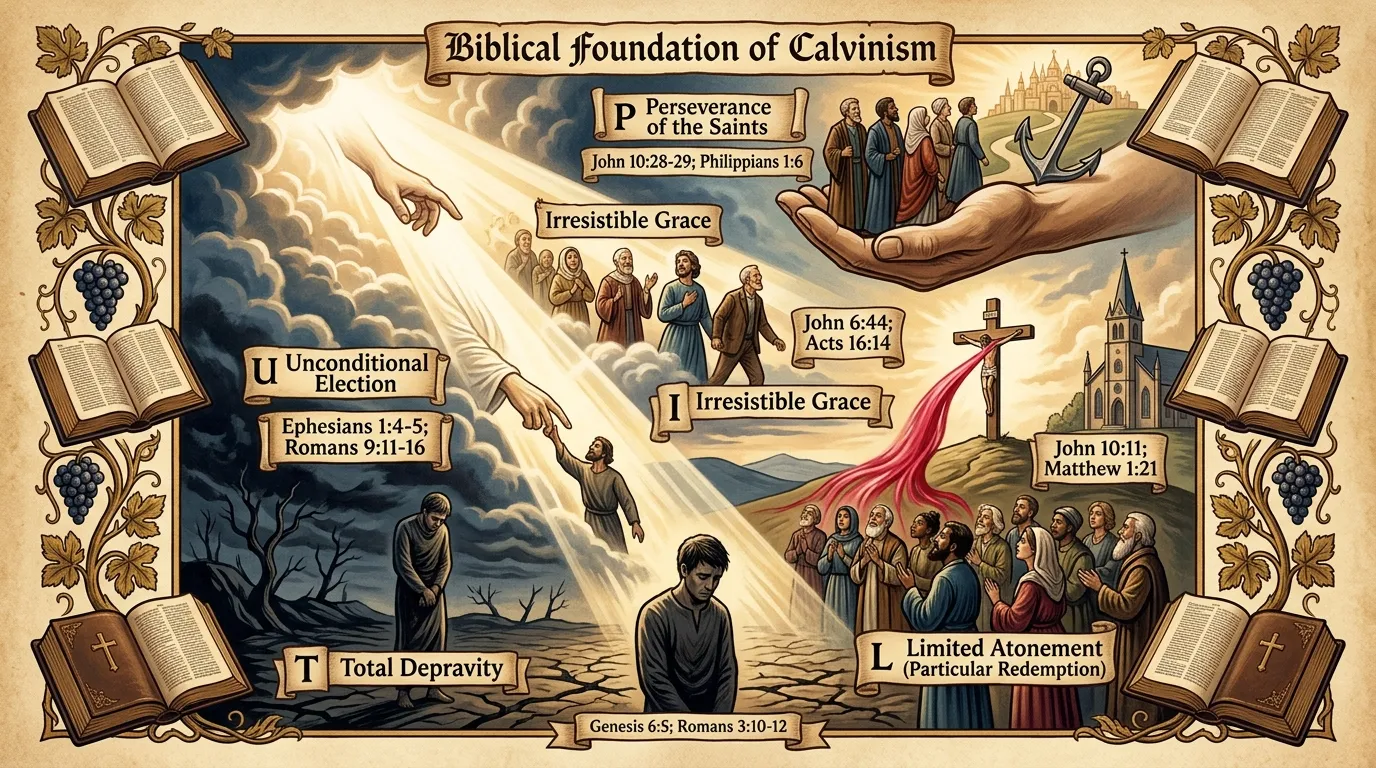
The five doctrines of grace Total Depravity, Unconditional Election, Limited Atonement, Irresistible Grace, and Perseverance of the Saints are not cold theological concepts. They are life-changing Biblical truths that, when understood and embraced, fill the heart of every believer with deep humility, overflowing gratitude, and unshakeable confidence in God’s saving power.
As Ephesians 2:8 reminds us, salvation is by grace through faith and not of ourselves. It is the gift of God. If you fully embrace Calvinism or are still working through its implications, the most important thing is that you keep studying God’s Word, keep asking honest questions, and keep drawing closer to the God who loved you before the foundation of the world. So here is your call to action today open your Bible, study grace deeply and let God’s sovereign love transform everything about how you live and believe.