Have you ever felt like something precious was stolen from you your joy, your peace, your health, your relationships, or your sense of purpose and wondered whether God would ever restore what you lost? That deeply personal and painful question leads us straight into the heart of the plunder meaning in the Bible and reveals one of the most powerful and hope filled truths found anywhere in God’s Word.
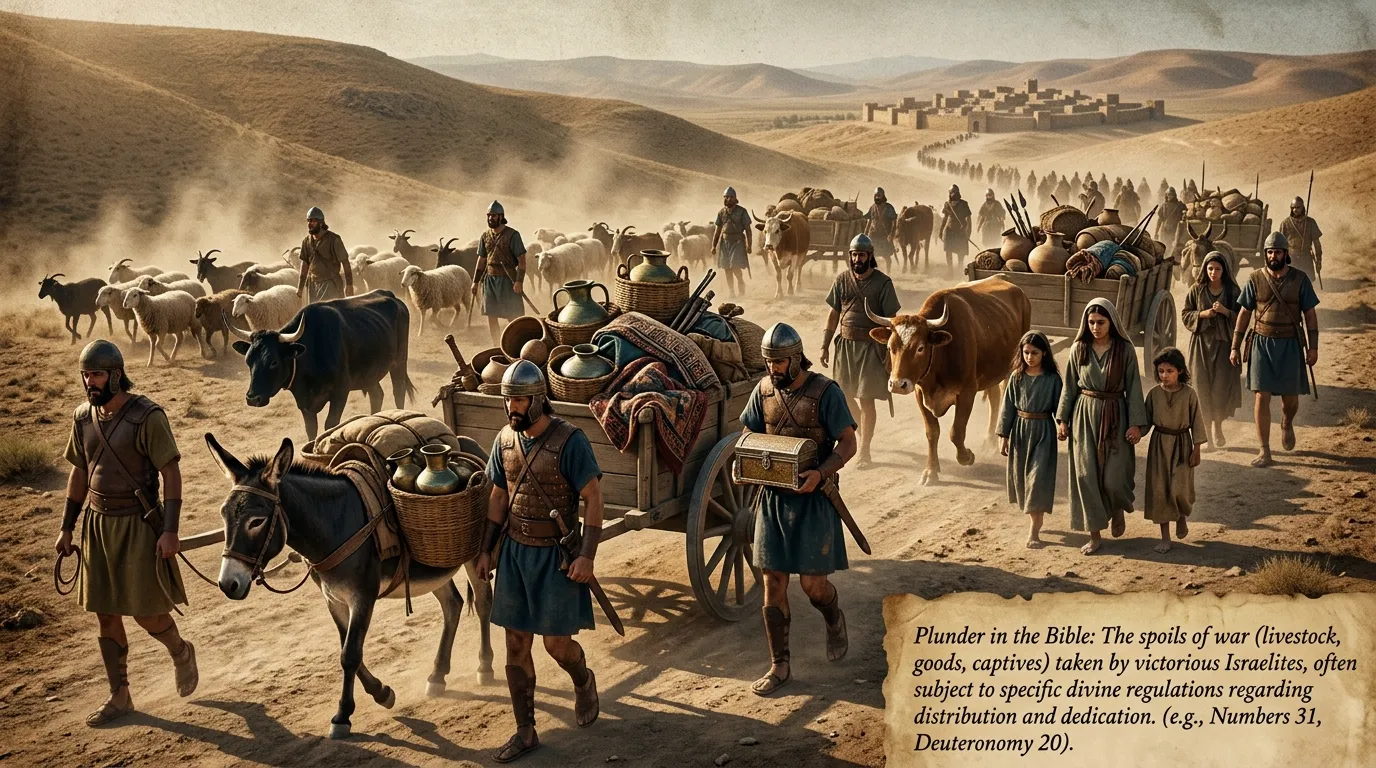
Plunder in Scripture refers to the act of forcibly taking valuable possessions from someone through war, conquest, or violent seizure. Throughout the Old Testament armies would plunder defeated enemies taking their wealth, livestock, and valuables as spoils of war and victory. But God consistently used this concept to reveal something far greater and more personal to his people that he is a God who not only fights for his children but who ensures that what the enemy steals is returned with even greater measure.
The prophet Joel captures this breathtaking promise in Joel 2:25 declaring, “I will restore to you the years that the swarming locust has eaten.” This powerful verse sits at the very heart of the plunder meaning in the Bible revealing a God who sees every loss, fights every battle and restores every stolen blessing with supernatural abundance and perfect precision.
Understanding the plunder meaning in the Bible will completely transform how you see your losses and ignite a fresh and unshakeable faith in God’s promise to restore, redeem, and return everything the enemy has ever taken from you.
What Does Plunder Mean in the Bible?
In the Bible, “plunder” refers to goods, possessions, livestock, or valuables taken after victory in battle. Spiritually, plunder can symbolize God’s provision, the consequences of judgment, restoration after hardship, or the victory that comes through trusting God. Its meaning depends on the biblical context in which it is used.
Simply put, the plunder meaning in the Bible includes:
- Spoils taken after battle.
- Material possessions captured during war.
- God’s provision after victory.
- The consequences of divine judgment.
- Spiritual restoration and victory over evil.
Does the Word “Plunder” Appear in the Bible?
Yes.
The word plunder, along with related terms such as spoil, spoils, and booty, appears many times throughout both the Old and New Testaments.
In the Old Testament, plunder frequently refers to possessions taken after military victories or defeats.
Sometimes God permitted Israel to keep the plunder.
At other times, He specifically commanded them not to take it, demonstrating that obedience was more important than material gain.
In the New Testament, the concept of plunder is occasionally used metaphorically to describe spiritual victory and the defeat of evil.
Hebrew and Greek Origins of “Plunder”
To better understand the plunder meaning in the Bible, it helps to examine the original biblical languages.
Hebrew: Shalal (שָׁלָל)
One of the primary Hebrew words translated as plunder is Shalal.
It means:
- Spoil.
- Booty.
- Property captured in war.
- Valuable possessions taken after victory.
The word often appears in accounts of battles involving Israel and neighboring nations.
Its meaning depends on whether God approved or condemned the actions surrounding the event.
Greek: Skylon (σκῦλον)
In the New Testament, a Greek word connected with plunder is Skylon, meaning:
- Spoil.
- Booty.
- Goods taken from an enemy.
- Captured possessions.
It can also be used figuratively to describe victory over a powerful opponent.
Together, these original words show that plunder is not simply about wealth but often points to the outcome of conflict, judgment, and deliverance.
Why Is Plunder an Important Biblical Theme?
The Bible frequently uses battles to illustrate larger spiritual truths.
Plunder often represents what remains after victory or defeat.
Sometimes it reminds readers that God provides for His people.
Other times it warns against greed, disobedience, and placing material gain above obedience to God.
Understanding the plunder meaning in the Bible helps answer important questions such as:
- Why did God sometimes forbid Israel from taking plunder?
- What does spiritual victory look like?
- How should believers view material blessings?
- What can we learn about obedience and trust?
Throughout Scripture, God teaches that faithfulness is always more valuable than possessions.
The Biblical Meaning of Plunder: Powerful Spiritual Lessons
1. Victory Comes From God, Not Human Strength
The first lesson connected with the plunder meaning in the Bible is that every true victory belongs to God.
Although armies fought battles, Scripture repeatedly reminds readers that success ultimately depended on God’s power rather than military strength.
Plunder served as a visible reminder that God had delivered His people.
The focus was never meant to be on wealth alone but on God’s faithfulness.
Bible Verse
“The battle is the Lord’s.” 1 Samuel 17:47 (KJV)
Simple Explanation
David declared that victory over Goliath would come through God’s power, not human ability.
This same principle applies throughout Scripture.
God deserves the glory for every genuine victory.
Modern Example
Someone may overcome financial hardship, addiction, illness, or a difficult season through God’s help.
Instead of taking all the credit personally, they recognize God’s guidance, strength, and provision throughout the journey.
Life Application
Ask yourself:
“Do I thank God for the victories He has given me, or do I rely only on my own abilities?”
True success begins with trusting God.
2. Obedience Is More Valuable Than Material Gain
Another important lesson connected with the plunder meaning in the Bible is that God values obedience above possessions.
There were times when God instructed Israel not to take any plunder because it belonged to Him or because taking it would lead to spiritual compromise.
When God’s people ignored His instructions out of greed, the consequences were serious.
Scripture teaches that blessings should never become more important than obedience.
Bible Verse
“To obey is better than sacrifice.” 1 Samuel 15:22 (KJV)
Simple Explanation
God is more pleased with hearts that obey him than with outward acts of religion or material success.
Faithfulness matters more than personal gain.
Modern Example
A business owner may have an opportunity to earn more money through dishonest practices.
Choosing integrity over profit reflects the biblical principle that obedience is worth more than temporary financial success.
Life Application
Ask yourself:
“Am I willing to obey God even when it costs me something?”
Faithfulness always brings greater rewards than compromise.
3. God Can Restore What Has Been Lost
Another powerful lesson connected with the plunder meaning in the Bible is restoration.
Throughout Scripture, there are times when God’s people experienced loss because of war, disobedience, or hardship. Yet God repeatedly demonstrated His ability to restore, provide, and bless those who trusted Him.
While plunder often refers to property taken after a battle, it can also remind believers that God is able to restore what seems impossible to recover.
His provision extends beyond material possessions to include peace, hope, joy, and renewed purpose.
Bible Verse
“And I will restore to you the years that the locust hath eaten.” Joel 2:25 (KJV)
Simple Explanation
God promises restoration to people who return to him with sincere hearts.
Although the verse speaks directly to Israel, it also reveals God’s character as One who brings healing, renewal, and hope after seasons of loss.
Modern Example
Someone who has experienced financial hardship, a broken relationship, or years of emotional struggle may gradually see God open new doors, strengthen their faith, and bring unexpected opportunities for healing and growth.
Restoration often looks different than we expect, but God’s faithfulness remains constant.
Life Application
Ask yourself:
“Am I trusting God to restore what I cannot restore on my own?”
Hope grows when we place our confidence in God’s power rather than our circumstances.
4. Greed Can Turn Blessings Into Trouble
The plunder meaning in the Bible also teaches that blessings become dangerous when greed replaces gratitude.
One of the clearest examples is Achan, who secretly kept plunder that God had forbidden Israel to take after the victory at Jericho.
His disobedience affected not only his own life but also the entire nation.
This account reminds believers that dishonesty and greed always carry spiritual consequences.
Bible Verse
“But the children of Israel committed a trespass in the accursed thing.” Joshua 7:1 (KJV)
Simple Explanation
Although God had clearly instructed Israel not to keep the plunder from Jericho, Achan secretly disobeyed.
His actions disrupted Israel’s relationship with God and led to unnecessary defeat.
The story emphasizes that obedience matters more than personal gain.
Modern Example
A person may be tempted to cheat on taxes, misuse company resources, or pursue wealth through unethical means.
Although these choices may seem profitable at first, they often lead to damaged relationships, lost trust, and unnecessary consequences.
Integrity protects what greed eventually destroys.
Life Application
Ask yourself:
“Am I handling God’s blessings with honesty and gratitude?”
Contentment helps guard the heart against greed.
5. Spiritual Victory Is Greater Than Material Wealth
Perhaps the greatest lesson connected with the plunder meaning in the Bible is that spiritual victory has far greater value than earthly possessions.
Material wealth eventually fades.
A growing relationship with God, however, produces lasting peace, wisdom, joy, and eternal hope.
The New Testament continually shifts believers’ attention from temporary treasures to eternal priorities.
The greatest victory is not gaining possessions but becoming more like Christ.
Bible Verse
“Lay up for yourselves treasures in heaven.” Matthew 6:20 (KJV)
Simple Explanation
Jesus encourages His followers to invest in what lasts forever.
Faith, love, obedience, generosity, and service have eternal value that no earthly treasure can replace.
Modern Example
Someone may choose to invest time serving others, mentoring young people, supporting their church, or strengthening their family instead of chasing success at any cost.
Those investments often leave a far greater legacy than financial wealth alone.
Life Application
Ask yourself:
“What treasures am I investing in today, temporary ones or eternal ones?”
A heart focused on God’s Kingdom gains rewards that never fade.
Bible Verses About Plunder Explained Simply
The Bible uses plunder in different contexts, each revealing valuable spiritual truths.
1 Samuel 17:47 Victory Belongs to God
“The battle is the Lord’s.”
Simple Meaning
David reminds Israel that true victory comes through God’s power rather than human strength.
Joshua 7:1 The Danger of Disobedience
“The children of Israel committed a trespass.”
Simple Meaning
Achan’s decision to keep forbidden plunder teaches that greed and disobedience bring painful consequences.
Joel 2:25 God’s Promise of Restoration
“I will restore to you the years.”
Simple Meaning
God has the power to restore hope, purpose, and blessing after seasons of loss and hardship.
Matthew 6:20 Store Up Heavenly Treasure
“Lay up for yourselves treasures in heaven.”
Simple Meaning
Jesus teaches believers to value eternal rewards above temporary possessions.
Ephesians 6:12 The Real Battle
“We wrestle not against flesh and blood.”
Simple Meaning
The greatest battles Christians face are spiritual rather than physical, requiring faith, prayer, and dependence on God.
Why the Plunder Meaning in the Bible Still Matters Today
Although modern believers rarely experience ancient warfare, the plunder meaning in the Bible continues to offer practical wisdom.
When You’re Facing Financial Challenges
Money is an important resource, but it should never become life’s ultimate goal.
The Bible encourages wise stewardship, generosity, integrity, and trusting God as the true provider.
When You’re Struggling With Identity
Many people measure success by possessions or career achievements.
Scripture reminds believers that their true identity is found in Christ rather than in wealth or social status.
Your value comes from belonging to God.
When Relationships Are More Important Than Possessions
Greed, jealousy, and selfish ambition often damage families, friendships, and workplaces.
Choosing generosity, honesty, and humility strengthens relationships and reflects God’s character.
People are always more valuable than possessions.
When You’re Fighting Spiritual Battles
Christians face daily battles against temptation, fear, discouragement, and doubt.
Victory comes through prayer, Scripture, faith, and reliance on the Holy Spirit not through human strength alone.
God equips His people for every spiritual challenge.
When You’re Pursuing Personal Growth
Lasting success involves more than accumulating wealth.
Real growth develops through integrity, gratitude, wise stewardship, compassion, and faithful obedience to God.
Character is a far greater treasure than material success.
Dreams, Repeated Signs, and Synchronicity: What Could Plunder Mean Spiritually?
Many people become interested in the plunder meaning in the Bible after reading Old Testament battle stories, studying biblical prophecy, or noticing the word appear repeatedly during Bible reading.
Others begin searching after dreaming about stolen possessions, recovering lost items, winning a battle, protecting valuables, or receiving unexpected treasures.
These experiences often raise thoughtful questions such as:
- Why do I keep seeing the word “plunder” in the Bible?
- Does dreaming about stolen belongings have a biblical meaning?
- Could repeated Bible passages about plunder be a message from God?
- What spiritual lesson should I learn from these experiences?
The Bible encourages believers to seek wisdom while remaining firmly grounded in Scripture.
God sometimes uses His Word to draw attention to an area of spiritual growth, but not every dream, repeated word, or coincidence should automatically be interpreted as a direct message from God.
His written Word remains the clearest and most trustworthy source of guidance.
The Spiritual Meaning of Repeatedly Seeing the Word “Plunder”
If the word plunder keeps appearing during Bible study, sermons, devotionals, or personal reading, it may simply encourage you to reflect on your priorities and your trust in God.
Prayerfully ask yourself:
- Am I trusting God as my provider?
- Do I value eternal treasures more than temporary possessions?
- Am I handling God’s blessings with gratitude and integrity?
- Is there an area where greed has replaced contentment?
- Am I recognizing God’s victories in my life?
These questions encourage spiritual growth rather than fear.
God’s desire is to shape our hearts, not simply increase our possessions.
Dreaming About Plunder: A Biblical Perspective
Dreams involving lost property, hidden treasure, battles, victory, theft, or recovering valuables can feel emotionally significant.
Although the Bible records occasions when God communicated through dreams, it does not teach that every dream carries prophetic meaning.
Most dreams reflect personal experiences, emotions, concerns, and memories.
If you dream about plunder, it may encourage reflection on themes such as:
- Spiritual victory
- Trusting God’s provision
- Letting go of greed
- Restoring what has been lost
- Gratitude
- Wise stewardship
- Personal priorities
Rather than asking,
“Is this dream predicting my future?”
consider asking,
“What biblical principle can I apply to my life because of this experience?”
That question keeps your focus on God’s truth instead of speculation.
Understanding Synchronicity from a Christian Perspective
Some people describe meaningful coincidences as synchronicity.
For example, you may read about Israel collecting plunder in the Old Testament, hear a sermon about heavenly treasures, and later study Matthew 6 during your devotional time.
These experiences may seem connected.
From a biblical perspective, they should always be evaluated carefully.
Helpful questions include:
- Does this agree with Scripture?
- Does it strengthen my trust in God?
- Does it encourage gratitude and faithfulness?
- Does it lead me toward Christ instead of materialism?
- Does it inspire obedience and spiritual maturity?
If these repeated experiences encourage you to rely more fully on God and value eternal rewards above temporary wealth, they have already served a meaningful purpose.
The Psychological Perspective: Why Certain Biblical Themes Stay in Your Mind
Psychology also helps explain why certain biblical ideas remain in our thoughts during particular seasons of life.
These explanations complement not replace faith.
The Role of the Subconscious Mind
Your subconscious mind naturally continues processing ideas that feel personally meaningful.
If you’ve recently experienced financial stress, personal loss, career changes, or questions about success, your brain may become more attentive to biblical themes involving treasure, victory, provision, and restoration.
You may notice words like:
- Blessing
- Provision
- Stewardship
- Victory
- Restoration
- Gratitude
This increased awareness is a normal part of human cognition.
Identity and What We Truly Value
Modern psychology suggests that our choices often reflect what we value most.
The plunder meaning in the Bible invites believers to examine an important question:
“What truly defines success in my life?”
If identity becomes centered on possessions, achievement, or social status, disappointment often follows.
When identity is rooted in God’s love and purpose, believers experience greater stability, contentment, and peace.
Emotional Symbolism in Dreams
Dreams frequently express emotions through symbolic images.
For example:
- Losing valuables may symbolize fear, insecurity, or uncertainty.
- Recovering treasure may represent hope, healing, or renewed confidence.
- Winning a battle may symbolize overcoming challenges.
- Sharing wealth may reflect generosity and gratitude.
- Protecting possessions may represent responsibility or stewardship.
These symbols should not automatically be viewed as supernatural messages.
More often, they reflect emotional and spiritual themes your mind is processing.
When considered alongside Scripture, they can encourage thoughtful self-reflection.
Scientific Insights: Why Certain Spiritual Themes Keep Appearing
Modern psychology and neuroscience provide additional insight into why themes such as victory, restoration, and treasure continue capturing our attention.
Although science cannot determine spiritual truth, it helps explain how the mind processes meaningful experiences.
Selective Attention
When a topic becomes personally important, your brain naturally notices it more often.
Someone studying the plunder meaning in the Bible may suddenly recognize related passages throughout Scripture because their attention has become focused on that theme.
Reward and Motivation
Behavioral science shows that people are motivated by what they believe is valuable.
The Bible encourages believers to pursue eternal rewards, faithfulness, wisdom, generosity, and spiritual growth rather than allowing temporary possessions to become life’s greatest goal.
This biblical perspective supports long-term fulfillment rather than short-term satisfaction.
Resilience After Loss
Research shows that hope, gratitude, healthy relationships, and a strong sense of purpose help people recover after difficult experiences.
This aligns with the Bible’s repeated message that God restores, strengthens, and guides those who place their trust in Him.
Faith often becomes a powerful source of resilience during seasons of loss.
Practical Life Lessons from the Plunder Meaning in the Bible
Understanding the plunder meaning in the Bible becomes most valuable when it shapes everyday decisions.
Here are practical habits that encourage faithful living.
Practice Gratitude Daily
Regularly thank God for both spiritual and material blessings.
Gratitude helps protect the heart from greed and comparison.
Be a Faithful Steward
Use your time, talents, finances, and opportunities wisely.
Everything we have ultimately belongs to God and should be managed with integrity.
Value Eternal Treasures
Invest in relationships, generosity, service, prayer, and spiritual growth.
These investments have lasting significance far beyond temporary possessions.
Trust God During Seasons of Loss
When life becomes difficult, remember that God remains faithful.
He often brings growth, wisdom, and unexpected restoration through challenging seasons.
Celebrate God’s Victories
Instead of taking credit for every success, pause to acknowledge God’s guidance, provision, and faithfulness.
Giving Him glory strengthens both humility and gratitude.
A Balanced and Trustworthy Perspective
As we’ve explored the plunder meaning in the Bible, one important truth should remain clear.
Not every dream, repeated Bible verse, coincidence, or emotional experience is necessarily a supernatural sign from God.
Likewise, biblical references to plunder should not be interpreted as promises of material wealth or financial prosperity.
The Bible consistently emphasizes something far greater:
A heart that trusts God, obeys His Word, and treasures eternal things above temporary possessions.
If this biblical theme continues standing out to you:
- Study the surrounding passages carefully.
- Pray for wisdom and discernment.
- Reflect on your priorities.
- Practice gratitude and faithful stewardship.
- Focus on growing closer to Christ rather than seeking hidden meanings.
God’s Word remains the believer’s most reliable guide.
FAQs
What does plunder mean in the Bible?
The plunder meaning in the Bible refers to possessions, goods, livestock, or valuables taken after victory in battle. Depending on the context, it can symbolize God’s provision, judgment, restoration, or spiritual victory.
Why did God sometimes allow Israel to take plunder?
In certain situations, God permitted Israel to keep plunder as part of His provision after victory. In other situations, He specifically forbade it to teach obedience, holiness, and dependence on Him rather than material gain.
What does plunder symbolize spiritually?
Spiritually, plunder may represent victory over spiritual enemies, God’s faithful provision, restoration after hardship, or the blessings that follow faithful obedience.
Does the New Testament mention plunder?
Yes. While less common than in the Old Testament, the New Testament uses the imagery of plunder to illustrate spiritual victory, particularly Christ’s triumph over the powers of evil.
What can Christians learn from the biblical idea of plunder?
Christians can learn to trust God as their provider, practice faithful stewardship, avoid greed, value eternal treasures above temporary wealth, and recognize that every true victory ultimately comes from Him.
Final Thoughts:
The plunder meaning in the Bible carries one of the most encouraging and faith igniting promises in all of Scripture that God is not only aware of everything the enemy has stolen from you but he has already planned your restoration with breathtaking precision and abundance.
Proverbs 6:31 declares that a thief must restore seven times what he has stolen and if that is true for earthly thieves how much more will God ensure the enemy pays back everything he has taken from His beloved children.
Your losses are not the end of your story they are simply the setup for God’s most powerful chapter of restoration and redemption in your life. Do not let the enemy convince you that what was stolen is gone forever. God sees it all, he remembers it all, and He is working all things together for your good.
So here is your declaration today rise up in faith, stand on God’s promises, and boldly declare that the plunder meaning in the Bible means your restoration is already on its way.

Adrian Cole is a creative author and digital writer known for producing engaging, informative, and inspiring content across multiple topics. His work focuses on creativity, technology, and modern online trends.