Have you ever been deeply wronged by someone and wondered whether God truly sees what happened to you and whether he will ever make it right? That painful question leads us directly to one of the most powerful and comforting truths in all of Scripture the recompense meaning in the Bible.
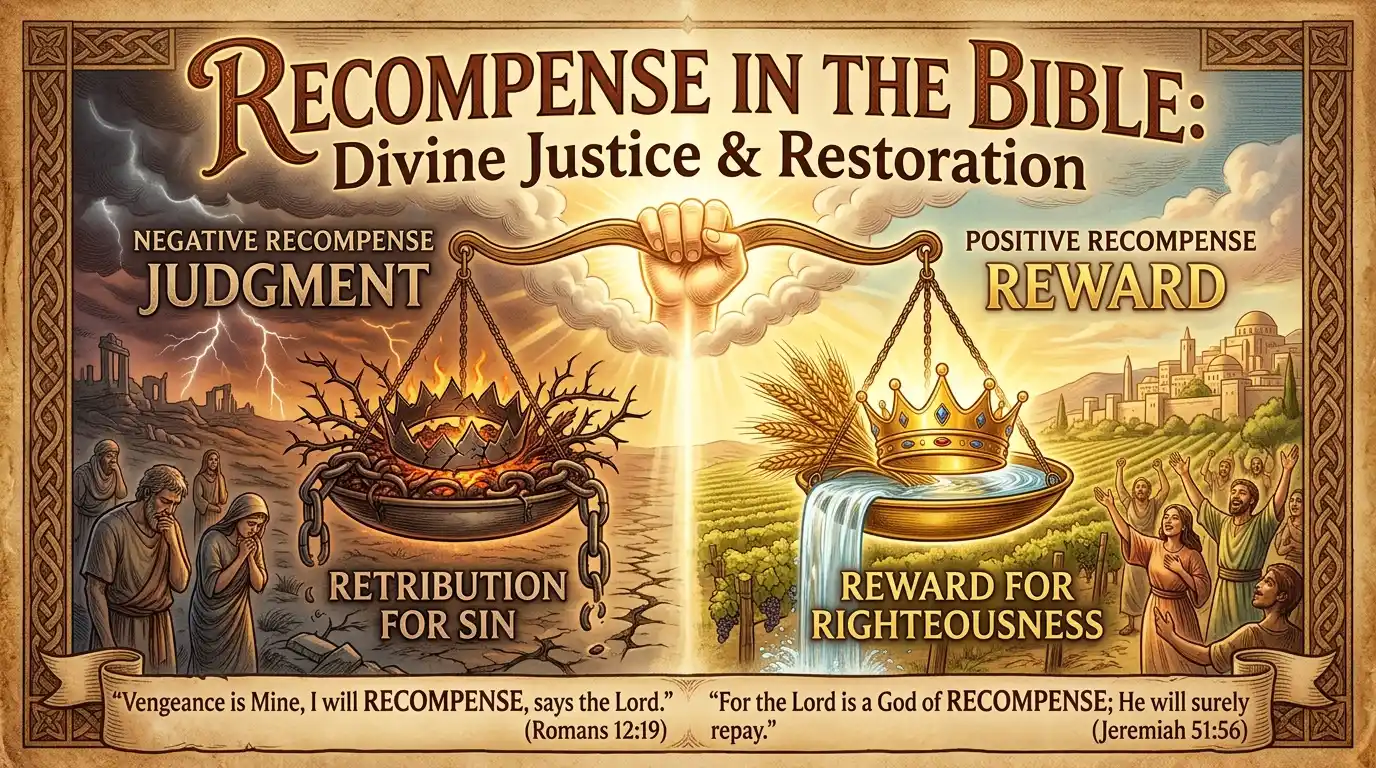
At its core, recompense refers to God’s divine system of repayment his promise to reward faithfulness and address injustice with perfect and unwavering accuracy. Romans 12:19 declares powerfully, “Do not take revenge, my dear friends, but leave room for God’s wrath, for it is written: It is mine to avenge; I will repay, says the Lord.”
This is the heartbeat of biblical recompense God sees everything, forgets nothing, and settles every account in His perfect timing. You may have heard young believers today say phrases like “On God” as a declaration of absolute truth and sincerity.
Interestingly, understanding the recompense meaning in the Bible gives that expression its deepest spiritual weight. When you truly understand the On God meaning through a biblical lens, you realize that trusting God’s justice is not passive it is one of the boldest acts of faith a believer can ever demonstrate.
What Does Recompense Mean in the Bible?
The recompense meaning in the Bible refers to God’s righteous repayment according to his perfect justice. Depending on the context, recompense can describe divine reward, consequences for sin, restoration after suffering, or God’s promise to make wrong things right. Rather than encouraging revenge, the Bible teaches believers to trust God’s justice, mercy, and perfect timing.
In simple terms, biblical recompense reminds us that:
- God notices every action, whether seen or unseen.
- Every choice carries spiritual significance.
- Faithfulness is never wasted.
- Justice ultimately belongs to God.
- God’s mercy is as real as His justice.
Does the Word “Recompense” Appear in the Bible?
Yes. The word recompense appears many times in traditional English Bible translations, particularly the King James Version (KJV) and the New King James Version (NKJV).
In more modern Bible translations, you’ll often find similar words instead, such as:
- Repay
- Reward
- Repayment
- Justice
- Restore
- Give according to one’s deeds
Although the wording may vary between translations, the biblical message remains consistent. The Bible teaches that God responds to human actions with perfect wisdom, fairness, mercy, and righteousness.
Unlike human judgment, which can be influenced by emotions, incomplete information, or personal bias, God’s judgment is always perfect because He knows every heart, every motive, and every circumstance.
That truth makes the biblical concept of recompense both comforting and challenging. It assures believers that nothing escapes God’s attention while also reminding us that our choices matter.
Hebrew and Greek Meaning of Recompense
To fully understand the recompense meaning in the Bible, it helps to look at the original biblical languages. The Hebrew and Greek words behind this concept reveal that recompense is much more than simple reward or punishment.
Hebrew Meaning of Recompense
The Old Testament uses several Hebrew words that contribute to the biblical idea of recompense.
Shalam (שָׁלַם)
One of the most significant Hebrew words is Shalam, which means:
- To repay
- To restore
- To make whole
- To complete
- To bring peace
This word shares the same root as Shalom, the familiar Hebrew word meaning peace, completeness, wholeness, and well-being.
This connection is important because it shows that God’s recompense is not limited to judgment. In many situations, His repayment includes healing, restoration, renewal, and bringing broken lives back into wholeness.
Rather than simply settling accounts, God often works to restore people according to His wisdom and purpose.
Gemul (גְּמוּל)
Another Hebrew word frequently connected with recompense is Gemul, meaning:
- Reward
- Repayment
- Benefit
- Deserved outcome
Throughout the Old Testament, Gemul describes God’s fair response to human actions while also emphasizing his compassion toward those who trust Him.
Together, Shalam and Gemul present a balanced picture of God’s character. He is perfectly just, yet deeply compassionate.
Greek Meaning of Recompense
The New Testament continues this theme using Greek words that highlight both accountability and reward.
Antapodidōmi (ἀνταποδίδωμι)
This Greek word means:
- To repay
- To give back
- To return according to what has been done
It emphasizes God’s righteous response rather than impulsive punishment or emotional revenge.
Misthos (μισθός)
Another important Greek word is Misthos, which means:
- Reward
- Wages
- Compensation
- Earned reward
Jesus often used this word when speaking about heavenly rewards for faithful living, generous giving, and sincere obedience.
Together, these Greek terms remind believers that God values every act of faithfulness, even when those actions go unnoticed by the world.
Why Is Recompense an Important Biblical Theme?
One reason the Bible frequently speaks about recompense is because it answers one of humanity’s oldest questions:
Will true justice ever exist?
Every generation struggles with questions like these:
- Why do good people suffer?
- Why do dishonest people sometimes seem successful?
- Why do prayers appear unanswered?
- Why does injustice continue?
The Bible doesn’t ignore these difficult realities.
Instead, it consistently teaches that God is never unaware of what happens in this world. His justice may not always arrive according to human expectations or timelines, but it is always perfect.
This truth encourages believers to replace bitterness with faith, anxiety with trust, and revenge with patience.
Knowing that God sees everything allows us to focus on living faithfully rather than becoming consumed by the unfairness around us.
The Biblical Meaning of Recompense: Powerful Spiritual Lessons
1. Recompense Reveals God’s Perfect Justice
One of the deepest spiritual meanings of recompense is that God’s justice is flawless.
Human justice is limited.
People misunderstand situations.
Evidence can be incomplete.
Personal opinions influence decisions.
Sometimes innocent people suffer while guilty people appear to prosper.
God, however, sees every detail.
Nothing is hidden from Him.
He knows every motive, every intention, every act of kindness, and every injustice that has ever taken place.
That truth gives believers confidence that ultimate justice belongs to Him alone.
Bible Verse
“Beloved, never avenge yourselves, but leave it to the wrath of God, for it is written, ‘Vengeance is Mine; I will repay, says the Lord.'” Romans 12:19
Simple Explanation
This verse does not encourage believers to seek revenge.
Instead, it teaches us to trust God’s judgment instead of allowing anger to control our actions.
Choosing forgiveness does not mean pretending that wrong actions never happened.
Rather, it means believing that God is capable of handling justice far better than we are.
Modern Example
Imagine working honestly for years while someone else gains success through dishonest shortcuts.
It’s natural to feel frustrated.
The biblical principle of recompense reminds us that temporary success does not always reflect God’s approval.
God values integrity, faithfulness, humility, and honesty even when those qualities receive little recognition from others.
Life Application
The next time you feel tempted to seek revenge or dwell on unfair treatment, ask yourself:
“Can I trust God’s justice even when I don’t immediately see the outcome?”
That question shifts your focus from controlling circumstances to trusting God’s wisdom.
2. God’s Recompense Includes Restoration, Not Just Judgment
Many people hear the word recompense and immediately think about punishment.
The Bible paints a much more hopeful picture.
God’s recompense often includes restoration.
He restores hope.
He restores peace.
He restores purpose.
He restores relationships.
He restores hearts that have been wounded by disappointment or loss.
One of the clearest examples appears in the book of Joel.
Bible Verse
“I will restore to you the years that the swarming locust has eaten.” Joel 2:25
Simple Explanation
Israel had experienced tremendous loss.
Their crops were gone.
Their future looked uncertain.
Yet God promised restoration.
This promise does not necessarily mean that every loss will be replaced exactly as before.
Instead, it reveals God’s ability to bring new life, fresh opportunities, stronger faith, and unexpected blessings even after painful seasons.
Many believers discover that God doesn’t always restore the same circumstances but He often restores hope, joy, purpose, and spiritual maturity in ways they never imagined.
Modern Example
Someone may lose a job they deeply valued.
Initially, the experience feels devastating.
Months later, that same loss leads them toward a career that better fits their gifts, values, and calling.
Looking back, they realize God was preparing a new path rather than abandoning them.
Life Application
When you’re walking through disappointment, remember that God’s work is not always finished when your circumstances seem darkest.
Sometimes restoration begins quietly, long before we can recognize it.
Key Takeaways from Part 1
Before moving to the next section, remember these foundational truths about the recompense meaning in the Bible:
- God’s recompense is rooted in perfect justice, not human revenge.
- The word recompense appears throughout Scripture and reflects God’s righteous character.
- The Hebrew and Greek words reveal ideas of repayment, restoration, reward, and wholeness.
- God’s justice is always balanced by His mercy and wisdom.
- Recompense often includes restoration, healing, and renewed purpose not merely punishment.
- Trusting God’s timing allows believers to replace bitterness with faith and hope.
3. Every Choice Has Spiritual Consequences
Another powerful spiritual lesson behind the recompense meaning in the Bible is that our choices matter. The Bible repeatedly teaches that God has given people the freedom to make decisions, but every decision carries consequences. These consequences are not always immediate, yet they often shape our character, relationships, and spiritual journey over time.
This principle isn’t meant to make us fearful. Instead, it encourages us to live wisely, knowing that every act of kindness, every honest decision, and every step of faith has lasting value in God’s eyes.
Unlike the world’s focus on instant results, Scripture reminds us that spiritual growth often happens gradually. The seeds we plant today frequently become tomorrow’s harvest.
Bible Verse
“Do not be deceived: God cannot be mocked. A man reaps what he sows.” Galatians 6:7
Simple Explanation
This verse doesn’t mean every hardship is God’s punishment. Faithful people also experience trials, loss, and disappointment.
Instead, Paul teaches a timeless principle: our habits and choices influence the direction of our lives.
For example:
- Honesty builds trust.
- Kindness strengthens relationships.
- Forgiveness brings emotional freedom.
- Pride often creates conflict.
- Patience develops wisdom.
God invites us to make choices that reflect His character because those choices shape who we become.
Modern Example
Imagine two coworkers who begin their careers at the same company.
One consistently works with integrity, helps others, and accepts responsibility for mistakes.
The other cuts corners, blames colleagues, and pursues success at any cost.
At first, their careers may appear similar. Over time, however, character becomes visible. Trust, credibility, and healthy relationships often open doors that shortcuts never can.
The Bible reminds us that lasting success is built on faithfulness rather than quick results.
Life Application
Ask yourself these questions during your daily reflection:
- What habits am I building today?
- Do my choices reflect my faith?
- Am I becoming the person God is calling me to be?
Small decisions made consistently often have the greatest long-term impact.
4. God’s Mercy Is Greater Than Our Mistakes
If recompense simply meant receiving exactly what we deserve, none of us would have much hope.
Thankfully, the Bible reveals something remarkable.
God is perfectly just, but He is also perfectly merciful.
Throughout Scripture, justice and grace work together. God does not ignore sin, but neither does He abandon those who sincerely turn back to Him.
This balance is one of the most beautiful themes in the entire Bible.
Bible Verse
“For the wages of sin is death, but the gift of God is eternal life in Christ Jesus our Lord.” Romans 6:23
Simple Explanation
This verse explains that sin has real consequences, yet God’s love provides a way to receive forgiveness through Jesus Christ.
In other words, biblical recompense is not only about judgment. It is also about redemption.
God’s grace offers people the opportunity to begin again.
Our past may shape our story, but it does not have to determine our future.
Modern Example
Someone may spend years making poor financial decisions that create stress and broken relationships.
Eventually, they seek God’s wisdom, change their habits, ask forgiveness where needed, and begin rebuilding their life one step at a time.
The past cannot be erased, but healing and restoration become possible through repentance, wisdom, and God’s grace.
This illustrates that God’s recompense often includes second chances rather than endless condemnation.
Life Application
Instead of asking,
“Have I made too many mistakes?”
Try asking,
“What step of faith is God inviting me to take today?”
The Bible consistently shows that genuine repentance opens the door to restoration and hope.
5. Recompense Encourages Hope While Waiting on God’s Timing
Waiting is one of the hardest parts of the Christian life.
Many people believe God is just, yet they struggle when justice doesn’t seem to arrive quickly.
Questions naturally arise.
Why hasn’t my prayer been answered?
Why do dishonest people appear successful?
Why has healing taken so long?
Why does life sometimes seem unfair?
The Bible doesn’t dismiss these questions. Instead, it encourages believers to trust God’s timing, even when they cannot fully understand it.
Bible Verse
“Say to those with fearful hearts, ‘Be strong, do not fear; your God will come… He will come with divine recompense; He will come to save you.'” Isaiah 35:4
Simple Explanation
Isaiah spoke these words to people facing fear, uncertainty, and hardship.
God reminded them that He had not forgotten them.
His justice would come.
His salvation would come.
His restoration would come.
Perhaps not according to human expectations, but according to His perfect wisdom.
This verse encourages believers to remain faithful while trusting that God is working even when circumstances haven’t changed yet.
Modern Example
A family may pray for years that a broken relationship will be restored.
For a long time, nothing seems to have improved.
Then, through patience, honest conversations, forgiveness, and God’s quiet work in each person’s heart, healing slowly begins.
Sometimes God’s greatest miracles happen gradually rather than instantly.
Life Application
Whenever waiting becomes difficult, remind yourself:
God’s delays are not always God’s denials.
Often, the waiting season is where faith becomes stronger, character grows deeper, and hope becomes more resilient.
Bible Verses About Recompense Explained Simply
The Bible mentions recompense in several different ways. Sometimes it refers to justice. Sometimes it emphasizes restoration, reward, or mercy.
Understanding these verses in their proper context helps us appreciate the full biblical meaning of recompense.
Romans 12:19 Leave Justice to God
“Vengeance is Mine; I will repay, says the Lord.”
Simple Meaning
This verse teaches believers not to seek personal revenge.
Instead, we are called to trust God’s wisdom and justice.
Forgiveness does not excuse wrongdoing. Rather, it frees us from allowing bitterness to control our hearts while leaving ultimate judgment in God’s hands.
Isaiah 35:4 God’s Recompense Brings Hope
“He will come with divine recompense… He will come to save you.”
Simple Meaning
Here, recompense is connected with salvation and restoration.
God promises that He has not forgotten His people.
Even during seasons of suffering, His justice is accompanied by hope.
Hebrews 10:30 God Judges Fairly
“The Lord will judge His people.”
Simple Meaning
Human beings often judge based on appearances or incomplete information.
God judges with perfect knowledge because He understands every motive, intention, and circumstance.
His justice is never unfair.
Psalm 103:10 Mercy Triumphs Alongside Justice
“He does not treat us as our sins deserve.”
Simple Meaning
This verse highlights one of the greatest truths in Scripture.
Although God is just, He is also compassionate.
His mercy gives people the opportunity to experience forgiveness, healing, and a renewed relationship with Him.
Proverbs 11:31 Our Choices Matter
Simple Meaning
This proverb reminds readers that actions have consequences.
Wise decisions generally lead toward peace and growth, while destructive choices often create unnecessary pain.
The message is not intended to produce fear but to encourage responsible and faithful living.
Why the Recompense Meaning in the Bible Still Matters Today
Although these biblical passages were written thousands of years ago, their message remains remarkably relevant.
The idea of recompense speaks directly into many of the challenges people face in modern life.
When You’re Struggling With Anxiety
Anxiety often grows when we feel responsible for controlling everything around us.
We replay conversations.
We worry about unfair treatment.
We wonder whether justice will ever come.
The biblical meaning of recompense offers a different perspective.
It reminds us that God sees what others overlook.
While we remain responsible for our own actions, we can release the burden of controlling every outcome.
Trusting God’s justice brings a sense of peace that constant worry cannot provide.
When Your Identity Feels Uncertain
Many people today define themselves by:
- Career achievements
- Income
- Social media approval
- Physical appearance
- Other people’s opinions
These things can change quickly.
The Bible offers a stronger foundation.
Our identity is rooted in God’s love rather than temporary success or failure.
Understanding recompense reminds us that God evaluates the heart before He evaluates outward accomplishments.
That truth provides stability in a world where identity often feels uncertain.
When Relationships Become Difficult
Every relationship experiences challenges.
Misunderstandings happen.
Trust can be broken.
Forgiveness may feel impossible.
The biblical principle of recompense encourages us to distinguish between forgiveness and justice.
Forgiving someone does not mean ignoring harmful behavior.
Instead, it means refusing to allow resentment to shape our future while trusting God to deal with ultimate justice according to his wisdom.
This perspective often creates space for healing, healthy boundaries, and emotional freedom.
When Personal Growth Feels Slow
Spiritual growth rarely happens overnight.
Whether you’re overcoming anxiety, developing healthier habits, strengthening your faith, or healing from past experiences, meaningful change usually happens little by little.
The message of recompense encourages perseverance.
Every prayer matters.
Every act of kindness matters.
Every wise decision matters.
Every small step of obedience matters.
Even when progress feels invisible, God is shaping your character through daily faithfulness.
When Life Feels Unfair
Almost everyone experiences seasons that seem deeply unfair.
Perhaps you’ve been overlooked for an opportunity.
Maybe someone betrayed your trust.
Perhaps you’ve worked hard without receiving recognition.
Or maybe you’ve experienced loss that simply doesn’t make sense.
The Bible never pretends these experiences are easy.
Instead, it reminds believers that injustice never escapes God’s attention.
God’s justice may unfold differently than we expect, but His promises remain trustworthy.
Choosing to trust Him does not erase pain, but it offers hope that evil will never have the final word.
Dreams, Repeated Signs, and Synchronicity: What Could Recompense Mean Spiritually?
Many people begin searching for the recompense meaning in the Bible after noticing the word repeatedly in unexpected places. Perhaps you read it in your daily Bible study, then heard it mentioned in a sermon, and later saw it again while reading a devotional or Christian article.
Experiences like these naturally raise questions.
Is God trying to tell me something?
Is this just a coincidence?
Could there be a deeper spiritual meaning?
The Bible encourages believers to seek wisdom and discernment rather than jumping to conclusions. While God can use Scripture, circumstances, and wise counsel to guide His people, the Bible also reminds us to test everything carefully.
Instead of assuming every repeated word is a supernatural sign, it’s healthier to examine the experience through both a biblical and practical perspective.
The Spiritual Meaning of Repeatedly Seeing the Word “Recompense”
If the word recompense continues to stand out during your Bible reading or daily life, it may simply be inviting you to reflect on important biblical truths.
Depending on your circumstances, it could encourage you to think about questions like:
- Am I trusting God’s justice instead of seeking revenge?
- Is there an area of my life where God is calling me to greater faithfulness?
- Am I holding onto bitterness that needs to be released?
- Have I forgotten that God notices even my unseen acts of obedience?
- Is God teaching me patience while I wait for His timing?
- Do I need to trust His promise of restoration instead of giving in to discouragement?
These reflections are valuable because they lead us back to Scripture rather than speculation.
Ultimately, God’s primary way of speaking to believers is through His Word, not through hidden messages or mysterious patterns alone.
Dreaming About Recompense: A Biblical Perspective
Dreams have an important place in the Bible.
God occasionally used dreams to communicate with individuals such as Joseph, Daniel, and others. However, the Bible also shows that not every dream carries a divine message.
Many dreams simply reflect our daily experiences, emotions, fears, hopes, or unanswered questions.
If you dream about recompense, consider the dream carefully instead of immediately assuming it predicts the future.
Depending on the context, the dream may encourage reflection on themes such as:
- Justice
- Forgiveness
- Accountability
- Restoration
- Healing
- New beginnings
- Waiting on God’s timing
The most important question is not, “What secret message does this dream contain?”
Instead, ask:
“Does this dream encourage me to grow closer to God and live according to biblical truth?”
That approach keeps your focus grounded in Scripture.
Understanding Synchronicity from a Christian Perspective
Another question people frequently ask is whether repeated words or meaningful coincidences represent synchronicity.
The term synchronicity, introduced by psychologist Carl Jung, describes meaningful coincidences that appear connected even when there is no obvious cause-and-effect relationship.
From a Christian perspective, this idea requires careful discernment.
Sometimes believers notice meaningful patterns because God is drawing their attention to biblical truth.
Other times, repeated experiences are simply part of normal human attention and memory.
The Bible does not encourage believers to build their faith on coincidences.
Instead, Scripture encourages us to test every impression by asking questions such as:
- Does this align with God’s Word?
- Does it point me toward Christ?
- Does it encourage wisdom rather than fear?
- Does it produce spiritual growth rather than unhealthy obsession?
When viewed this way, synchronicity should never replace Scripture as the foundation for decision-making.
Rather, if a repeated experience encourages deeper study of God’s Word, honest self-examination, or renewed faith, it can become a meaningful opportunity for spiritual growth.
The Psychological Perspective: Why Certain Biblical Words Keep Appearing
Psychology offers another helpful perspective that complements careful biblical discernment.
Sometimes we notice particular words because our minds naturally pay closer attention to ideas connected with our emotions and current experiences.
This does not automatically make the experience purely psychological or purely spiritual.
In many cases, both perspectives can exist together.
The Role of the Subconscious Mind
Our subconscious mind constantly processes thoughts, memories, emotions, and unanswered questions.
If you’re wrestling with issues involving justice, forgiveness, unfair treatment, or hope, your brain naturally becomes more aware of related words such as recompense, justice, restoration, or reward.
Psychologists sometimes refer to this as selective attention. Once something becomes emotionally significant, we begin noticing it more frequently.
This doesn’t necessarily mean the word is appearing more often.
Instead, our awareness of it has increased.
Identity Formation and Personal Growth
Throughout life, people continually develop their sense of identity.
Periods of transition such as changing careers, recovering from loss, strengthening faith, or overcoming anxiety often lead us to reflect on deeper questions.
Questions like:
- Who am I?
- What is my purpose?
- Can people truly change?
- Does justice really exist?
- Is God still working in my life?
The biblical theme of recompense naturally connects with these questions because it reminds us that our identity is rooted in God’s character rather than our temporary circumstances.
Emotional Symbolism
Dreams and repeated thoughts often use symbolic language.
For example:
- Restoring a damaged house may symbolize emotional healing.
- Paying a debt may symbolize forgiveness or personal responsibility.
- Receiving a reward may reflect hope or encouragement.
- Facing a judge may represent accountability or unresolved guilt.
These symbols should not automatically be interpreted as predictions.
Instead, they often reflect emotional processing that can encourage healthy self-reflection and spiritual growth.
Scientific Insights: What Research Suggests
Modern psychology and neuroscience offer additional insights into why certain words or themes seem to appear repeatedly.
While science cannot determine whether an experience is spiritually significant, it can explain some of the mental processes involved.
Selective Attention
The human brain naturally notices information related to what already occupies our thoughts.
For example, after learning a new word, many people suddenly begin noticing it everywhere.
This happens because the brain filters information based on relevance.
If you’ve recently been studying biblical justice or reading about God’s promises, your mind may naturally recognize the word recompense more often.
Pattern Recognition
Human beings are naturally wired to recognize patterns.
This ability helps us learn, solve problems, and make sense of our environment.
Occasionally, however, it can also lead us to assign meaning to unrelated events.
That is why discernment is important.
Not every coincidence carries spiritual significance.
At the same time, thoughtful reflection on biblical truth can still produce genuine spiritual growth.
Emotional Memory
Emotionally significant experiences tend to remain in our memory longer than ordinary events.
If the word recompense becomes meaningful during an important season of your life, your brain is more likely to notice it again in the future.
Understanding this process helps us avoid unnecessary fear while remaining open to spiritual reflection.
Practical Life Lessons from the Biblical Meaning of Recompense
Understanding Scripture becomes most meaningful when it shapes the way we live.
Here are practical ways to apply the biblical meaning of recompense in everyday life.
Practice Daily Reflection
Spend a few quiet minutes each day asking yourself:
- Did I respond with honesty today?
- Did I show kindness to others?
- Where do I need God’s forgiveness?
- What spiritual lesson am I learning?
Consistent reflection helps build wisdom and humility.
Develop a Habit of Gratitude
Gratitude shifts your attention from what feels unfair to what God has already provided.
Keeping a gratitude journal or simply thanking God in prayer each day can strengthen hope and improve emotional resilience.
Pray Before Reacting
When someone hurts you, your first response may be anger or frustration.
Instead of reacting immediately, bring your emotions to God in prayer.
Prayer doesn’t erase injustice, but it often changes the way we respond to it.
Build Emotional Awareness
Healthy spiritual growth includes emotional maturity.
Learn to recognize emotions such as:
- Anger
- Fear
- Shame
- Disappointment
- Anxiety
- Bitterness
Naming these emotions honestly allows you to address them in healthy and constructive ways.
Choose Integrity Every Day
Integrity is rarely built through one dramatic decision.
It grows through countless small choices made consistently over time.
Whether at work, at home, or within your relationships, choose honesty, humility, compassion, and faithfulness.
Those habits shape character far more than occasional achievements.
A Balanced and Trustworthy Perspective
As we’ve explored the recompense meaning in the Bible, one important truth deserves repeating.
Not every repeated word, dream, coincidence, or life experience should automatically be interpreted as a direct message from God.
The Bible encourages discernment rather than superstition.
If the word recompense keeps appearing in your life:
- Compare every impression with Scripture.
- Pray for wisdom rather than quick answers.
- Consider your current circumstances honestly.
- Seek guidance from mature Christian mentors when needed.
- Focus on growing in faith instead of searching for hidden messages.
God’s Word provides a reliable foundation for understanding His character and His purposes.
When our experiences lead us back to Scripture, they become opportunities for genuine spiritual growth.
FAQs:
What is the biblical meaning of recompense?
The recompense meaning in the Bible refers to God’s righteous repayment according to His perfect justice. Depending on the context, it may involve reward, discipline, restoration, mercy, or God’s promise to make wrong things right.
Is recompense always about punishment?
No.
Although recompense can involve judgment, it also includes restoration, blessing, healing, forgiveness, and reward. Throughout Scripture, God’s justice is consistently balanced by His mercy.
What is the Hebrew meaning of recompense?
The Hebrew concept of recompense is closely connected to words such as Shalam, meaning to restore or make whole, and Gemul, meaning reward or repayment. Together, these words emphasize both justice and restoration.
Can repeatedly seeing the word recompense be a sign from God?
It may encourage spiritual reflection, but it should not automatically be viewed as a supernatural sign.
Prayerfully compare your experiences with Scripture, seek wisdom, and remember that psychology also explains why meaningful words often capture our attention during important seasons of life.
How can I apply the biblical meaning of recompense in daily life?
You can apply this biblical principle by:
- Trusting God’s justice.
- Choosing forgiveness over revenge.
- Practicing gratitude.
- Living with integrity.
- Developing emotional awareness.
- Praying consistently.
- Remaining faithful while waiting on God’s timing.
These habits encourage lasting spiritual and personal growth.
Final Thoughts:
The recompense meaning in the Bible is one of the most stabilizing and soul-strengthening truths a believer can anchor their life to in difficult seasons. It reminds us that no injustice goes unnoticed by God, no faithful act of obedience goes unrewarded and no wound inflicted in darkness escapes the attention of a God who sees all things with perfect clarity.
When life feels unfair and justice seems delayed, this Biblical truth calls you to stand firm, release your need for revenge and trust completely in the One who repays with perfect precision and eternal purpose. In today’s culture, when someone says “On God” they are making their most serious declaration of absolute truth.
Understanding biblical meaning slang like this through Scripture deepens our appreciation for how deeply faith language is woven into everyday life even when people do not realize it. The God of recompense is not slow he is strategic, sovereign, and always right on time. So here is a challenge for you today is there a situation in your life where you need to release control, trust God’s justice completely and let him be the recompense you have been waiting for? Surrender it to Him today.

James Harper is a passionate writer and digital creator known for sharing insightful, engaging, and easy-to-understand content. With a strong interest in technology, creativity, and modern trends, he aims to inspire readers through informative articles and fresh ideas. His writing style combines simplicity with professionalism, making content enjoyable for every audience.