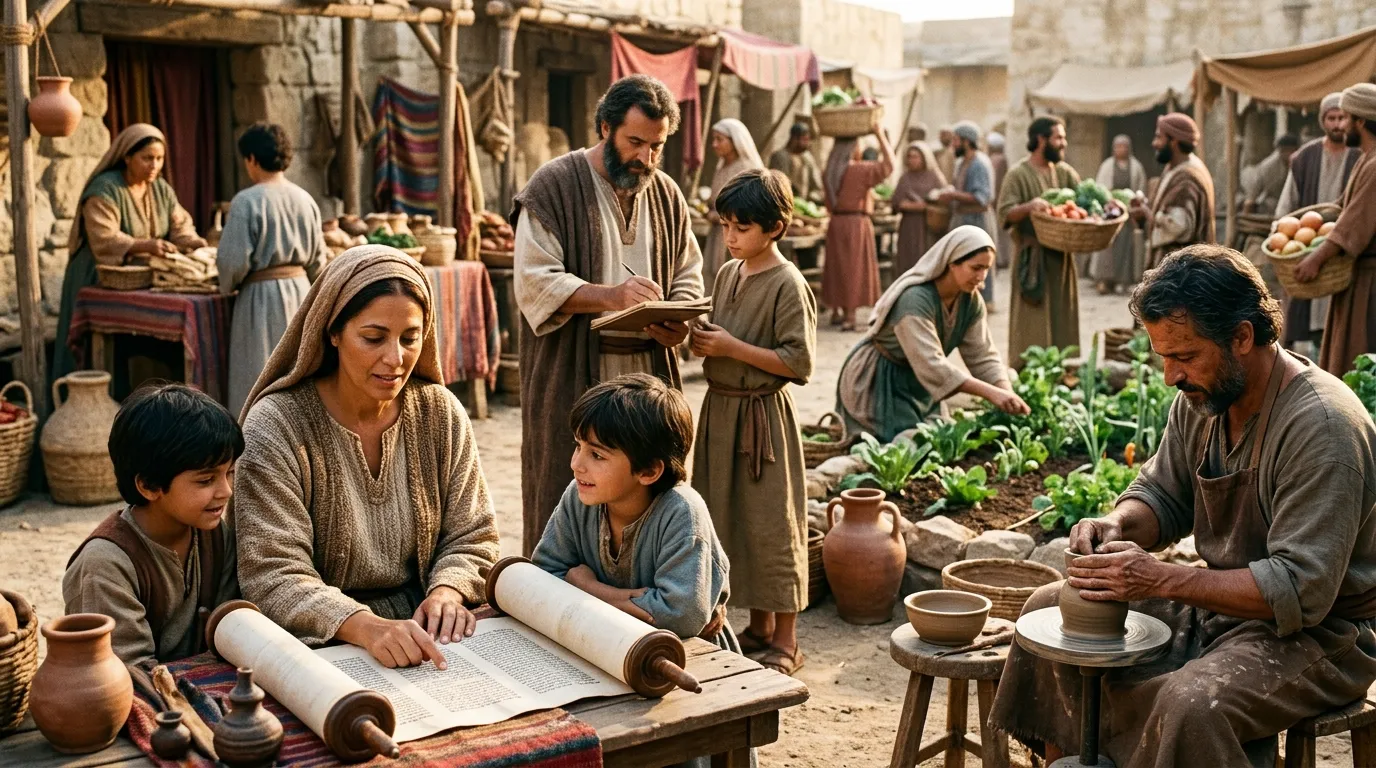
The phrase Talents Meaning Bible refers to the biblical understanding of “talents” as gifts, abilities, and responsibilities given by God. In the Bible, the word “talent” originally described a unit of money or weight, especially in the famous Parable of the Talents found in the Gospel of Matthew.
Over time, Christians began connecting the term with personal skills, wisdom, leadership, creativity, and spiritual gifts entrusted by God for a greater purpose. The Bible teaches that every person receives unique talents and is expected to use them faithfully, wisely, and productively. These God-given abilities are not meant to be hidden or wasted but developed to serve others and honor God.
Understanding talents in a biblical sense helps believers recognize their purpose, strengthen faith, and live responsibly according to God’s plan. This concept continues to inspire Christians to use their abilities for spiritual growth and meaningful service in daily life.
What Does “Talents” Mean in the Bible?
In the Bible, “talents” refer to God-given gifts, abilities, opportunities, and responsibilities entrusted to a person to use wisely and productively for His purpose. The concept comes from the Parable of the Talents in Matthew 25:14–30, where servants are given resources to manage according to their ability.
In simple terms:
- Talents = entrusted gifts
- Purpose = responsible use
- Outcome = growth, faithfulness, and impact
Does the Word “Talents” Appear in the Original Bible?
The English word “talent” does not originally mean skills in Hebrew or Greek.
Hebrew and Greek Background
- The Old Testament does not use “talent” as we understand it today.
- In the New Testament, the Greek word “talanton” (τάλαντον) refers to a unit of weight or money, not ability.
- Over time, the meaning evolved into “abilities” or “gifts.”
Biblical Connection
Jesus used money (talents) as a metaphor to represent:
- Spiritual gifts
- Personal abilities
- Opportunities in life
- Responsibility before God
So while “talent” originally meant currency, its spiritual meaning is much deeper.
The Parable of Talents: The Foundation of Biblical Meaning
Key Scripture Context (Matthew 25:14–30)
Jesus tells a story of a master giving servants different amounts of money (talents) before leaving. When he returns:
- Two servants multiply what they received
- One hides his talent out of fear
Spiritual Message
The parable teaches:
- Gifts are meant to be used, not hidden
- Fear can block potential
- Faithfulness matters more than comparison
- Growth is a spiritual responsibility
Spiritual Meaning of Talents in the Bible
1. Talents as Divine Trust
God does not give talents randomlythey are intentional assignments.
Biblical Insight
Each person receives gifts according to their ability (Matthew 25:15).
Meaning
- Your abilities are not accidents
- Your life has intentional design
- You are trusted with something meaningful
This challenges feelings of insecurity and comparison.
2. Talents as Responsibility, Not Competition
A major biblical principle is stewardship.
Key Idea
You are not judged by how much you have, but how well you use what you have.
Life Reflection
- Small gifts used well are valuable
- Comparison destroys purpose
- Growth matters more than size
This helps people struggling with self-worth and pressure.
3. Talents as Growth and Multiplication
Biblical Principle
“What you use grows, what you hide disappears.”
Meaning
- Skills increase through action
- Confidence grows through practice
- Purpose expands through consistency
Even fear does not cancel talentit only delays it.
4. Talents as Spiritual Identity
Key Verse
“We have different gifts according to the grace given to each of us.” Romans 12:6
Spiritual Insight
- Your gifts reflect your identity
- Your identity is not random
- Your life has divine structure
This helps people struggling with identity confusion or low confidence.
5. Talents as Service to Others
Key Verse
“Each of you should use whatever gift you have received to serve others.” 1 Peter 4:10
Meaning
- Talent is not only for personal success
- It is meant to benefit others
- Purpose grows through contribution
True fulfillment comes from impact, not just achievement.
Modern-Day Relevance of Talents Meaning Bible
In today’s world, people often struggle with:
- Career confusion
- Comparison on social media
- Fear of failure
- Identity crisis
- Pressure to succeed
How Biblical Talents Apply Today
Anxiety and Pressure
People often feel they are “not enough.” The Bible teaches that value comes from stewardship, not perfection.
Identity Confusion
Talents remind us that identity is rooted in purpose, not popularity.
Relationships
Using your gifts well improves confidence, communication, and emotional stability.
Personal Growth
Every skill you develop is part of a bigger life assignment.
Dreams, Signs, and Synchronicity Around Talents
Many people feel drawn to certain skills repeatedly or notice patterns in dreams and life events.
Spiritual Interpretation
In biblical thinking:
- Repeated impressions may reflect calling
- Dreams can symbolize direction
- Inner conviction can signal purpose
Example:
- Dreaming about teaching may reflect leadership gifting
- Repeated interest in helping others may reflect service calling
Psychological Interpretation
From psychology:
- The subconscious mind highlights interests
- Repeated thoughts reflect emotional value
- Identity forms through patterns of attention
This means:
- What you repeatedly think about may reflect your natural strengths
- Emotional attraction often signals internal alignment
Scientific Insights: Talents and the Human Mind
Modern psychology and neuroscience show that talents develop through:
1. Neuroplasticity
The brain strengthens what you repeatedly practice.
2. Identity Formation
People become what they consistently do.
3. Emotional Reinforcement
Skills tied to emotion grow faster.
Key Insight
Talent is not only gifted it is also developed.
This aligns strongly with the biblical idea of “faithfulness leading to increase.”
Practical Life Lessons from Talents Meaning Bible
1. Identify Your Natural Strengths
Ask:
- What comes naturally to me?
- What do people appreciate in me?
- What do I enjoy doing consistently?
2. Develop What You Have
Even small abilities grow when practiced.
- Writing improves by writing
- Communication improves by speaking
- Leadership improves by responsibility
3. Avoid Comparison
Comparison creates:
- Fear
- Insecurity
- Delay in growth
Biblical principle: focus on stewardship, not competition.
4. Use Your Talents for Good
Ask:
- How can my skills help others?
- How can I add value to people’s lives?
Purpose grows through service.
5. Stay Consistent
Consistency transforms potential into impact.
Small daily effort matters more than occasional motivation.
Balanced Perspective: Not Everything Is a “Sign”
It is important to stay grounded.
Not every ability, thought, or dream is a divine message. Sometimes:
- Interests come from environment
- Skills develop naturally through exposure
- Thoughts reflect emotions or experiences
However, even natural development can align with spiritual purpose.
The key is balance:
- Stay open to meaning
- Stay grounded in reality
- Focus on growth and responsibility
Frequently Asked Questions
What is the meaning of talents in the Bible?
Talents in the Bible represent God-given gifts, abilities, and responsibilities entrusted to a person to use wisely for purpose and service.
What is the main lesson of the Parable of Talents?
The main lesson is that faithfulness and action with what you have is more important than comparison or fear.
Are talents the same as skills?
Not exactly. Skills are learned abilities, while biblical talents include both natural gifts and spiritual responsibilities.
Can talents be developed?
Yes. Both the Bible and psychology show that talents grow through practice, discipline, and consistency.
What happens if talents are not used?
Biblically, unused talents represent missed growth opportunities, often linked with fear, hesitation, or lack of action.
Final Conclusion:
The meaning of talents in the Bible goes far beyond skills or abilities. It speaks to something deeperpurpose, identity, responsibility, and spiritual trust.
You are not randomly gifted. You are intentionally equipped.
Your talents are not meant to stay hidden. They are meant to grow, develop, and impact lives around you.
Even if you feel uncertain, behind every ability you carry is a message:
You were created with direction, not confusion.
And sometimes, the smallest talent used faithfully becomes the beginning of the greatest transformation in your life.

James Harper is a passionate writer and digital creator known for sharing insightful, engaging, and easy-to-understand content. With a strong interest in technology, creativity, and modern trends, he aims to inspire readers through informative articles and fresh ideas. His writing style combines simplicity with professionalism, making content enjoyable for every audience.