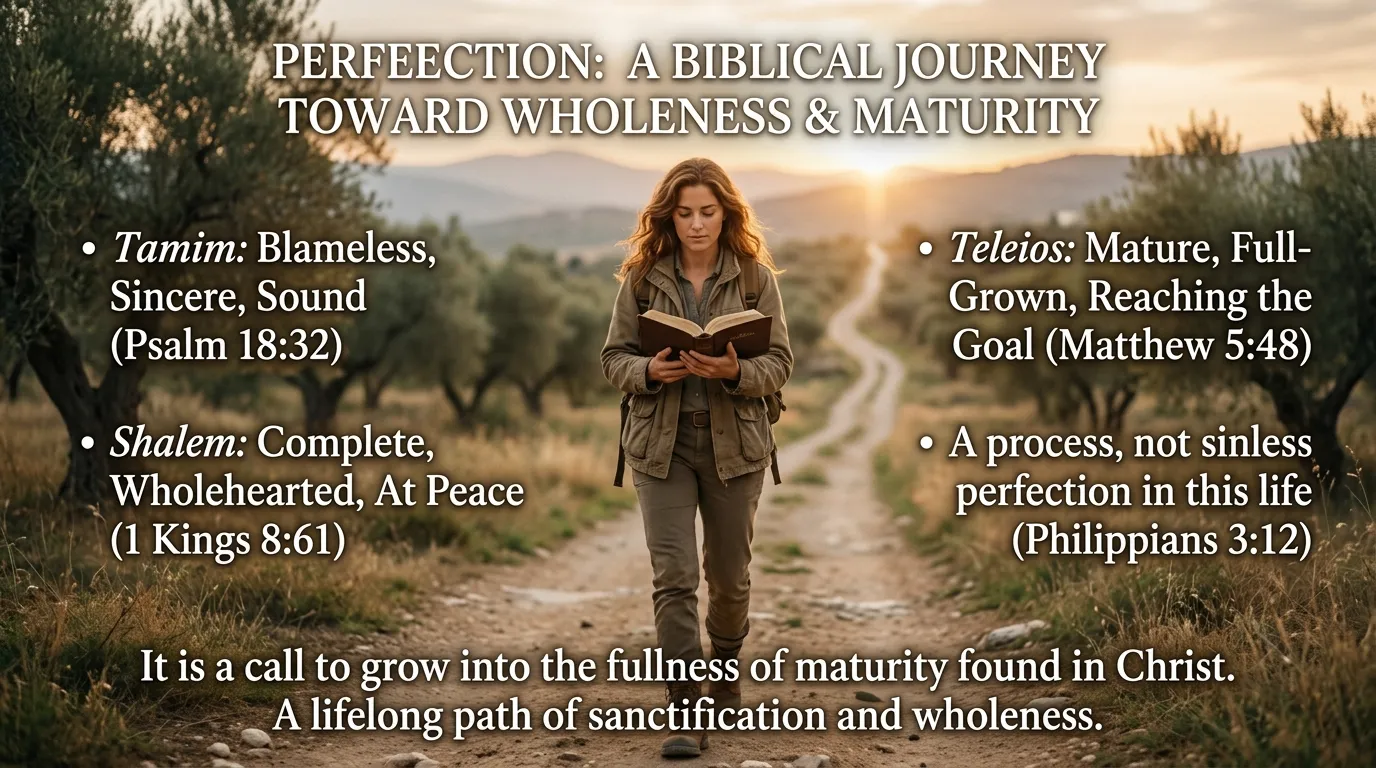
The term Perfection Bible Meaning explores how the Bible defines perfection in spiritual, moral, and personal life. In Scripture, perfection does not always mean being flawless; instead, it often refers to spiritual maturity, completeness, and wholehearted faith in God.
Many Christians search for the deeper biblical meaning of perfection to understand how they can grow closer to God while living in an imperfect world. From the teachings of Jesus in the New Testament to the wisdom found in the Old Testament, the Bible encourages believers to pursue holiness, love, patience, and faithfulness.
The concept of perfection is strongly connected with obedience to God and transformation through faith. Understanding the perfection Bible meaning can inspire believers to strengthen their spiritual journey, develop godly character, and seek a life guided by biblical principles.
This topic remains highly searched because it offers encouragement, clarity, and spiritual direction for modern Christian living today.
Does “Perfection” Appear in the Bible? (Word Origin & Meaning)
The idea of “perfection” does appear frequently in Scripture, but not in the modern sense of being without mistakes.
Hebrew and Greek Roots
- Hebrew word: “tamim” → meaning complete, whole, blameless, mature
- Greek word: “teleios” → meaning finished, mature, fully developed, spiritually complete
Biblical Connection
In biblical thought, perfection is not about:
- Never making mistakes
- Being emotionally flawless
- Achieving human standards of excellence
Instead, it refers to:
- Spiritual maturity
- Inner wholeness
- A heart aligned with God
Key Verse Example
“Be perfect, therefore, as your heavenly Father is perfect.” Matthew 5:48
This verse is not calling for human flawlessness, but for spiritual maturity and love that reflects divine character.
Spiritual Meaning of Perfection in the Bible
1. Perfection as Spiritual Maturity
Biblically, perfection means growing into emotional and spiritual maturity over time.
Key Verse
“Let perseverance finish its work so that you may be mature and complete…” James 1:4
Meaning Explained
Life struggles are not signs of failure but tools for growth.
Spiritual perfection is:
- Learning patience through trials
- Developing emotional strength
- Becoming wiser through experience
It is a process, not an instant state.
2. Perfection as Inner Wholeness
The Bible connects perfection with being “whole” rather than divided internally.
Key Verse
“The law of the Lord is perfect, refreshing the soul.” Psalm 19:7
Meaning Explained
Inner perfection means:
- Peace within the mind
- Emotional stability
- Alignment between belief and action
Many people today struggle with internal conflict:
- Who they are vs. who they pretend to be
- What they feel vs. what they show
Biblical perfection invites integration, not performance.
3. Perfection as Love in Action
In Scripture, love is the highest expression of perfection.
Key Verse
“Love is the bond of perfection.” Colossians 3:14
Meaning Explained
A “perfect” person biblically is not flawless but loving, forgiving, and compassionate.
Love brings:
- Emotional healing
- Relationship restoration
- Inner peace
This shifts perfection from achievement to character transformation.
4. Perfection as God’s Finished Work
The Bible teaches that ultimate perfection is found in God, not human effort.
Key Verse
“He who began a good work in you will carry it on to completion…” Philippians 1:6
Meaning Explained
You are not expected to complete yourself alone.
Spiritual growth is:
- A guided process
- A lifelong journey
- A partnership between faith and growth
This brings emotional relief to people struggling with self-pressure.
5. Perfection as Freedom from Condemnation
Biblical perfection also means being free from guilt and shame.
Key Verse
“There is now no condemnation for those in Christ Jesus.” Romans 8:1
Meaning Explained
Many people live with:
- guilt from past mistakes
- self-criticism
- emotional shame
Biblical truth reframes perfection as freedom, not pressure.
Modern-Day Relevance of Biblical Perfection
In today’s world, perfection is often misunderstood as:
- Social media success
- Academic achievement
- Physical appearance
- Financial stability
This creates anxiety, identity confusion, and emotional burnout.
Real-Life Struggles
People often feel:
- “I am not good enough”
- “I must hide my flaws”
- “I need to be perfect to be accepted”
Biblical Response
The Bible replaces pressure with:
- Growth instead of comparison
- Purpose instead of performance
- Grace instead of shame
True perfection is not about being flawless, it is about becoming whole.
Dreams, Signs, and Spiritual Sensitivity
Many people associate spiritual meaning with repeated thoughts, dreams, or emotional impressions about perfection.
Spiritual Interpretation
In biblical tradition, God often used:
- Dreams
- Symbolic messages
- Inner conviction
These moments may feel like reminders of growth, direction, or correction.
Psychological Interpretation
From a psychological view:
- The subconscious highlights unresolved emotions
- Repeated thoughts reflect internal focus
- Dreams process identity and emotional stress
For example:
- Someone struggling with self-worth may dream about “not being enough”
- Someone seeking direction may repeatedly think about improvement and growth
Both interpretations reflect deep internal processing, not necessarily literal prediction.
Scientific Insights: Why We Seek Perfection
Psychology explains the desire for perfection through identity formation and emotional conditioning.
Subconscious Mind Influence
The brain constantly:
- compares experiences
- stores emotional memories
- builds identity based on feedback
Emotional Symbolism
Perfection often symbolizes:
- Safety
- acceptance
- control
- stability
People chase perfection because they are actually seeking emotional security.
Identity Formation
Modern psychology shows identity is shaped by:
- childhood experiences
- social environment
- cultural expectations
Biblical teaching offers a counter-message:
Your value is not earned, it is recognized and restored.
Practical Life Lessons From Biblical Perfection
1. Practice Self-Reflection
Ask daily:
- Am I growing or just performing?
- What am I learning from my struggles?
Reflection builds emotional awareness.
2. Replace Pressure With Grace
Instead of saying:
- “I must be perfect”
Try:
- “I am growing step by step”
This reduces anxiety and increases resilience.
3. Develop Gratitude Habits
Gratitude shifts focus from:
- lack → abundance
- failure → progress
Even small gratitude practices improve emotional stability.
4. Practice Honest Prayer or Reflection
You don’t need perfect words.
Honesty creates:
- emotional release
- mental clarity
- spiritual grounding
5. Accept Growth as a Process
Biblical perfection is not instant.
It involves:
- learning
- failure
- correction
- renewal
Growth is evidence of life, not failure.
Balanced Perspective: Not Every Feeling Is a Divine Message
It is important to remain balanced and grounded.
Not every thought about perfection is a spiritual sign. Sometimes it reflects:
- stress
- comparison culture
- internal pressure
- emotional insecurity
However, these feelings can still lead to:
- self-awareness
- healing
- healthier mindset
- personal development
Wisdom lies in discernment, not extremes.
FAQs:
What does perfection mean in the Bible?
It means spiritual maturity, inner wholeness, and becoming complete in character, not being flawless.
Does the Bible expect humans to be perfect?
No. The Bible emphasizes growth, grace, and transformation rather than human perfection.
What is the original meaning of perfection in Hebrew?
It comes from “tamim,” meaning complete, whole, or blameless in character.
Why do people struggle with perfectionism?
Psychologically, it is linked to fear of failure, need for acceptance, and identity pressure.
Is perfection a spiritual goal?
Biblically, yes but it refers to maturity and love, not flawless performance.
Conclusion:
The perfect Bible meaning is not about becoming flawless it is about becoming whole.
It is the journey from:
- fear to faith
- pressure to peace
- shame to grace
- confusion to clarity
You are not being called to perform perfection. You are being invited into spiritual growth, emotional healing, and inner restoration.
In a world that constantly demands more, the Bible offers a different message:
You are not incomplete because you are imperfect. You are becoming complete through growth, grace, and purpose.
And that journey, slow, honest, and real is where true perfection begins.