Have you ever found yourself wondering why there are different Christian traditions even though they all follow Jesus Christ? Maybe you’ve attended a Lutheran church with a friend, grown up Catholic or found yourself searching online for answers about faith, salvation and spiritual truth. Questions like these often go beyond theology they touch on something deeply personal: identity, purpose, and your relationship with God.
The topic of Lutheranism vs Catholicism isn’t simply about comparing denominations. For many people, it represents a search for spiritual clarity, biblical understanding, and a deeper connection with God. It raises questions such as: What does the Bible teach about salvation? How should Christians worship? What role does tradition play in faith? And how can believers stay united despite their differences?
The Bible encourages believers to seek wisdom, pursue truth and grow in faith. Understanding the biblical meaning behind Lutheranism and Catholicism can help Christians appreciate both their shared foundations and their important theological distinctions while keeping their focus on Christ.
What Is the Biblical Meaning of Lutheranism vs Catholicism?
Featured Snippet Answer
The biblical meaning of Lutheranism vs Catholicism centers on how different Christian traditions interpret Scripture, salvation, church authority, and Christian practice. While both believe in Jesus Christ, the Trinity, and the authority of the Bible, they differ on issues such as justification, church tradition, the sacraments, and the role of the Pope. Spiritually, the comparison highlights the importance of seeking God, understanding biblical truth, and growing in faith.
Do the Terms Lutheranism and Catholicism Appear in the Bible?
No. The words “Lutheranism” and “Catholicism” do not appear in the Bible.
These terms developed centuries after the New Testament was written.
The Origin of Lutheranism
The term “Lutheran” comes from the name of the German reformer Martin Luther, who lived during the sixteenth century.
Luther sought to reform practices he believed were inconsistent with biblical teaching. His efforts eventually became part of what is known as the Protestant Reformation.
The Meaning of Catholic
The word “Catholic” comes from the Greek word katholikos, meaning:
- Universal
- Whole
- Complete
- According to the whole
The term was used by early Christians to describe the universal Christian Church.
Biblical Connection
Although these names are not found in Scripture, the Bible does address many of the questions that later became points of discussion between Catholics and Lutherans:
- Salvation
- Faith
- Grace
- Church leadership
- Worship
- Unity among believers
For this reason, studying Lutheranism vs Catholicism can lead believers back to important biblical themes.
Shared Biblical Foundations Between Lutherans and Catholics
Before exploring differences, it is important to recognize what both traditions share.
Both Catholics and Lutherans believe:
- Jesus Christ is the Son of God.
- Salvation comes through Christ.
- The Bible is God’s Word.
- God exists as Father, Son, and Holy Spirit.
- Prayer is important.
- Christians are called to love God and others.
These shared beliefs form the foundation of Christian faith.
Ephesians 4:5 reminds believers:
“One Lord, one faith, one baptism.”
Despite theological differences, both traditions seek to follow Christ and honor God.
Spiritual Meaning #1: The Search for Truth
One of the deepest spiritual meanings behind Lutheranism vs Catholicism is the human desire to understand truth.
Throughout Scripture, God invites people to seek Him sincerely.
Jesus said in John 8:32:
“Then you will know the truth, and the truth will set you free.”
The comparison between Christian traditions often reflects a person’s desire to answer important questions:
- What does God want from me?
- How can I grow spiritually?
- What does the Bible teach?
Modern Example
Many young adults explore different churches because they want a faith that feels authentic and grounded in Scripture.
This search is not a sign of weakness. It can be part of spiritual growth.
Spiritual Meaning #2: Salvation Is a Gift of God’s Grace
One of the most discussed topics between Lutheranism and Catholicism is salvation.
Lutherans strongly emphasize salvation by grace through faith.
Ephesians 2:8-9 says:
“For it is by grace you have been saved, through faith.”
Catholics also affirm the importance of grace but place greater emphasis on the ongoing process of cooperating with God’s grace through faith, obedience, and participation in the life of the Church.
Spiritual Lesson
Both traditions point to an important biblical truth:
Human beings cannot save themselves. Salvation begins with God’s grace.
This truth encourages humility and dependence on God rather than personal achievement.
Spiritual Meaning #3: Faith Must Transform Daily Life
The debate between faith and works has often been central to discussions between Catholics and Lutherans.
James 2:17 teaches:
“Faith by itself, if it is not accompanied by action, is dead.”
While interpretations differ, both traditions ultimately agree that genuine faith should produce spiritual fruit.
True faith influences:
- Character
- Relationships
- Decisions
- Integrity
- Compassion
Modern Example
A person may attend church every week, but genuine faith becomes visible through kindness, honesty, forgiveness, and service to others.
Spiritual Meaning #4: Unity Matters More Than Division
One powerful biblical lesson from Lutheranism vs Catholicism is the importance of unity.
Jesus prayed for His followers in John 17:21:
“That all of them may be one.”
Christian history includes disagreements, debates, and divisions.
Yet Scripture consistently encourages believers to maintain love and respect for one another.
Spiritual Lesson
Differences should never become excuses for hostility.
Christians can disagree while still recognizing their shared faith in Jesus Christ.
Spiritual Meaning #5: Authority and Spiritual Guidance
Another important theme involves authority.
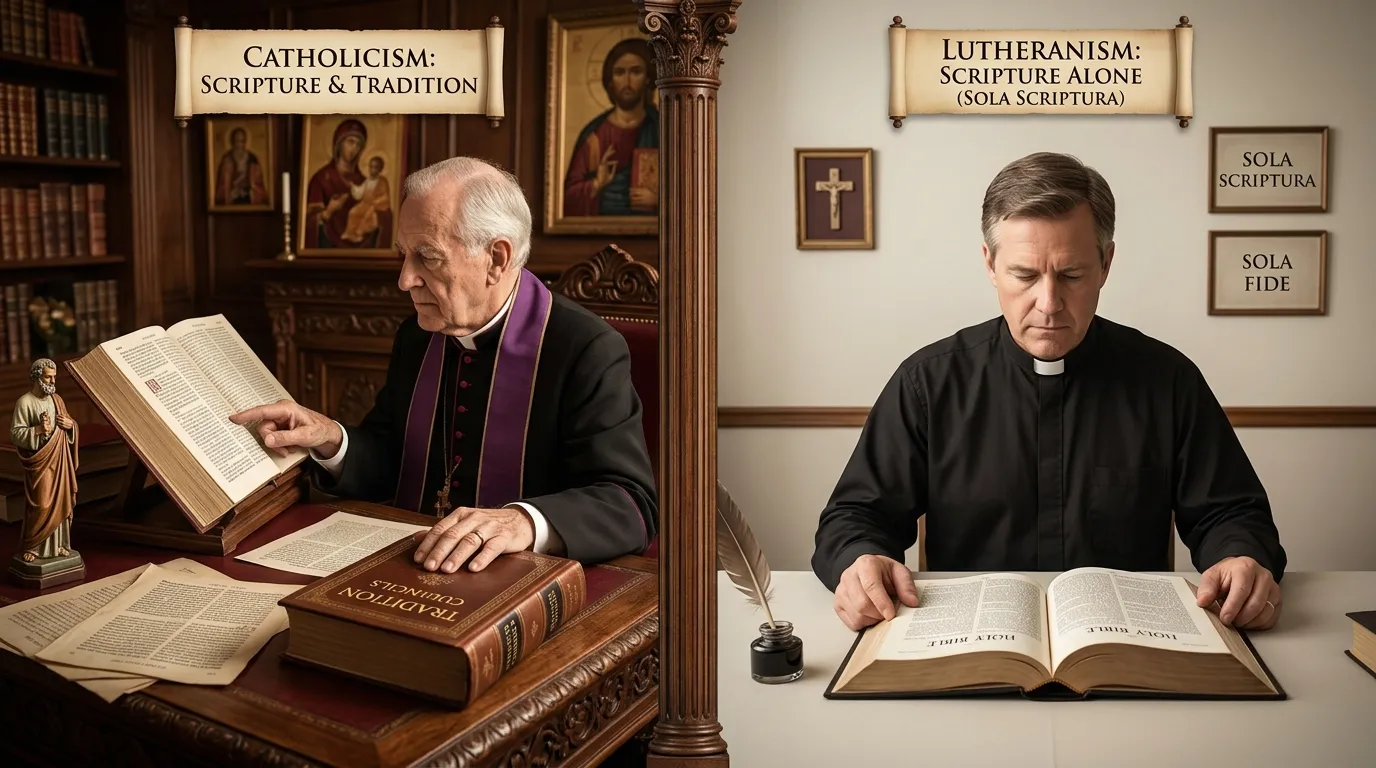
Catholics place significant emphasis on Church tradition and apostolic succession.
Lutherans emphasize the authority of Scripture as the primary guide for faith and practice.
2 Timothy 3:16 teaches:
“All Scripture is God-breathed and is useful for teaching.”
Deeper Meaning
The spiritual lesson here is not merely about institutions.
It is about the importance of seeking reliable guidance while remaining rooted in God’s truth.
Every believer needs wisdom, accountability, and spiritual direction.
Spiritual Meaning #6: God Calls Believers to Continual Growth
Whether someone identifies as Lutheran, Catholic, or another Christian tradition, Scripture consistently calls believers to grow.
2 Peter 3:18 says:
“Grow in the grace and knowledge of our Lord and Savior Jesus Christ.”
Faith is not meant to remain stagnant.
Spiritual growth includes:
- Learning
- Reflection
- Prayer
- Service
- Humility
The comparison between traditions ultimately points believers back to the same goal: becoming more like Christ.
Why Lutheranism vs Catholicism Matters Today
Many people assume theological discussions are only relevant for pastors or scholars.
In reality, these questions affect everyday life.
Anxiety and Spiritual Uncertainty
Many people struggle with questions such as:
- Am I doing enough?
- Does God accept me?
- How can I know I’m saved?
Understanding biblical teachings on grace and faith can provide peace and reassurance.
Identity Confusion
Modern culture often encourages people to define themselves through:
- Career success
- Social media approval
- Wealth
- Appearance
Christian faith offers a deeper identity rooted in God’s love.
Relationship Challenges
Differences in religious backgrounds can affect:
- Marriages
- Friendships
- Family relationships
Understanding different traditions can promote respect and healthy conversations.
Personal Growth
Many believers seek a stronger spiritual life.
Studying Christian traditions often encourages deeper Bible study, prayer, and self-reflection.
Dreams About Churches, Denominations or Religious Differences
Some people experience dreams involving:
- Churches
- Religious leaders
- Worship services
- Spiritual debates
- Religious symbols
These dreams can feel significant.
Spiritual Interpretation
From a spiritual perspective, such dreams may symbolize:
- A desire for guidance
- Spiritual searching
- Questions about faith
- A need for clarity and direction
They may encourage deeper reflection on one’s relationship with God.
Psychological Interpretation
Psychologists often view these dreams as expressions of:
- Identity exploration
- Personal values
- Emotional conflict
- Decision-making processes
Rather than predicting future events, these dreams frequently reflect concerns already present in the subconscious mind.
Scientific Insights: What Psychology Says About Religious Identity
Modern psychology offers valuable insights into why faith traditions matter so much.
The Subconscious Mind
The subconscious stores beliefs, experiences, memories, and emotional associations.
Religious symbols often appear in dreams because they carry strong personal meaning.
Identity Formation
Research suggests that faith plays a major role in identity development.
People often find purpose, belonging, and stability through religious communities.
Emotional Symbolism
Churches, crosses, and religious figures can symbolize:
- Guidance
- Security
- Wisdom
- Hope
- Moral direction
Understanding these symbols can increase self-awareness and emotional health.
Practical Life Lessons From Lutheranism vs Catholicism
Practice Regular Reflection
Take time to examine your beliefs and spiritual priorities.
Ask yourself:
- Am I growing closer to God?
- What is shaping my faith?
Develop Gratitude
Gratitude strengthens spiritual resilience and shifts focus toward God’s blessings.
Build a Consistent Prayer Habit
Prayer deepens your relationship with God and creates space for spiritual growth.
Strengthen Emotional Awareness
Pay attention to emotions such as:
- Fear
- Doubt
- Frustration
- Anxiety
Healthy emotional awareness supports both spiritual and personal development.
Focus on Christ First
While theological discussions are valuable, Jesus remains the center of Christian faith.
Keeping Christ at the center helps maintain perspective and unity.
A Balanced Perspective on Lutheranism vs Catholicism
It is important to approach this topic with humility and balance.
Neither tradition should be reduced to stereotypes.
Many faithful Christians exist within both Lutheran and Catholic communities.
Likewise, not every religious experience, dream, or coincidence should automatically be viewed as a divine sign.
Spiritual growth requires:
- Prayer
- Wisdom
- Biblical study
- Discernment
- Healthy community
The goal is not simply to win theological arguments but to pursue truth and deepen one’s relationship with God.
FAQs:
What is the main difference between Lutheranism and Catholicism?
The primary differences involve teachings about justification, church authority, tradition, and certain sacraments. Both traditions share belief in Jesus Christ and core Christian doctrines.
Are Lutherans and Catholics both Christians?
Yes. Both Lutherans and Catholics identify as Christians and affirm foundational beliefs about Jesus Christ, the Trinity, and salvation.
Does the Bible support Lutheran or Catholic beliefs?
Both traditions base their teachings on Scripture, though they interpret some passages differently.
Can Catholics and Lutherans worship together?
Many communities engage in dialogue, prayer, and cooperation while still maintaining theological distinctions.
Why do Christians have different denominations?
Denominations developed over centuries because of differences in theology, church structure, culture, and interpretation of certain biblical teachings.
Final Thoughts:
The biblical meaning of Lutheranism vs Catholicism goes far beyond comparing denominations. At its heart, it reflects humanity’s ongoing search for truth, spiritual growth, and a deeper relationship with God.
While differences between traditions exist, both ultimately point believers toward Jesus Christ. The Bible consistently calls Christians to pursue truth with humility, faith with sincerity, and love with grace.
If you are exploring faith, asking questions or seeking clarity about Christian beliefs, remember that spiritual growth is a journey. Questions are not the enemy of faith; they are often part of the path toward deeper understanding.
Your identity is not found primarily in a denomination but in your relationship with God. As you continue seeking wisdom, studying Scripture, and growing spiritually you can move forward with confidence, knowing that God honors sincere hearts that seek Him.
In a world filled with confusion and division, faith offers something powerful purpose, hope, truth and the promise that God continues to guide those who genuinely desire to know him.