Have you ever sat in a church pew and wondered if you are worshipping in the tradition that truly aligns with your heart and your faith? That deeply personal question is exactly why so many American Christians are searching for clarity on the Episcopal vs Catholic comparison today.
Both traditions share deep roots in early Christianity, reverence for Scripture and a love for Jesus Christ yet they differ in meaningful and important ways that every believer deserves to understand. As Romans 12:5 beautifully reminds us, we are many parts but one body in Christ and understanding how different traditions express that shared faith only strengthens the entire body of believers.
The Episcopal vs Catholic conversation is not about declaring one church superior over the other. It is about helping sincere seekers and committed believers find the worship community where they can grow deepest in their relationship with God. If you are exploring your faith for the first time, considering a church change or simply hungry to understand Christian history more fully, this honest and grace-filled guide will walk you through everything you need to know about Episcopal vs Catholic with clarity, respect and biblical wisdom.
What Is the Difference Between Episcopal and Catholic?
Quick Answer
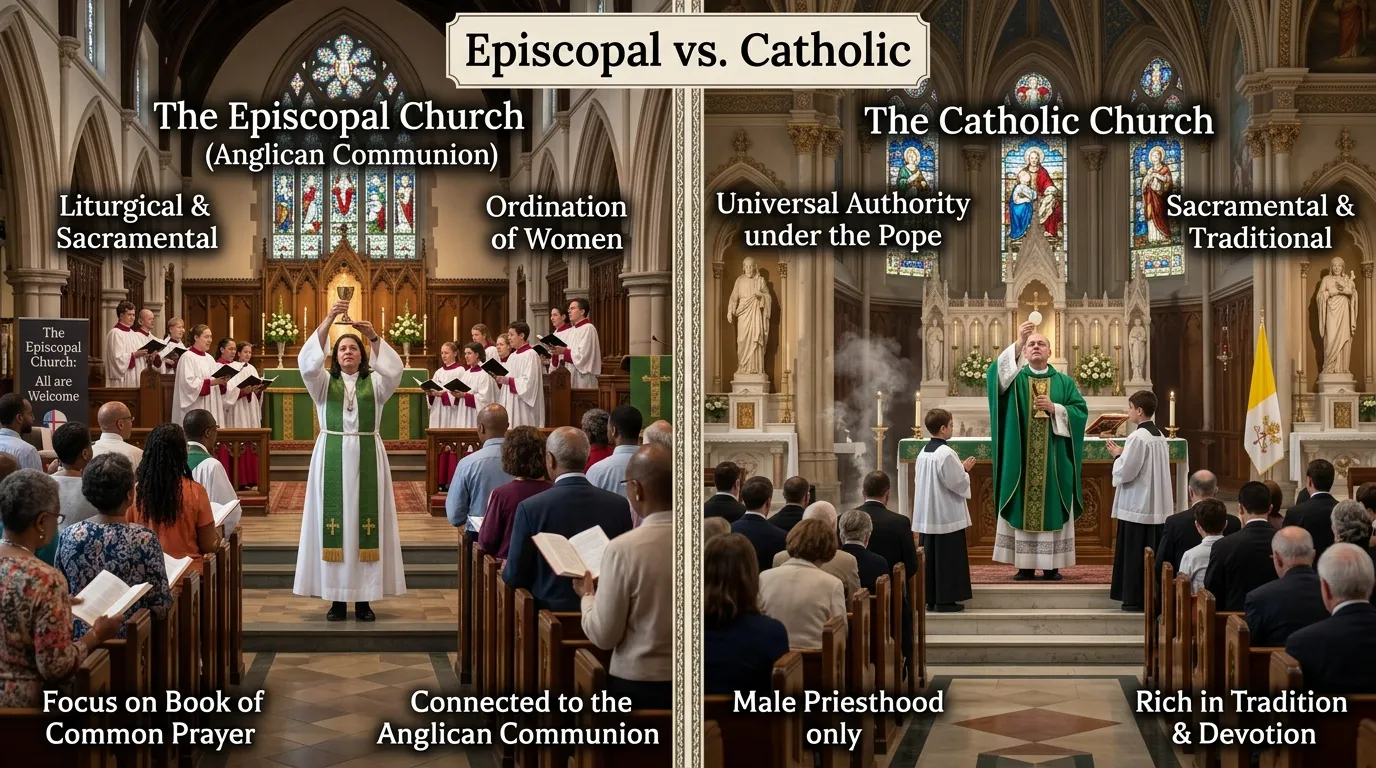
The main difference between Episcopal and Catholic churches is their authority structure, certain theological beliefs, and church practices. Both traditions share many core Christian beliefs, including faith in Jesus Christ, the Bible, baptism, and communion. However, the Catholic Church recognizes the authority of the Pope, while the Episcopal Church operates with a more decentralized leadership structure and often allows greater flexibility on certain doctrinal and social issues.
Does the Bible Mention Episcopal or Catholic Churches?
The specific terms “Episcopal” and “Catholic” do not appear in the Bible.
These denominations developed centuries after the New Testament was written. However, both traditions trace their roots back to the early Christian church established by Jesus and His apostles.
The Greek Origin of “Episcopal”
The word “Episcopal” comes from the Greek word episkopos, meaning:
- Overseer
- Bishop
- Guardian
- Spiritual leader
This word appears in the New Testament when describing church leadership.
For example, in Acts 20:28, church leaders are instructed to care for God’s people as overseers.
The Episcopal Church derives its name from this biblical concept of leadership through bishops.
The Meaning of “Catholic”
The term “Catholic” comes from the Greek word katholikos, meaning:
- Universal
- Whole
- Complete
Although the word itself does not appear in Scripture, the concept of a universal Church is found throughout the New Testament.
Ephesians 4:4-6 emphasizes the unity of all believers under one Lord, one faith, and one baptism.
The Biblical Foundation Shared by Both Traditions
Before discussing differences, it’s important to understand what Episcopalians and Catholics have in common.
Both believe:
- Jesus Christ is the Son of God.
- Salvation comes through Christ.
- The Bible is sacred Scripture.
- Baptism is important.
- Communion is a central act of worship.
- Prayer strengthens a believer’s relationship with God.
These shared beliefs reflect the foundation of historic Christianity.
Spiritual Meaning #1: Unity Matters More Than Labels
One of the most important biblical lessons in the Episcopal vs Catholic discussion is that Scripture emphasizes unity among believers.
Jesus prayed in John 17:21:
“That all of them may be one.”
The focus of Christ’s prayer was not denominational identity but spiritual unity.
What This Means Today
Many Christians become anxious about choosing the “perfect” denomination.
The Bible encourages believers to focus first on:
- Following Christ
- Loving others
- Growing spiritually
- Living faithfully
Denominations can guide believers, but they should never replace a personal relationship with God.
Spiritual Meaning #2: Different Paths Can Pursue the Same Savior
One reason Episcopal and Catholic worship services often feel similar is because both traditions preserve many ancient Christian practices.
These include:
- Formal liturgy
- Communion
- Scripture readings
- Prayer traditions
- Sacramental worship
Romans 14 teaches that believers may express their faith differently while still honoring God.
A Modern Example
Two Christians may worship in different churches yet share the same devotion to Jesus, prayer, and serving others.
The Bible encourages respect and humility when discussing differences among believers.
Spiritual Meaning #3: Authority and Guidance Are Important
One of the biggest differences between Episcopal and Catholic traditions involves authority.
Catholic View
Catholics recognize:
- The Pope
- Church tradition
- Sacred Scripture
as sources of spiritual authority.
Episcopal View
Episcopalians generally emphasize:
- Scripture
- Tradition
- Reason
as guiding principles for faith and practice.
Biblical Perspective
Hebrews 13:17 encourages believers to respect spiritual leadership.
At the same time, Acts 17:11 praises people who carefully examined Scripture for themselves.
The biblical lesson is balance: respect leadership while seeking personal understanding of God’s Word.
Spiritual Meaning #4: Worship Shapes the Heart
Both Episcopal and Catholic traditions place strong emphasis on worship.
The Bible teaches that worship is more than music or ceremonies.
Romans 12:1 describes worship as offering our lives to God.
Why This Matters
Church traditions can help believers:
- Develop spiritual discipline
- Experience reverence
- Build community
- Remember biblical truths
The deeper goal is transformation, not simply participation.
Spiritual Meaning #5: Faith Is About Relationship, Not Just Ritual
One criticism Jesus often directed toward religious leaders was that some focused on external rituals while neglecting the heart.
Matthew 15:8 states:
“These people honor me with their lips, but their hearts are far from me.”
This teaching applies to every Christian tradition.
Whether someone attends an Episcopal church or a Catholic church, genuine faith involves:
- Love for God
- Love for others
- Humility
- Obedience
- Spiritual growth
Rituals have value when they strengthen a real relationship with God.
Spiritual Meaning #6: The Search for Belonging Is a Spiritual Journey
Many people exploring Episcopal vs Catholic traditions are ultimately searching for something deeper than doctrine.
They are searching for:
- Meaning
- Identity
- Community
- Purpose
- Connection with God
Psalm 84:10 celebrates the joy of dwelling in God’s presence.
The Bible consistently teaches that true belonging begins with a relationship with Christ.
Why the Episcopal vs Catholic Question Matters Today
This topic remains highly relevant because many people feel spiritually uncertain.
Anxiety About Choosing the Right Church
Many believers worry:
- What if I choose the wrong denomination?
- Am I following God correctly?
- Will my family approve?
These concerns are common and understandable.
Identity and Spiritual Belonging
Modern culture often creates confusion about identity and purpose.
Church communities can provide:
- Stability
- Guidance
- Support
- Shared values
Relationships and Family Traditions
Differences in religious background can affect:
- Marriages
- Friendships
- Family dynamics
Understanding each tradition helps create healthier conversations and greater mutual respect.
Personal Growth
Both Episcopal and Catholic traditions encourage spiritual development through:
- Prayer
- Worship
- Service
- Reflection
- Community involvement
Dreams About Churches, Religious Symbols, and Spiritual Searching
Some people report dreams involving:
- Churches
- Crosses
- Religious ceremonies
- Priests or bishops
- Sacred spaces
These dreams often occur during seasons of spiritual questioning.
Spiritual Interpretation
From a spiritual perspective, such dreams may symbolize:
- A search for truth
- Spiritual growth
- Desire for guidance
- A deeper connection with God
Psychological Interpretation
Psychologists often view religious dreams as reflections of:
- Identity questions
- Moral values
- Emotional needs
- Personal beliefs
Rather than predicting the future, these dreams frequently reveal what’s happening internally.
Scientific Insights: Why Faith Communities Matter
Research in psychology and sociology provides interesting insights into religious belonging.
The Human Need for Community
Humans naturally seek connection.
Healthy faith communities often provide:
- Emotional support
- Shared purpose
- Social belonging
- Stability during difficult times
Identity Formation
Psychologists believe identity develops through:
- Beliefs
- Relationships
- Values
- Experiences
Religious traditions often help people develop a stronger sense of self.
Emotional Symbolism
Religious symbols frequently carry emotional meaning.
A church building, cross, or prayer ritual can represent:
- Safety
- Hope
- Guidance
- Healing
These symbols often influence both conscious and subconscious thinking.
Practical Life Lessons From the Episcopal vs Catholic Discussion
Practice Personal Reflection
Ask yourself:
- What draws me closer to God?
- What beliefs matter most to me?
- Where do I experience spiritual growth?
Develop a Habit of Gratitude
Gratitude strengthens faith and helps maintain perspective.
Consider writing down three blessings each day.
Build a Consistent Prayer Life
Prayer creates space for wisdom, peace, and spiritual clarity.
Develop Emotional Awareness
Understanding your emotions can improve both spiritual and personal growth.
Pay attention to:
- Fear
- Doubt
- Hope
- Curiosity
Seek Community
Faith is often strengthened through healthy relationships and supportive communities.
A Balanced Perspective
It is important to approach the Episcopal vs Catholic conversation with humility.
Neither denomination perfectly represents every believer’s experience.
Likewise, joining a specific church does not automatically guarantee spiritual maturity.
The Bible consistently points believers toward:
- Faith in Christ
- Love for others
- Humility
- Wisdom
- Spiritual growth
Denominations can support that journey, but they are not the ultimate destination.
FAQs:
Is Episcopal the same as Catholic?
No. While both share many historical traditions and practices, they differ in authority structure, certain doctrines, and church governance.
Do Episcopalians believe in Jesus?
Yes. The Episcopal Church is a Christian denomination that believes Jesus Christ is the Son of God and Savior.
Why do Episcopal and Catholic services seem similar?
Both traditions preserve many ancient Christian worship practices, including liturgy, communion, prayers, and Scripture readings.
Which church is more biblical?
Both Episcopal and Catholic traditions base their teachings on Scripture, though they may interpret certain passages differently.
Can Catholics attend Episcopal churches?
In many situations, Catholics may attend Episcopal services, although official church teachings regarding communion and membership can vary.
Conclusion:
The Episcopal vs Catholic comparison ultimately reveals something beautiful that God’s family is wonderfully diverse, deeply rooted in Scripture, and united by one shared Savior, Jesus Christ. The Catholic Church stands as one of the oldest and most structured expressions of Christian faith in the world, offering centuries of rich tradition, unified doctrine and sacramental worship that has anchored billions of believers across generations.
The Episcopal Church carries that same ancient heritage forward with a spirit of grace, inclusion, and prayerful discernment that resonates deeply with many modern American Christians. As Ephesians 4:4-5 powerfully declares, there is one body, one Spirit, one Lord, one faith and one baptism and that unifying truth flows through both traditions with equal beauty and power.
What matters most is not the label on the church door but if you are growing in your love for God, your knowledge of Scripture, and your commitment to living out the Gospel every single day. So as you reflect on the Episcopal vs Catholic question today, ask yourself this where can I grow deepest in my faith, serve most faithfully and worship most sincerely? Find that place and never stop growing in God.

Adrian Cole is a creative author and digital writer known for producing engaging, informative, and inspiring content across multiple topics. His work focuses on creativity, technology, and modern online trends.