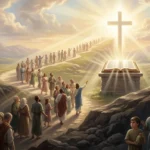
Have you ever read a passage in Scripture that left you completely breathless a moment so extraordinary that it felt almost too glorious to fully grasp? That is exactly what happens when you dive into a deep Transfiguration Bible Study. Found in Matthew 17:1–9, this powerful event takes place on a high mountain where Jesus takes Peter, James, and John and is suddenly transfigured before them.
His face shines like the sun and his clothes become as white as light a breathtaking glimpse of His divine glory breaking through his human form. As Matthew 17:5 records, a voice from the cloud declared, “This is my Son, whom I love with Him I am well pleased. Listen to Him.”
This Transfiguration Bible Study is not just a fascinating historical event it is a deeply personal and spiritually transforming revelation of who Jesus truly is It confirms his identity, his glory and His divine authority over all of creation. If you are a longtime believer or just beginning your journey with Scripture this study will open your eyes to a side of Jesus that will deepen your faith, strengthen your trust and leave you in complete awe of our Savior.
What Is the Biblical Meaning of the Transfiguration?
Featured Snippet Answer
The Transfiguration in the Bible refers to the moment when Jesus was transformed in appearance before Peter, James, and John, revealing His divine glory. Found in Matthew 17, Mark 9, and Luke 9, the event confirms Jesus as the Son of God and teaches believers about spiritual transformation, faith, and God’s eternal purpose.
Does the Word “Transfiguration” Appear in the Bible?
Yes. The event known as the Transfiguration is recorded in three of the four Gospels:
- Matthew 17:1-8
- Mark 9:2-8
- Luke 9:28-36
While English translations use the word “transfigured,” the original New Testament language provides deeper insight.
Greek Origin of Transfiguration
The word translated as “transfigured” comes from the Greek word metamorphoo.
This word means:
- To transform
- To change form
- To be altered from the inside out
- To reveal true nature
Interestingly, this is the same root from which we get the English word “metamorphosis.”
The Transfiguration was not Jesus becoming something different. Rather, it was a temporary unveiling of who He truly was all along the divine Son of God.
The Biblical Context
According to the Gospel accounts, Jesus took Peter, James, and John up a mountain.
There:
- His face shone like the sun.
- His clothes became dazzling white.
- Moses and Elijah appeared beside Him.
- A cloud overshadowed them.
- God’s voice declared Jesus to be His beloved Son.
This extraordinary event revealed both Christ’s divinity and God’s approval of his mission.
Spiritual Meanings of the Transfiguration
The Transfiguration Reveals Our True Identity in God
One of the most powerful lessons from a Transfiguration Bible study is the theme of identity.
Jesus’ divine nature was revealed openly before His disciples.
In a similar way, Scripture teaches that believers are called to discover their true identity in God rather than in the opinions of others.
2 Corinthians 5:17 says:
“If anyone is in Christ, he is a new creation.”
Many people struggle with identity today.
They define themselves by:
- Success
- Failure
- Appearance
- Career status
- Social approval
The Transfiguration reminds us that our deepest identity comes from God.
Spiritual Takeaway
Your true worth is not determined by circumstances. It is rooted in who God says you are.
The Transfiguration Shows That God Reveals Himself Gradually
Peter, James, and John had followed Jesus for years before witnessing this moment.
God often reveals His plans step by step rather than all at once.
Proverbs 3:5-6 encourages believers to trust God even when the full picture is not visible.
Many people want immediate answers regarding:
- Relationships
- Career decisions
- Purpose
- Future direction
The Transfiguration teaches patience and trust in God’s timing.
Spiritual Takeaway
Faith grows when we trust God before we understand everything.
The Transfiguration Connects the Old and New Covenants
The appearance of Moses and Elijah carries deep symbolic meaning.
Moses represents:
- The Law
Elijah represents:
- The Prophets
Their presence beside Jesus demonstrates that he fulfills everything promised in the Old Testament.
Matthew 5:17 records Jesus saying He came not to abolish the Law but to fulfill it.
Spiritual Takeaway
God’s plan has always pointed toward redemption through Christ.
The Transfiguration Reveals the Glory Behind the Struggle
Immediately before the Transfiguration, Jesus began teaching His disciples about His upcoming suffering and crucifixion.
The disciples were confused and troubled.
The Transfiguration gave them a glimpse of glory before the coming hardship.
This lesson remains relevant today.
Many people encounter seasons of:
- Loss
- Uncertainty
- Anxiety
- Waiting
- Disappointment
The Transfiguration reminds believers that difficult seasons do not tell the whole story.
Romans 8:18 teaches that present sufferings cannot compare to future glory.
Spiritual Takeaway
God often provides hope before the challenge is fully resolved.
The Transfiguration Calls Believers to Listen to Christ
During the event, God spoke from the cloud:
“This is my beloved Son; listen to Him.”
This command remains central to Christian faith.
Modern life is filled with competing voices:
- Social media
- News
- Public opinion
- Personal fears
- Cultural pressures
The Transfiguration directs believers back to Jesus as the ultimate source of truth.
Spiritual Takeaway
Clarity often comes when we learn to quiet other voices and listen to Christ.
The Transfiguration Points Toward Spiritual Transformation
The Greek word metamorphoo appears elsewhere in the New Testament.
Romans 12:2 says:
“Be transformed by the renewing of your mind.”
The Transfiguration is not only about Jesus’ glory.
It also points to the transformation God desires in every believer.
Spiritual growth involves:
- Renewed thinking
- Emotional healing
- Greater faith
- Christlike character
Spiritual Takeaway
Transformation begins internally before it becomes visible externally.
Why the Transfiguration Matters Today
The lessons of the Transfiguration remain incredibly relevant in modern life.
Anxiety and Uncertainty
Many people feel overwhelmed by uncertainty about the future.
The Transfiguration reminds believers that God remains present even when circumstances feel confusing.
Identity Confusion
Modern culture often encourages people to define themselves by achievements and external success.
The Transfiguration teaches that identity begins with God’s perspective rather than public opinion.
Relationship Challenges
Healthy relationships require humility, patience, and transformation.
The spiritual growth symbolized by the Transfiguration can positively impact how we interact with others.
Personal Growth and Purpose
Many people feel stuck or uncertain about their purpose.
The Transfiguration reveals that growth is often a process of becoming who God created us to be.
Dreams About Light, Mountains, and Transformation
Many people who study biblical symbolism wonder whether dreams connected to transformation carry spiritual meaning.
Common dream themes include:
- Bright light
- Mountains
- White clothing
- Transformation
- Hearing a voice
Spiritual Interpretation
From a biblical perspective, these symbols may represent:
- Spiritual growth
- God’s guidance
- Increased awareness
- A desire for deeper faith
- Personal transformation
However, Scripture encourages discernment and wisdom rather than assuming every dream is a direct message from God.
Psychological Interpretation
Psychology often views these symbols as reflections of:
- Personal development
- Hope
- Emotional healing
- Life transitions
- Identity formation
Dreams frequently help the mind process significant emotional experiences.
Scientific Insights Into Transformation and Spiritual Growth
Modern psychology provides fascinating insights that align with some themes found in the Transfiguration.
The Subconscious Mind
The subconscious mind stores beliefs, memories, and emotional experiences.
Many personal transformations begin when deeply held beliefs are challenged and renewed.
Identity Formation
Psychologists recognize that identity plays a major role in behavior.
People tend to act consistently with the person they believe themselves to be.
This mirrors the biblical principle that inner transformation leads to outward change.
Emotional Symbolism
Images of light, mountains, and transformation frequently appear in dreams and personal growth experiences because they symbolize progress, insight, and breakthrough.
These symbols are common across many cultures and psychological studies.
Practical Life Lessons From the Transfiguration
Spend Time in Reflection
The disciples encountered God’s revelation in a quiet place away from distractions.
Create regular moments for reflection and spiritual growth.
Practice Gratitude
Gratitude helps shift focus from fear toward God’s blessings and faithfulness.
Strengthen Your Prayer Life
Prayer develops awareness of God’s presence and guidance.
Pay Attention to Emotional Growth
Notice patterns in:
- Fear
- Anger
- Anxiety
- Joy
- Gratitude
Emotional awareness often supports spiritual maturity.
Focus on Long-Term Transformation
True growth rarely happens overnight.
Small daily steps often produce lasting change.
A Balanced Perspective on Spiritual Signs
The Transfiguration was a unique historical event in Scripture.
While believers may experience meaningful spiritual moments today, it is important to maintain balance.
Not every dream, coincidence, or unusual experience is necessarily a direct message from God.
Healthy discernment involves:
- Prayer
- Biblical wisdom
- Reflection
- Sound judgment
Spiritual experiences should strengthen faith rather than replace biblical truth.
FAQs:
What is the main lesson of the Transfiguration?
The main lesson is that Jesus is the divine Son of God and that believers are called to trust Him, listen to Him, and experience spiritual transformation.
Why did Moses and Elijah appear during the Transfiguration?
Moses represented the Law, while Elijah represented the Prophets. Their appearance demonstrated that Jesus fulfilled God’s promises throughout the Old Testament.
What does the Transfiguration symbolize spiritually?
It symbolizes divine glory, spiritual transformation, God’s approval of Jesus, and the believer’s journey toward becoming more like Christ.
Why is Transfiguration important for Christians today?
It provides encouragement during difficult seasons and reminds believers that God’s purpose extends beyond present challenges.
What does the Greek word for Transfiguration mean?
The Greek word is metamorphoo, meaning to transform or change form, revealing one’s true nature.
Final Thoughts:
The Transfiguration Bible Study leaves every sincere believer with one undeniable and life-changing truth Jesus Christ is not merely a good teacher or a moral example. He is the glorified Son of the Living God, worthy of every ounce of our worship, our trust and our complete surrender.
On that holy mountain, God the Father pulled back the curtain of humanity and gave Peter, James and John and through Scripture, all of us a breathtaking glimpse of eternal glory. Moses represented the Law, Elijah represented the Prophets and Jesus stood above them both the fulfillment of everything God had promised since the very beginning of time.
As you apply this Transfiguration Bible Study to your daily life, let it remind you that the same Jesus who shone with blinding glory on that mountain is walking with you through every ordinary and difficult moment of your life today. He has not changed. His glory has not dimmed. His love for you has not wavered. So here is your call to action today open your Bible, revisit Matthew 17, read it slowly, pray over it deeply and allow the glory of Jesus to completely transform the way you live your faith every single day.